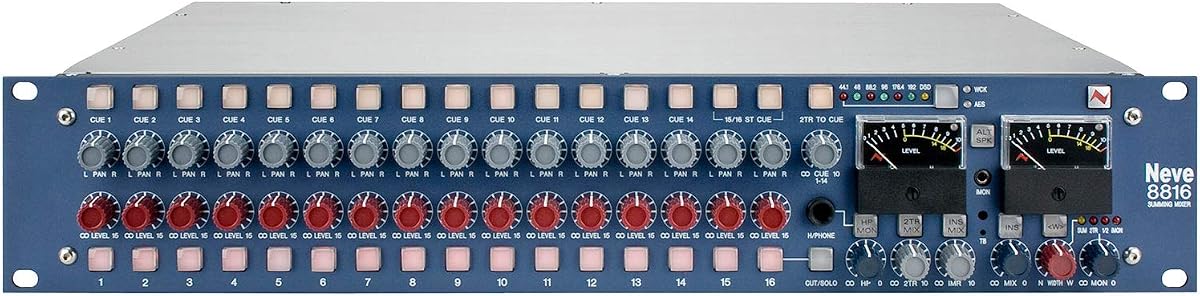
Neve 8816 Summing Mixer
Sixteen channel summing capability
Transformer balanced analog mixing
Dual headphone outputs included
This guide compares the top analog summing mixers for studio and live use, evaluating sound quality, channel count, and connectivity features for 2026.
Analog summing mixers are essential tools for audio engineers seeking to add warmth and depth to digital recordings. These devices combine multiple audio signals into a single output, offering a distinct sonic character that digital plugins often struggle to replicate.
We have carefully selected and reviewed ten of the most highly rated analog mixers available today. Our evaluation process focuses on build quality, sound fidelity, connectivity options, and user feedback to ensure you find the right tool for your specific workflow.
Each product in this list showcases unique strengths tailored to different mixing environments and budgets. Please note that pricing and availability can fluctuate over time, so always verify the latest details before making your final purchasing decision.

4.9Editor score

4.8Editor score
The following table provides a side by side comparison of all ten selected analog summing mixers to help you quickly identify the model that best fits your technical requirements and budget constraints.




The Neve 8816 Summing Mixer is a premium device designed for professionals who demand the highest fidelity in their audio workflows. It offers a sixteen channel summing system that combines signals with the warmth and depth characteristic of classic analog gear.
We may earn a commission when you buy through this link, at no additional cost to you.
This mixer features a transformer balanced analog mixing engine which ensures clean signal paths with minimal noise. The monitoring section includes dual headphone outputs and main alternate speaker outputs allowing flexible setup options for different studio environments.
While the cost is significant, the build quality and sonic performance justify the investment for serious engineers. The lack of digital features keeps the signal path pure but may require external processing for advanced effects needs.
Professional studios and mastering engineers looking for authentic analog summing should strongly consider this unit. It delivers a reliable high quality experience that elevates the final mix with tangible sonic improvements.
The transformer balanced design provides exceptional clarity and depth for any mix session.
Multiple outputs allow for seamless integration with complex studio speaker configurations.
We may earn a commission when you buy through this link, at no additional cost to you.
The Radial Mix 2:1 is a straightforward passive mixer ideal for budget conscious users needing basic summing. It takes two inputs and combines them into one mono output without requiring external power or complex settings.
We may earn a commission when you buy through this link, at no additional cost to you.
Its passive design ensures a clean signal path without the noise floor often introduced by active electronics. The compact form factor makes it easy to transport or store in any small workspace or rack setup.
While it lacks advanced controls the simplicity is its greatest strength for basic tasks. Users should note that channel volume control is limited to the source inputs themselves rather than the mixer.
Beginners and hobbyists looking for an entry level analog summing solution will find this unit perfect. It provides a reliable way to combine signals while maintaining audio integrity at a minimal cost.
The passive nature means no batteries or power supplies are needed for operation.
Its small size allows for easy transport to gigs or different studio locations.
We may earn a commission when you buy through this link, at no additional cost to you.
The Mackie 1202VLZ4 stands out as a versatile mixer delivering professional quality at a competitive price point. It features twelve channels with high quality Onyx preamps that ensure clean gain and low noise across all inputs.
We may earn a commission when you buy through this link, at no additional cost to you.
Users benefit from a remarkable dynamic range of 128.5dB which allows for capturing subtle details without distortion. The routing options include multiple stereo buses and auxiliary sends making it suitable for live sound and studio recording.
The metal chassis ensures durability for regular transport and use in various environments. While it does not include a built in digital interface the analog path quality remains exceptional for traditional workflows.
This mixer is ideal for broadcasters live sound engineers and home studio owners. It balances performance and price effectively making it the top recommendation for most general summing needs.
The Onyx mic preamps provide ultra wide gain range and low noise performance.
Multiple aux sends and buses allow complex signal paths for monitoring and FX.
We may earn a commission when you buy through this link, at no additional cost to you.
The Rupert Neve Designs 5059 Satellite Summing Mixer brings high end analog processing to compact studios. It offers a sixteen plus two configuration that allows for flexible routing of multiple tracks into a stereo bus.
We may earn a commission when you buy through this link, at no additional cost to you.
This Shelford Edition unit features a distinct design and robust build quality typical of the brand. The analog signal path preserves harmonic richness and depth that digital summing often lacks.
While it requires an external audio interface to connect to a computer the sonic benefits are substantial for professionals. Users seeking a boutique analog summing experience will appreciate the attention to detail in design.
This mixer is best suited for established studios where sound quality is the top priority. It provides a reliable and aesthetically pleasing addition to any high end analog workflow setup.
The Shelford design ensures premium components are used throughout the signal path.
The 16 x 2 plus 2 setup allows for complex parallel processing workflows.
We may earn a commission when you buy through this link, at no additional cost to you.
The Headliner R4 is a rotary mixer designed for DJs who value tactile control and sound quality. It features four stereo channels with dedicated filter controls and ALPS potentiometers for smooth operation.
We may earn a commission when you buy through this link, at no additional cost to you.
The metal enclosure and wood side panels provide a durable and classic look that fits any club setup. Inputs include line phono and mic connections allowing versatility for different equipment setups.
While marketed towards DJs the analog summing capabilities are robust enough for live performance needs. The filter controls with frequency and resonance options allow for creative sound shaping during transitions.
This unit is perfect for club DJs and live performers needing precise analog control. It balances durability with high fidelity sound to ensure consistent performance night after night.
Genuine ALPS potentiometers ensure smooth and precise adjustments during mixing.
Independent filter controls allow for deep creative sound shaping on the fly.
We may earn a commission when you buy through this link, at no additional cost to you.
The Mackie Onyx Series offers a blend of analog warmth and digital convenience for modern recording. With sixteen channels it provides ample space for bands and live sessions while maintaining high quality preamps.
We may earn a commission when you buy through this link, at no additional cost to you.
The USB interface allows direct multi-track recording to a computer which simplifies the workflow for home studios. Bluetooth streaming lets you play backing tracks directly to a channel strip without extra gear.
The digital effects engine is user customizable allowing for delays and reverbs without external units. While the effects are digital the core analog path delivers the classic sound Mackie is known for.
This mixer is ideal for bands needing a portable recording solution on the go. It bridges the gap between traditional analog mixing and modern digital recording needs effectively.
The USB multi-track feature allows for direct capture of every channel simultaneously.
Bluetooth streaming enables seamless integration of backing tracks or remote audio.
We may earn a commission when you buy through this link, at no additional cost to you.
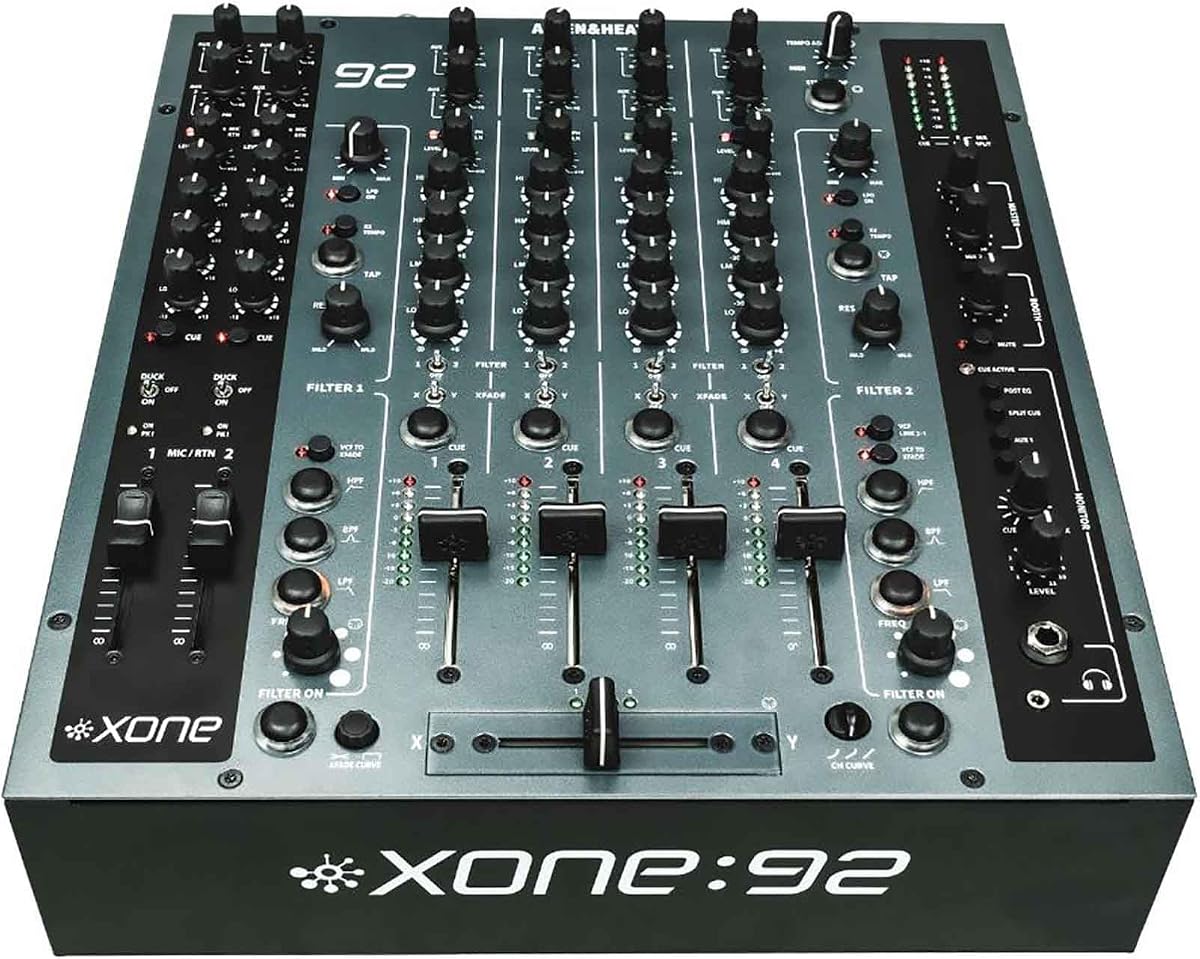
The Allen & Heath Xone:92 Mk2 is a staple in professional clubs known for its rich analog sound. It features four channels with dual multimode filters that provide deep tonal control over your tracks.
We may earn a commission when you buy through this link, at no additional cost to you.
The VCF switching system allows for versatile filter modes which add creativity to your mixes. Multiple send and return connections make it easy to integrate external effects units into your setup.
While it has a learning curve its durability and sound quality make it worth the investment for pros. The analog circuitry ensures that your music sounds warm and punchy in any environment.
This mixer is best suited for touring DJs and serious enthusiasts with club setups. It offers the highest standard of analog performance available in modern DJ equipment today.
Dual multimode filters allow for creative sound sculpting and unique transitions.
Widely trusted in professional environments for reliability and sonic excellence.
We may earn a commission when you buy through this link, at no additional cost to you.
The Allen & Heath Xone:43 is a high performance analog mixer offering great value for intermediate users. It features four channels with a Voltage Controlled Filter system for precise tonal shaping.
We may earn a commission when you buy through this link, at no additional cost to you.
Send and return connections allow you to integrate external FX units easily. Individual dry/wet control per channel provides flexibility in how effects are applied to your tracks.
Booth and record outputs ensure you can monitor your mix separately from the main signal. The Innofader compatibility means you can upgrade the fader for smoother performance later if needed.
This unit is perfect for DJs who want professional features without the cost of flagship models. It offers a reliable analog platform for developing skills and delivering high quality performances.
External effects units can be integrated easily with individual channel wet controls.
Dedicated booth and record outputs allow for precise monitoring and recording.
We may earn a commission when you buy through this link, at no additional cost to you.
The Solid State Logic BiG SiX is a premium console that bridges the gap between hybrid production and analog summing. It offers eighteen input summing capabilities for extensive mixing options.
We may earn a commission when you buy through this link, at no additional cost to you.
The SuperAnalogue mic preamps are renowned for their clarity and dynamic range. With a built in USB interface you can record directly to your DAW without needing extra hardware.
The stereo master bus compressor and listen mic compressor provide tools for shaping dynamics without plugins. While expensive the build and sound quality match the legacy of SSL in professional studios.
This console is designed for high end home studios and hybrid production setups. It delivers the sonic character of large studio consoles in a compact package for serious engineers.
SuperAnalogue preamps ensure studio grade signal quality and clarity throughout.
Built-in USB and converters streamline your hybrid analog digital production.
We may earn a commission when you buy through this link, at no additional cost to you.
The Yamaha MG10 is a compact mixer designed for small setups needing reliable analog performance. It features studio-grade D-PRE preamps that deliver natural sound and smooth highs.
We may earn a commission when you buy through this link, at no additional cost to you.
The 1-knob compressors make it easy to control dynamics without complex settings. The metal chassis provides protection and stability for transport between different venues or locations.
Without USB or built-in effects this unit focuses purely on analog mixing quality. It eliminates unwanted noise with high-pass filters ensuring a cleaner final mix for any source.
This mixer is perfect for small bands and podcasters who want quality without digital complications. It offers excellent sound quality and durability at an affordable price point for beginners.
Studio-grade discrete class-A preamps deliver natural sound and smooth highs.
1-knob compressors allow for quick dynamic control without technical hassle.
We may earn a commission when you buy through this link, at no additional cost to you.
Selecting the right analog summing mixer depends on your specific needs, budget, and the environment where you will use it. This section breaks down the key factors you should consider before making a purchase.
The number of channels determines how many inputs you can connect to your mixer at once. For small home studios or basic DJ setups, a four to ten channel unit may suffice. Larger live bands or production studios often require sixteen or more channels to accommodate all instruments.
Always choose a mixer with enough channels to handle your current setup while leaving a little room for future expansion.
Mic preamps are crucial for capturing vocals and acoustic instruments without adding noise or distortion. Look for mixers that highlight low-noise, high-gain preamps like the Onyx or D-PRE systems mentioned in our reviews.
High-quality preamps ensure that your quiet sources are amplified clearly before they reach the summing section.
Passive mixers like the Radial Mix 2:1 do not require power and often have a cleaner signal path with minimal coloration. Active mixers provide gain and EQ control but require electricity and can add a slight noise floor.
Decide based on whether you need gain control and effects or prefer a simple, direct connection.
Check the input types to ensure compatibility with your gear. XLR inputs are essential for microphones, while TRS or RCA inputs are better for line-level sources like keyboards or media players.
Ensure the mixer supports the specific connectors you use daily to avoid needing extra cables or adapters.
If you plan to transport your mixer regularly, a metal chassis is highly recommended. Plastic casings may crack under stress, whereas steel or aluminum builds withstand the rigors of touring and frequent setup changes.
Invest in a robust unit if your equipment will be used in live performance environments.
Prices range widely from under two hundred dollars to several thousand depending on features and brand reputation. Determine your maximum spending limit before shopping to narrow down options quickly.
Remember that higher cost often correlates with better components, but mid-range options can offer great value for hobbyists.
Good monitoring sections allow you to listen to different signals like main, alternate, or booth outputs easily. Dual headphone outputs are useful when working with multiple engineers or performers.
Select a model that supports the speaker and headphone configurations you need for your workspace.
Some mixers include built-in compressors, EQs, or digital effects which can simplify your workflow. Others offer USB connectivity for recording directly to a computer without additional hardware.
Evaluate if these features are necessary for your workflow or if you prefer to use external plugins.
Connect your audio sources to the mixer using appropriate cables such as XLR for microphones or TRS for line instruments. Ensure all gain levels are set to zero before powering on to avoid loud pops or speaker damage.
Adjust the channel EQs and faders gradually to blend your sound. If your mixer includes a master compressor or filter, engage these sparingly to maintain the integrity of the original signal.
Store your mixer in a cool, dry place when not in use. Clean the knobs and sliders with a soft cloth regularly to prevent dust buildup which can affect contact and performance over time.
An analog summing mixer combines multiple audio tracks into a single stereo output using analog circuitry. Unlike digital summing, it often adds warmth and character to the sound.
Passive mixers do not require power, but active mixers need electricity to run preamps and EQs. Always check the manual to see if your model needs an external power supply.
Yes, most analog mixers can be connected to a DAW via USB or line outputs. This allows you to process signals in the analog domain before recording digitally.
Analog summing often provides a warmer, richer sound with more depth and punch. It avoids the digital artifacts that can sometimes occur when summing inside software plugins.
For home studios, a mixer with eight to sixteen channels is usually sufficient. This allows you to handle a full band setup or complex multi-track sessions effectively.
Use a soft, dry cloth to wipe down the surface and knobs. Avoid using harsh chemicals or liquids directly on the mixer to prevent damage to the electronics.
Our top picks highlight a range of options including the Neve 8816 for premium quality and the Mackie 1202VLZ4 for overall value. Each unit offers unique strengths tailored to different studio needs and budgets.
Prioritize features like preamp quality and channel count to ensure your choice fits your specific workflow. Whether you are a professional engineer or a hobbyist, the right analog mixer can significantly improve your sound.
Always check current prices and availability before making your final purchase decision as these details change frequently. With the right equipment, you can achieve professional results in your audio projects.