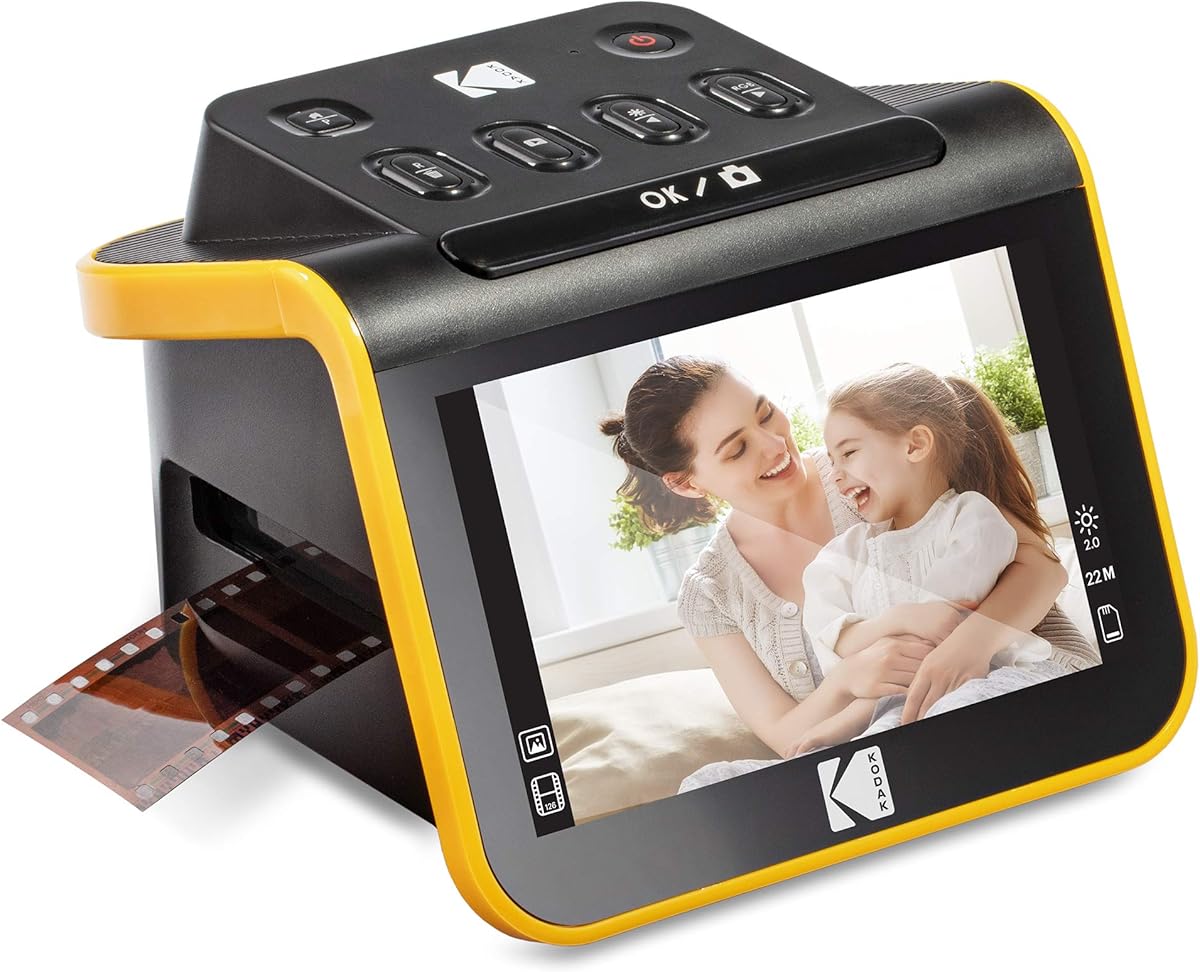
KODAK Slide N Scan Film & Slide Scanner
4.3Editor score
22MP resolution for detailed scans
Built-in 5 inch LCD display
Supports multiple film types easily
SD card storage compatibility
Simple one touch scanning process
Preserving analog memories requires high quality digitization tools that capture every detail from your vintage slides and negatives. Choosing the right flatbed scanner ensures your digital archive maintains the original vibrancy and sharpness of your physical film.
We evaluated ten leading models based on optical resolution, transparency units, and software capabilities. Each product was analyzed for its ability to handle various film formats including 35mm and medium format to ensure comprehensive coverage for photographers and archivists.
Every pick highlights specific strengths like speed or color accuracy to match different user needs. Please note that pricing fluctuates frequently so verify current costs before making your final purchase decision for your home office or studio setup.
4.3Editor score

4.0Editor score

4.4Editor score
As an Amazon Associate we earn from qualifying purchases.
This side by side comparison overview key specifications across all ten selected models to help you identify the most suitable device for your specific archiving requirements and budget constraints effectively.


This device offers an accessible entry point for users wanting to digitize old slides without investing in a full flatbed scanner. With a rating of 4.3 stars it is praised for its ease of use and portability making it ideal for home enthusiasts.
We may earn a commission when you buy through this link, at no additional cost to you.
The 22MP sensor captures decent detail while the 5 inch LCD allows for instant preview and basic editing. You can adjust color and brightness on the fly saving directly to an SD card without needing a computer connection.
However the lack of automatic dust removal software means you must manually correct imperfections in post production. It is also slower for bulk scanning compared to larger units so it best for small batches or casual use.
If you need a simple standalone solution that fits easily in a drawer this scanner is an excellent choice for converting legacy media into digital files quickly and cost effectively.
You can scan and save images directly to an SD card without ever connecting to a computer.
The large screen lets you check your scan quality immediately before saving to avoid wasted time.
We may earn a commission when you buy through this link, at no additional cost to you.
The V800 delivers outstanding quality for those needing precise color reproduction and fine detail. Its 6400 dpi resolution ensures that even the tiniest grain structures are preserved making it a favorite for professional archivists and photographers.
We may earn a commission when you buy through this link, at no additional cost to you.
The dual lens system optimizes resolution based on the media type which improves sharpness for both slides and prints. The 16-bit internal processing captures a wide dynamic range allowing for smooth gradations in dark and light areas.
While it produces top tier results it is a flatbed unit which means it takes more time than a dedicated slide scanner. You also need to rely on external software for dust removal as this model does not include Digital ICE technology.
Choose this scanner if you prioritize image fidelity above speed and want a versatile tool that can handle both documents and high quality film negatives effectively.
The high resolution sensor captures fine grain and textural details that other scanners might miss.
With a 4.0 Dmax you can recover shadow details in negatives without losing highlights in the scan.
We may earn a commission when you buy through this link, at no additional cost to you.
This model stands out as the top choice for professional digitization workflows requiring maximum fidelity. With a rating of 4.4 it is widely recognized for its ability to capture incredible detail and smooth tonal transitions in scanned images.
We may earn a commission when you buy through this link, at no additional cost to you.
The included Digital ICE technology automatically detects and removes dust and scratches without affecting fine details. This feature alone saves hours of manual retouching time making it invaluable for archiving damaged vintage film.
The dual lens system ensures optimal sharpness for both medium format and 35mm film while the high bit depth processing preserves subtle color nuances. It is the ultimate tool for serious collectors who need museum quality digital reproductions.
If you have valuable film negatives that require careful handling and restoration this scanner offers the reliability and quality needed to preserve your memories for future generations.
Digital ICE technology cleans up imperfections like dust and scratches automatically during the scanning process.
It handles everything from 35mm to 6x7cm film so you only need one device for all your formats.
We may earn a commission when you buy through this link, at no additional cost to you.
The V550 balances performance and cost effectively offering robust features for users who need both document and film scanning. Its digital ICE technology removes dust and scratches which is essential for maintaining the quality of older negatives.
We may earn a commission when you buy through this link, at no additional cost to you.
ReadyScan LED technology ensures there is no warmup time allowing you to start scanning immediately after turning it on. Auto edge detection helps to save multiple photos at once by cropping them into individual files automatically.
While the build is mostly plastic and feels less premium than the V850 the optical performance is solid for most consumer needs. The included OCR software is a nice bonus for digitizing text documents alongside your photo collection.
This unit is a great mid-range option if you want professional quality features like dust removal without paying for the top tier pro models.
The LED light source is energy efficient and removes the need for warmup before scanning.
Scan multiple items at once and let the software automatically separate them into individual digital files.
We may earn a commission when you buy through this link, at no additional cost to you.
This scanner offers the best balance of features and price for home users serious about digitizing 35mm film. It includes a built-in transparency unit allowing you to scan slides and negatives directly without needing external accessories.
We may earn a commission when you buy through this link, at no additional cost to you.
The 6400 x 9600 dpi resolution provides plenty of detail for enlarging prints up to 17 x 22 inches. Digital ICE technology removes dust and scratches while Easy Photo Fix helps restore faded colors with a single click.
The customizable buttons make it easy to initiate common tasks like scanning to PDF or email directly. While the plastic chassis feels less durable than higher-end models the scanning results are consistently excellent for the cost.
If you are looking for a reliable all-in-one solution that handles photos documents and film with ease this model is highly recommended for most home archiving projects.
The lid includes a built-in light source specifically designed for scanning translucent film and slides.
Easy Photo Fix software restores faded photos quickly without needing advanced editing skills or knowledge.
We may earn a commission when you buy through this link, at no additional cost to you.
The V700 is designed for users who need to scan medium format film and high quality prints. Its dual lens system automatically selects the best lens for the job ensuring sharpness across all types of media.
We may earn a commission when you buy through this link, at no additional cost to you.
With a 4.0 Dmax it can reproduce fine shadow details in negative film that other scanners might miss. The image quality is professional grade making it suitable for professional photographers and serious collectors.
While it shares many features with the V600 it offers better resolution and medium format support at a higher price point. The dual lens technology is a key differentiator that ensures consistent quality across different film sizes.
Consider this model if you work with 120 film and need the extra optical quality to match the higher resolution of your camera.
Two lenses switch automatically to provide optimal resolution for slides negatives and prints.
High Dmax allows for detailed shadow reproduction in dark negatives without losing color accuracy.
We may earn a commission when you buy through this link, at no additional cost to you.
This model is a favorite among professionals who prioritize resolution and color depth for archival work. It includes SilverFast Ai software which offers advanced control over image processing and color correction for precise results.
We may earn a commission when you buy through this link, at no additional cost to you.
The 48-bit color depth ensures that color transitions are smooth and accurate for high-end reproduction. Firewire connectivity was a major advantage for faster data transfer in older workstation setups.
However Firewire ports are rare on modern computers requiring adapters which adds complexity to the setup process. While the optical hardware is excellent the age of the connectivity options may limit its usability today.
If you have a legacy workstation or need extremely high bit depth for print production this scanner remains a powerful tool for professional workflows.
Includes professional software for advanced color correction and dust removal beyond standard drivers.
48-bit color provides smooth gradients and high fidelity color accuracy for professional print work.
We may earn a commission when you buy through this link, at no additional cost to you.
Designed for graphic arts this scanner handles large formats up to 12×17 inches which is rare for film scanners. The large bed allows you to scan documents and prints alongside your film negatives in one device.
We may earn a commission when you buy through this link, at no additional cost to you.
The transparency unit handles 35mm and medium format film though the optical resolution is lower than dedicated film models. The 3.8 Dmax ensures rich detail and contrast for high quality print output.
Users may find the resolution lower than other models but the size advantage is unique for mixed media workflows. It is a solid choice for graphic designers who need to scan original documents and film.
If you need to scan large documents and artwork alongside your photo collection this model provides a unique solution for mixed media needs.
Accommodates oversized originals up to 12×17 inches for professional graphic arts scanning needs.
Easy Photo Fix automatically restores faded colors and removes dust from film scans instantly.
We may earn a commission when you buy through this link, at no additional cost to you.
This version of the V550 offers similar capabilities to the standard model with a focus on energy efficiency and resolution. It provides a high optical resolution and good color depth suitable for most home archiving tasks.
We may earn a commission when you buy through this link, at no additional cost to you.
The 16-bit grayscale and 48-bit color depth ensure that subtle variations in color and tone are captured accurately. It is Energy Star compliant which helps keep power consumption low during long scanning sessions.
While the user rating is lower than other models it still performs well for basic digitization needs. The lower rating might stem from software quirks rather than hardware limitations so be prepared to troubleshoot.
Choose this model if you find it available at a good price and need a reliable workhorse for occasional photo scanning.
Energy Star compliance helps reduce power consumption which is great for long-term use in home offices.
48-bit color ensures smooth gradients and accurate color reproduction in your scanned images.
We may earn a commission when you buy through this link, at no additional cost to you.
This wide-format scanner is built for professional graphic arts and large documents. It offers a large A3 bed that allows scanning of documents too big for standard flatbeds alongside your photos.
We may earn a commission when you buy through this link, at no additional cost to you.
The 3.8 Dmax optical density ensures good detail capture for both reflective and transparent media. Firewire support provides high speed data transfer for handling large file sizes efficiently.
However the optical resolution is lower than dedicated film scanners which may result in less detailed scans of fine grain film. The low user rating reflects challenges with software and complexity for general consumers.
If you are scanning large documents and do not need high resolution for 35mm film this scanner is a specialized tool for broader needs.
Scans up to 12×17 inches providing room for larger documents and original art pieces.
Firewire support allows for faster data transfer speeds compared to standard USB connections.
We may earn a commission when you buy through this link, at no additional cost to you.
Selecting the right scanner depends on your film formats and how much detail you need to preserve.
Optical resolution determines the level of detail your scanner can capture. For 35mm film you want at least 2400 dpi to capture fine grain but 4800 dpi or higher is better for enlargements.
Higher resolution results in larger files so ensure your storage can handle them before buying.
A built-in transparency unit is essential for scanning negatives and slides. It provides a light source from above to illuminate translucent media properly.
Check if the unit supports your specific film formats like 35mm or medium format before purchasing.
Color depth indicates how many colors the scanner can distinguish. 48-bit color is standard for photo scanning while 24-bit may be sufficient for casual use.
Higher bit depth ensures smoother color transitions and better accuracy in your digital files.
Software like Digital ICE removes dust and scratches automatically saving you time in post-production. Look for tools that offer auto-correct and cropping features.
Ensure the software is compatible with your operating system to avoid installation issues.
Modern scanners use USB 3.0 for fast data transfer. Firewire is faster but less common on newer computers.
Check your computer ports to ensure compatibility or plan to buy the necessary adapters.
Dedicated film scanners are faster for bulk work but flatbeds offer versatility. Consider how many photos you need to scan regularly.
Higher speeds are useful for large archives but quality often takes precedence over speed for archiving.
Plastic models are affordable but less durable than metal ones. A sturdy chassis ensures consistent scanning quality over time.
Invest in a build quality that matches the expected lifespan of your archiving project.
Prices vary widely from standalone units to professional scanners. Decide how much you are willing to spend based on your needs.
Mid-range models often offer the best balance of quality and affordability for home users.
Always clean your film and scanner glass before scanning to remove dust that causes artifacts. Use a soft brush and avoid touching the glass with your fingers.
Place your film in the correct holder provided with the scanner to ensure flatness. Warped film leads to uneven focus and blurry results.
Store your scanner in a cool dry place away from direct sunlight to prevent damage to the sensors. Regular cleaning of the glass with a microfiber cloth keeps scans clear.
Yes most modern flatbed scanners come with a transparency unit designed for negatives and slides. Ensure your scanner has this feature and the correct holder for your film size.
For standard archiving 2400 to 4800 dpi is usually sufficient. Higher resolutions above 6400 dpi are useful only if you plan to make very large prints.
Most scanners include basic software that handles inversion and color correction. However dedicated tools like SilverFast offer better control for professional results.
Use software with dust removal features like Digital ICE. Always clean the film physically before scanning to prevent scratches from forming.
Yes dedicated models support medium formats up to 6x7cm. Check the transparency unit dimensions to confirm compatibility with your specific film type.
Optical resolution is the actual hardware limit. Interpolated resolution is software enhanced and does not add true detail to your image.
We reviewed ten models ranging from standalone units to professional flatbeds. The V600 offers the best value while the V850 Pro leads in professional quality.
Prioritize resolution and transparency units when selecting a device. Your choice should match the formats you have and how large you plan to print.
Always check current prices and availability before buying. Technology evolves quickly so ensure your model supports modern operating systems for long-term use.