
SOLPERK Solar Panel Kit 20W 12V Solar Battery Charger Maintainer+Controller
4.5Editor score
20W Monocrystalline Cells
Built-in Charge Controller
Adjustable Mounting Bracket
Discover the top rated marine solar panels for 2026. We compare efficiency, durability, and value to help you power your boat reliably.
Marine solar panels are essential for keeping your boat's batteries charged during long voyages. They offer a reliable and sustainable energy source that reduces reliance on fuel-powered generators.
We evaluated ten top-rated models based on efficiency, durability, and ease of installation. Our selection includes rigid, flexible, and bifacial options suitable for various boat sizes and power needs.
Each pick highlights key features, pros, and cons to help you decide. Prices and availability change frequently, so check the latest offers before purchasing your new marine solar system.
4.5Editor score

4.8Editor score
4.6Editor score
Below is a detailed side-by-side comparison of the top marine solar panels available this year. We highlight key specifications and features to help you find the perfect match for your vessel.


This top-rated 400W bifacial panel delivers outstanding efficiency at 25.6%. It is a top choice for serious boaters needing reliable power in varied conditions.
We may earn a commission when you buy through this link, at no additional cost to you.
Its bifacial design captures reflected light, boosting output by up to 30%. The twin-cell anti-shade design ensures power continues even if part of the panel is covered.
The dual-module parallel design adds robustness against shading but requires careful mounting to maximize rear-side light capture. It is also heavier than standard panels, so strong mounting hardware is essential.
Ideal for larger boats or off-grid setups needing high output. This panel provides exceptional performance and long-term value for demanding marine environments.
Captures sunlight from the back to add extra energy without extra space. Perfect for bright, reflective surfaces like water or white decks.
The anti-shade design splits the panel into two sections so one side keeps working if the other is blocked by masts or trees.
We may earn a commission when you buy through this link, at no additional cost to you.
This affordable kit offers a simple way to maintain small 12V batteries on boats. It comes with a smart controller to prevent overcharging and ensure safe charging cycles.
We may earn a commission when you buy through this link, at no additional cost to you.
The 20W monocrystalline cell provides enough trickle charge for small loads. The adjustable bracket allows you to angle the panel for maximum sun exposure throughout the day.
Its low power limits use to maintenance charging rather than running appliances. It is perfect for keeping a starter battery healthy when the boat is docked for long periods.
Great for small boats or auxiliary battery maintenance. This kit balances cost and functionality for those needing basic solar charging without a complex setup.
Includes everything you need: panel, controller, bracket, and clips. No extra tools or parts are required for a quick installation.
The built-in controller manages the charge automatically to prevent overvoltage and short circuits that could damage your battery bank.
We may earn a commission when you buy through this link, at no additional cost to you.
This trickle charger uses advanced MPPT technology to maximize efficiency for small 12V systems. It is ideal for maintaining various battery types safely and effectively.
We may earn a commission when you buy through this link, at no additional cost to you.
With support for AGM, lithium, and flooded batteries, it adapts automatically to your needs. The visual indicators let you see the charging status at a glance without complex tools.
Its higher price than basic controllers reflects its advanced features and safety protections. It is suitable for users who want reliable automation without manual intervention or constant monitoring.
Perfect for boaters with sensitive electronics or diverse battery types. This unit ensures your batteries are always ready without requiring extra attention or worry.
Switch easily between 12V, AGM, and Lithium modes to ensure optimal charging for whatever battery your vessel uses.
The system stops when full and resumes when discharged, so you never have to disconnect the charger or check the levels.
We may earn a commission when you buy through this link, at no additional cost to you.
This 100W panel delivers strong efficiency and resilience for marine use. Its N-type cells and 16BB technology provide better performance in heat and less degradation over time.
We may earn a commission when you buy through this link, at no additional cost to you.
Renogy backs it with a 25-year performance guarantee, ensuring long-term value. The IP67 rating protects against harsh marine conditions like salt spray and heavy rain effectively.
While it requires mounting hardware, its durability and efficiency make it worth the effort. It is a solid middle ground for small to medium boat setups needing reliable power.
Great for cruisers needing consistent power in hot climates. This panel balances performance and price for general-purpose marine solar applications.
Low temperature coefficient means you lose less power when the sun beats down on your boat deck during summer months.
The low degradation rate ensures your panel will still produce over 90% of its rated power after a decade of use.
We may earn a commission when you buy through this link, at no additional cost to you.
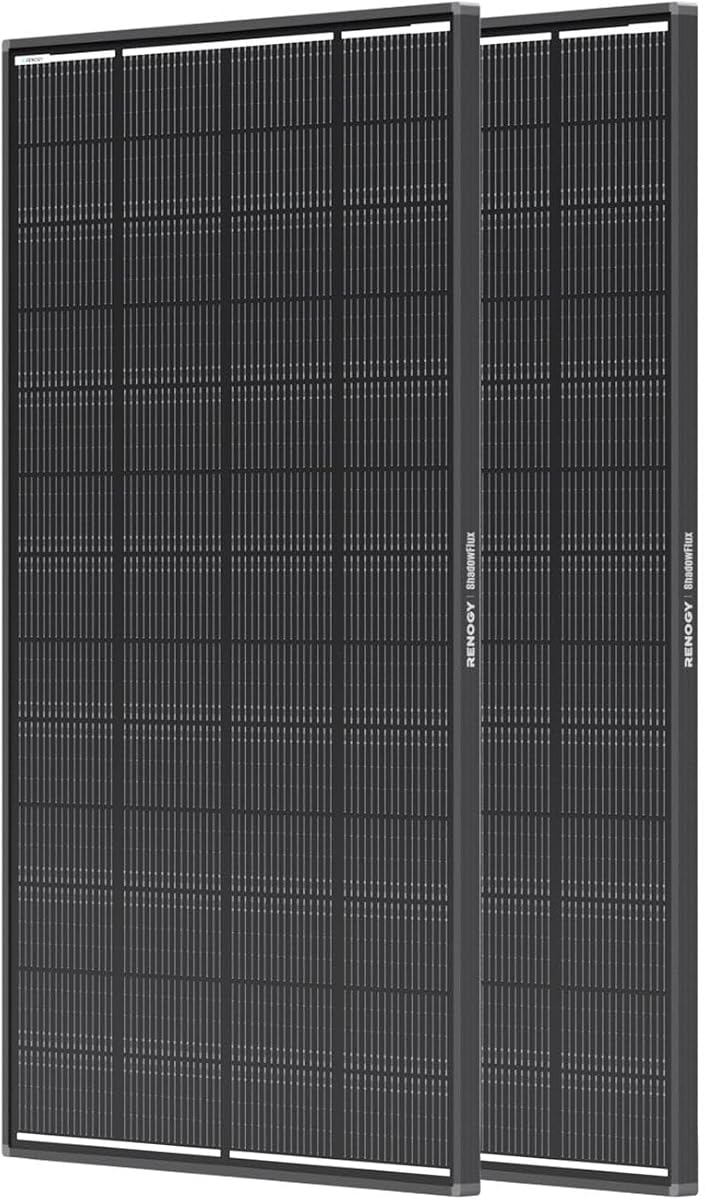
This 200W panel combines high efficiency with ShadowFlux anti-shading tech to keep power flowing even in tricky lighting conditions. It is compact and lighter than traditional rigid panels.
We may earn a commission when you buy through this link, at no additional cost to you.
Renogy guarantees 80% output after 25 years, giving you confidence in your investment. The IP67 rating ensures it can handle rain, hail, and harsh marine environments without issues.
The compact size makes it easy to fit on smaller decks or curved surfaces where space is tight. Its lightweight design reduces stress on your boat's structure.
Ideal for modern boats needing efficient shading resistance. This panel is a great choice for those valuing performance and durability over sheer bulk.
ShadowFlux technology reduces hot-spot risks from partial shading caused by masts or cabin structures.
At 7% smaller than standard panels, it saves valuable roof or deck space while delivering strong 200W output.
We may earn a commission when you buy through this link, at no additional cost to you.
This flexible 200W panel bends up to 240 degrees, fitting unique boat shapes that rigid panels cannot. It uses half-cut PERC technology to boost light capture and efficiency.
We may earn a commission when you buy through this link, at no additional cost to you.
At half the weight of rigid panels, it puts less stress on your boat's structure. The all-black finish reduces glare, keeping the deck sleek and modern looking.
Flexible panels are prone to damage if not mounted securely, so care is needed during installation. They are best for temporary or low-impact setups where rigidity is not required.
Great for sailboats with curved roofs or small cabin tops. This panel offers unmatched flexibility for tricky mounting spots.
The 240-degree bendable design lets you mold it around domes, railings, and rounded cabin roofs without air gaps.
Despite being flexible, it withstands heavy snow loads and wind pressure thanks to durable encapsulation and reinforced edges.
We may earn a commission when you buy through this link, at no additional cost to you.
The 120W ShadowFlux panel brings high efficiency to a smaller package. It is perfect for boats with limited space but needing reliable power for essentials like navigation or lighting.
We may earn a commission when you buy through this link, at no additional cost to you.
Renogy's ShadowFlux technology ensures consistent output even in shaded areas. The 25% efficiency rating means you get more power per square foot than older panel designs.
Its compact design makes it easy to integrate into existing setups without major modifications. While slightly more expensive than basic panels, its tech justifies the cost for serious boaters.
Perfect for small vessels or supplemental power systems. This panel offers a smart balance of size and performance for diverse marine applications.
High-efficiency N-Type cells squeeze extra energy into a smaller frame, ideal for tight boat roofs.
IP67 rating and water vapor resistant encapsulation protect against salt spray and humidity over years of ocean use.
We may earn a commission when you buy through this link, at no additional cost to you.
This 400W panel is a powerhouse for large boats needing significant off-grid power. It combines two 200W modules with ShadowFlux technology to maintain consistent energy even when shaded.
We may earn a commission when you buy through this link, at no additional cost to you.
It delivers 400W in a space-saving design, making it efficient for limited roof real estate. The IP67 rating and advanced encapsulation ensure reliability in rain, snow, and dust.
While expensive, it offers high return on investment for those using heavy onboard electronics. It is designed for long-term reliability with 25-year output guarantees for peace of mind.
Ideal for luxury cruisers and expedition vessels. This panel provides the best balance of high wattage and smart shading protection available.
At 7% smaller than traditional panels, this 400W setup frees up deck space for other gear.
Built to withstand harsh conditions with advanced encapsulation that resists moisture and environmental degradation.
We may earn a commission when you buy through this link, at no additional cost to you.
This 50W kit delivers high efficiency with Ultra-Smart MPPT technology to ensure maximum energy transfer. It is ideal for maintaining batteries on boats that sit idle for long periods.
We may earn a commission when you buy through this link, at no additional cost to you.
The visual indicators let you see charging stages clearly, while the three-stage charging algorithm optimizes battery health. Multiple safety features protect against overcharging and short circuits.
It is slightly bulkier than basic models but offers significant advantages in battery care. The automatic resume feature ensures your battery stays topped up without any manual checks.
Best for boats needing consistent battery maintenance without complex systems. This unit ensures your batteries stay healthy and ready for the next voyage.
Visual indicators show you exactly how much charge is in the battery so you never get caught with a dead system.
The system automatically resumes charging when the battery drops below a set level, keeping it ready without your intervention.
We may earn a commission when you buy through this link, at no additional cost to you.
This small 7.5W charger is perfect for preventing battery drain on small vessels. It offers a simple plug-and-play solution for basic maintenance needs without any complex wiring.
We may earn a commission when you buy through this link, at no additional cost to you.
The LED indicator clearly shows charging status so you know your system is active. Its smart protection system prevents overcharging and short circuits to keep your battery safe.
It is not powerful enough for running appliances but excellent for maintaining starter batteries during off-season storage. Its low cost makes it an easy addition to any boat's maintenance kit.
Great for small boats needing basic battery protection. This unit offers a cost-effective way to ensure your battery never dies when the boat is in dry dock.
Just connect the alligator clips or plug it into the cigarette lighter for instant solar maintenance.
LED lights show you when the panel is getting sunlight and actively charging the battery.
We may earn a commission when you buy through this link, at no additional cost to you.
Selecting the right marine solar panel involves balancing power needs, space, and environmental conditions. This guide helps you understand key factors to ensure a reliable power solution.
Determine your daily energy consumption to choose a panel size that meets your needs. Small 12V batteries need 20-50W for maintenance, while larger systems require 200W or more for daily use. Always size your panel to exceed your expected load to account for cloudy days.
For reliable charging, select a panel with wattage sufficient to cover your daily usage plus a buffer for inefficiency.
Efficiency determines how much sunlight is converted into electricity. Higher efficiency panels like those with N-Type cells produce more power in less space. Look for panels with 25% efficiency or higher to maximize output.
Prioritize high efficiency panels to save space and increase power generation on small decks.
Marine environments are harsh with salt spray, UV exposure, and heavy winds. Look for panels with IP67 or higher ratings and corrosion-resistant aluminum frames to ensure longevity. Tempered glass and strong encapsulation materials protect against hail and physical damage.
Always choose panels with high IP ratings and durable materials to withstand salt and wind.
Masts, rigging, and cabins often cast shadows on boat decks. Panels with anti-shading technologies like ShadowFlux or bypass diodes maintain power even in partial shade. This feature is critical for vessels that operate in complex lighting environments.
Opt for panels with advanced anti-shade tech to avoid significant power drops when shadowed.
Boats have curved or limited surfaces. Consider flexible panels for curved roofs or rigid ones for flat, stable mounting areas. Ensure the panel is compatible with marine-grade mounting hardware to prevent corrosion and loosening.
Match your panel type to your boat's surface and secure it properly with marine hardware.
Solar panels must be paired with appropriate charge controllers to manage battery charging. MPPT controllers are more efficient than PWM, especially for larger systems. Ensure the controller supports your battery type such as AGM or Lithium.
Always use an efficient MPPT controller tailored to your battery chemistry for best results.
Solar panels lose efficiency in high heat. Look for panels with a low temperature coefficient to minimize power loss on hot days. This ensures stable performance during summer months and tropical voyages.
Select panels with low temperature coefficients for consistent performance in hot weather.
Long-term warranties indicate confidence in product durability. Look for 25-year performance guarantees and responsive technical support. This protects your investment and ensures you get help if issues arise.
Choose brands with strong warranties and support to safeguard your marine solar investment.
Clean your panels regularly with fresh water and a soft cloth to remove salt and debris that block sunlight. Avoid harsh chemicals that could damage the glass or seals.
Inspect mounting brackets and cables every month for signs of corrosion or wear. Tighten screws and replace any damaged connectors to maintain safety and performance.
Ensure your charge controller is properly ventilated and protected from direct water spray. Regularly monitor battery levels to confirm your solar setup is charging efficiently.
Flexible panels are ideal for curved surfaces where rigid panels cannot fit. They are lighter but may wear faster than rigid glass models. If space is limited or the surface is curved, they are a valuable investment.
Use panels with bypass diodes or anti-shading tech like ShadowFlux. Position panels in areas least likely to be blocked by masts. Consider smaller panels in multiple locations to avoid large shaded zones.
Yes, but you need a charge controller specifically compatible with lithium chemistry. Ensure your controller supports Lithium modes to prevent damage and ensure safe charging cycles for your bank.
Calculate your daily energy usage in watt-hours and divide by sun hours. For maintenance of small batteries 20-50W is enough. For running appliances, look for 200W or higher depending on your load.
Most high-quality panels last 25 years or more with proper maintenance. Look for warranties that guarantee 80% output after two decades. Saltwater exposure may reduce lifespan slightly if not properly sealed.
Yes, a controller is essential to prevent overcharging and extend battery life. Small trickle chargers may have built-in controllers, but larger systems require separate MPPT or PWM controllers.
Yes, you can wire panels in series to increase voltage or parallel to increase current. Ensure all panels are similar in type and size for balanced performance and avoid mismatched outputs.
Check your setup monthly for loose cables, corrosion, or dirt accumulation. Look for signs of wear on connectors and mounting brackets. Regular inspection ensures your system performs safely and efficiently.
We highlighted ten top-rated marine solar panels ranging from entry-level kits to high-performance systems. Each pick offers unique benefits for power needs and boat types ensuring you find a suitable match.
Focus on efficiency, shade resistance, and durability when making your choice. Ensure your panel matches your battery type and controller for a reliable and safe charging system on the water.
Prices and availability change frequently, so always check the latest offers before purchasing. Investing in the right marine solar panel ensures you stay powered and independent on every voyage.