
YCA1030 Dusk to Dawn Sensor
4.4Editor score
UL listed photocell switch
IP65 weatherproof rating
Standard outlet box fit
This guide compares the top light sensor for home security options including motion detectors and photocells to help you automate lighting and enhance safety
Securing your home starts with smart automation that responds to your presence. A reliable light sensor for home security detects motion or ambient light to trigger alarms or illuminate dark areas instantly. These devices blend seamlessly into your routine while keeping intruders at bay.
We evaluated ten leading models based on detection range, connectivity, battery life, and ease of installation. Our analysis covers wired and wireless options for indoor and outdoor use. Each pick was chosen for its ability to deliver consistent performance in real-world security scenarios.
Every review highlights key strengths, trade-offs, and ideal use cases to guide your decision. Remember that availability and offers may shift over time. Check current listings to confirm compatibility with your existing smart home setup before purchasing.
4.4Editor score

4.5Editor score

4.4Editor score
The following table provides a side-by-side comparison of all ten products. It highlights key specifications to help you quickly identify which sensor matches your specific security and automation needs.


This Zigbee motion sensor combines precise motion detection with integrated lux measurement for intelligent automation. It achieves high marks for reliability and flexibility in local smart home ecosystems like Home Assistant and SmartThings.
We may earn a commission when you buy through this link, at no additional cost to you.
The dual-sensor design allows you to trigger lights only when both motion and low light conditions are met. The adjustable sensitivity levels help reduce false alarms from pets or moving curtains while maintaining strong detection accuracy.
Setup requires a compatible Zigbee hub, which adds a step compared to Wi-Fi options. However, this local connectivity ensures faster response times and eliminates cloud dependency for critical security automations.
Ideal for tech-savvy users seeking granular control over home automation. Its low power consumption and robust mounting options make it a standout choice for secure lighting control.
Local processing allows complex routines without cloud latency or internet dependency.
Lux sensor ensures lights activate only when natural light is insufficient.
We may earn a commission when you buy through this link, at no additional cost to you.
The TP-Link Tapo Motion Sensor delivers reliable performance at a budget-friendly price. It uses a Sub-1G wireless protocol to ensure long battery life and extended range without Wi-Fi interference.
We may earn a commission when you buy through this link, at no additional cost to you.
Smart Actions allow you to automate lights and other devices directly through the hub. The adjustable sensitivity and viewing angle help fine-tune detection to match your specific room layout.
While it requires a separate Tapo Hub, the initial investment pays off in stable connectivity and low maintenance. Battery replacement is infrequent, saving time and effort over the long term.
Perfect for those entering the smart home space without overspending. It offers essential features for effective security monitoring in entryways and hallways.
Sub-1G technology provides better obstacle penetration than standard Wi-Fi.
Seamlessly connects with other Tapo devices for unified control.
We may earn a commission when you buy through this link, at no additional cost to you.
The Akamatis Litos v3 stands out with mmWave radar technology that detects stationary humans, a feature most basic motion sensors miss. It integrates directly with Home Assistant for advanced automation capabilities.
We may earn a commission when you buy through this link, at no additional cost to you.
Its ambient light sensor mimics human eye sensitivity, ensuring precise triggering based on actual lighting conditions. The pre-flashed ESPHome firmware simplifies setup for those familiar with open-source platforms.
The light-permeable front panel ensures accurate readings while maintaining a sleek look. This premium device is ideal for users who want cutting-edge reliability in their home security setup.
Best suited for advanced users prioritizing presence detection over basic motion. It transforms how you manage lighting and security with superior intelligence and precision.
Detects breathing-level movement to avoid false negatives when still.
Built on ESPHome for full control and community support.
We may earn a commission when you buy through this link, at no additional cost to you.
This contact sensor provides critical entry-point monitoring for homes using the Philips Hue ecosystem. It sends instant notifications when doors or windows open, enhancing overall security awareness.
We may earn a commission when you buy through this link, at no additional cost to you.
When armed, it can trigger lights to mimic presence or alert you of intrusions. The compact design blends well with standard fixtures, ensuring discretion while maintaining high visibility for security purposes.
Setup is straightforward via the Hue App, but relies entirely on the Hue Bridge. While limited to this ecosystem, the seamless integration offers robust automation capabilities for users invested in Hue.
Ideal for Hue users wanting comprehensive door and window security. It complements motion sensors by covering entry points that other devices might overlook.
Monitors doors and windows for unauthorized access instantly.
Triggers lights and alarms automatically based on contact status.
We may earn a commission when you buy through this link, at no additional cost to you.
Built for outdoor environments, this sensor combines motion detection with automatic dusk-to-dawn light control. It ensures your property stays lit and secure during nighttime hours without manual intervention.
We may earn a commission when you buy through this link, at no additional cost to you.
The wide detection area covers driveways, porches, and yards effectively. Battery power means no wiring is required, allowing flexible placement anywhere you need enhanced lighting security.
While it demands a Hue Bridge, the integration with major voice assistants adds convenience. You can trigger lights or security alerts via voice commands or automation rules.
Perfect for homeowners wanting a robust outdoor lighting solution. It offers the reliability of Hue with the practicality of motion-activated security.
Designed to withstand rain and dust for outdoor longevity.
Compatible with Alexa, Google, and HomeKit for easy control.
We may earn a commission when you buy through this link, at no additional cost to you.
This photocell sensor provides automatic dusk-to-dawn lighting for outdoor fixtures. It eliminates the need for smart hubs, offering a simple, hard-wired solution for consistent outdoor illumination.
We may earn a commission when you buy through this link, at no additional cost to you.
The built-in time delay prevents triggers from passing headlights, ensuring stable operation. Its IP65 rating protects against rain and dust, making it suitable for various outdoor conditions.
Installation involves a standard through-hole mount, which might require basic electrical knowledge. However, once set up, it operates reliably with zero maintenance or subscription costs.
Ideal for homeowners prioritizing simplicity and direct control over complex automation. It ensures outdoor areas are lit whenever needed without digital dependencies.
Consistently turns lights on and off based on natural light levels.
Fits standard residential outlet boxes for easy retrofitting.
We may earn a commission when you buy through this link, at no additional cost to you.
Offering a two-pack bundle, these photocell sensors provide excellent value for covering multiple outdoor fixtures. They handle various voltage inputs and include surge protection for enhanced durability.
We may earn a commission when you buy through this link, at no additional cost to you.
The swivel mount allows precise adjustment to avoid glare or incorrect triggers. Like other hard-wired options, they operate automatically without needing smart home integration or subscriptions.
Installation requires disconnecting power and mounting via a knockout hole. While the upfront effort is higher than wireless devices, the long-term reliability is unmatched for simple lighting control.
Best for those needing coverage for multiple exterior lights. The bundle reduces per-unit cost while delivering consistent performance across your property.
Two sensors provide complete exterior coverage at an economical price.
Swivel base ensures the sensor faces optimal light exposure.
We may earn a commission when you buy through this link, at no additional cost to you.
The Ring Motion Detector provides straightforward motion alerts using Amazon Sidewalk for connectivity. Its pet-friendly mode reduces false alarms from smaller animals, ensuring reliable notifications.
We may earn a commission when you buy through this link, at no additional cost to you.
Setup is quick and requires no base station, making it accessible for non-technical users. It integrates directly with the Ring app for instant mobile alerts when motion is detected.
While it relies on Amazon's ecosystem, it offers robust coverage for single rooms. The device is compact and discreet, fitting well in most home environments.
Ideal for Ring users looking to expand their security setup. It delivers dependable alerts with minimal installation effort.
Filters out small movements to prevent false alerts from pets.
Uses existing Ring network for seamless communication without a hub.
We may earn a commission when you buy through this link, at no additional cost to you.
Utilizing LoRa technology, this sensor offers exceptional range across large properties. It pairs directly with a YoLink Hub, ensuring reliable communication without relying on crowded Wi-Fi networks.
We may earn a commission when you buy through this link, at no additional cost to you.
The plug-and-play setup with QR code scanning makes adding devices effortless. Notifications are flexible, including SMS, email, or push alerts to keep you informed instantly.
Its magnetic mounting option allows easy placement on metal surfaces. This convenience paired with robust range makes it a strong choice for multi-building security.
Best for large homes or businesses needing wide coverage. It delivers security-grade performance with flexible alert options for peace of mind.
LoRa technology penetrates walls for coverage over 2000 feet.
Receive alerts via SMS, email, or push depending on preference.
We may earn a commission when you buy through this link, at no additional cost to you.
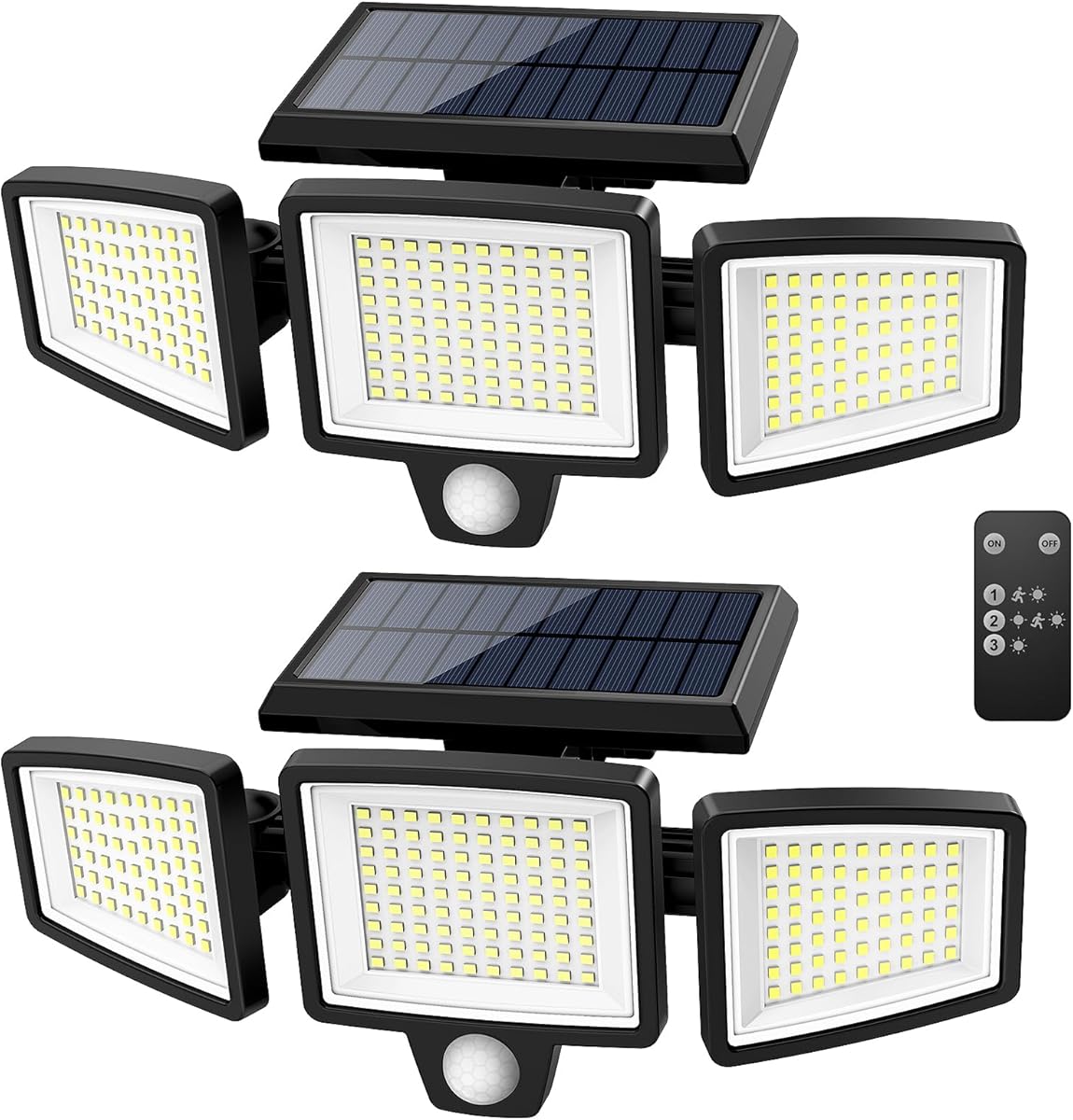
These lights combine illumination with motion detection in one unit. Powered by solar energy, they reduce wiring needs while providing bright security lighting for driveways and yards.
We may earn a commission when you buy through this link, at no additional cost to you.
The adjustable heads allow targeting specific areas, and remote control simplifies mode selection. With a 270-degree coverage, they provide extensive visibility for security monitoring.
While performance depends on sunlight exposure, the built-in battery ensures operation during overcast days. This all-in-one approach saves time and energy for outdoor security.
Perfect for areas where wiring is difficult. It offers a practical, self-sustaining solution for bright, motion-activated outdoor lighting.
Recharges daily to ensure reliable nighttime operation without wires.
2500 lumens output illuminates large areas effectively for security.
We may earn a commission when you buy through this link, at no additional cost to you.
Selecting the right light sensor involves understanding your home layout, connectivity needs, and desired automation features. This guide breaks down the essential factors to consider.
Decide between Wi-Fi, Zigbee, Z-Wave, or proprietary systems. Wi-Fi sensors connect directly to your router but may clog the network. Zigbee and Z-Wave devices require a hub but offer better range and battery efficiency.
Choose Wi-Fi for simplicity or a protocol like Zigbee for scalability.
Battery-powered sensors offer flexible placement but need occasional changes. Hard-wired options provide constant power but require installation effort. Solar units eliminate batteries but depend on sunlight exposure.
Select based on whether you prioritize convenience or maintenance-free operation.
Ensure the sensor covers the intended area effectively. Typical ranges vary from 15 to 30 feet indoors and up to 50 feet for specialized outdoor models. Consider room size and mounting height when choosing.
Match the range to your space to avoid blind spots or excessive triggers.
Built-in light sensors allow automation based on ambient conditions. This feature ensures lights only turn on when it is dark, saving energy. Some models provide lux data for precise control over lighting triggers.
Prioritize sensors with integrated light detection for smarter automation.
Outdoor sensors must withstand rain, dust, and temperature shifts. Look for IP65 or IP44 ratings to ensure durability in various conditions. Indoor models generally do not need this level of protection.
Verify the IP rating matches your installation environment for longevity.
Check if the sensor works with your existing smart home platform like Alexa, Google Home, or Apple HomeKit. Integration ensures seamless automations and centralized control. Incompatible devices may limit functionality.
Ensure cross-platform support to avoid siloed smart home systems.
Different models offer push notifications, SMS, email, or local alarms. Choose a notification style that ensures you never miss a security event. Some systems require subscriptions for advanced alerts.
Select options that fit your preferred method of receiving security updates.
Some sensors require hard-wiring or hubs, while others are plug-and-play. Assess your technical comfort and tools available before buying. Professional installation might be needed for complex setups.
Balance ease of setup against advanced features to suit your skills.
Install the sensor at eye level or slightly higher to maximize detection coverage. Ensure the view of the area is unobstructed by furniture or plants that could block signals.
Regularly clean the sensor lens with a soft cloth to remove dust or pollen. Accumulated grime can affect light readings and reduce motion detection accuracy.
Check battery levels through the app or device indicator to replace them before they fail. For hard-wired units, inspect connections periodically to ensure they remain secure and dry.
Many models like Zigbee or hard-wired sensors operate independently of Wi-Fi networks. They rely on local hubs or direct electrical connections for functionality, reducing reliance on internet stability.
Yes, but check the IP rating for outdoor use. Indoor models may not survive rain or dust. Outdoor sensors are weather-sealed to handle harsh environmental conditions effectively.
Battery-powered sensors usually last 6 to 12 months depending on usage frequency. Some low-power protocols extend this to two years with minimal motion detection events.
Adjust sensitivity settings to filter out minor movements like pets. Mount the sensor away from heat sources or high-traffic areas to improve accuracy.
Basic push notifications are often free. Advanced monitoring or cloud storage may require a paid subscription depending on the manufacturer.
Many sensors integrate with smart bulbs or relays to switch traditional fixtures. Ensure your lighting setup supports the required automation protocols.
Most devices have a reset button or require a specific app sequence. Check the product manual for the exact steps to restore factory settings.
Obstacles like walls or interference from other electronics can reduce range. Installing the sensor in an open, central location helps optimize performance.
We explored ten top light sensors for home security, ranging from budget photocells to advanced mmWave models. Each offers unique benefits for automating lighting and enhancing safety.
Prioritize connectivity and range to match your home's layout. Reliable alerts and weatherproofing are critical for outdoor installations.
Verify compatibility and current pricing before buying. The right sensor transforms how you protect your property with intelligent, automated lighting.