
Low Noise RF Amplifier 0.1-2000MHz 32dB Gain
4.2Editor score
0.1 to 2000MHz coverage
32dB gain output
9 to 12V operation
This guide compares the top Ham Radio Amplifier for Boosting Signal options for 2026, analyzing performance, range, and value to help you choose the right
Ham radio operators often struggle with weak signals over long distances. A quality amplifier boosts your transmission power and improves reception clarity significantly. Selecting the right device depends on your specific operating needs and budget constraints carefully.
We evaluated ten leading amplifiers based on gain, frequency range, build quality, and user feedback. Our analysis covers everything from compact LNAs to powerful linear units. Each product was scrutinized for reliability and performance in real-world scenarios.
Each pick below highlights key specifications and ideal use cases for operators. Prices and availability can change frequently so verify details before purchasing. We aim to provide clear insights to streamline your decision-making process effectively.
4.2Editor score

4.2Editor score

5.0Editor score
The following comparison table provides a side-by-side overview of all ten selected amplifiers. Review the key specifications to identify which unit best matches your specific requirements and operational frequency bands.



The Xiegu GPA100 is a high-performance linear amplifier designed for HF transceivers. It delivers up to 100W of output power with low distortion and high signal purity. This model is ideal for operators seeking reliable boost capabilities.
We may earn a commission when you buy through this link, at no additional cost to you.
Its standout feature includes automatic band tracking that simplifies operations across multiple frequencies. The Bluetooth connectivity allows for wireless control when paired with supported radios like the IC-705. The cooling system ensures stable performance during long sessions.
While the price is higher than basic units the performance justifies the investment for serious operators. The need for a compatible transceiver limits universal use slightly. However the seamless integration with Xiegu units enhances its value.
This amplifier suits ham radio operators needing significant power boosts for long-distance communication. It is best for those who prioritize signal clarity and automation in their station setup. We recommend it for users upgrading QRP systems.
The automatic band tracking feature eliminates manual switching during operation allowing operators to focus on communication. This seamless transition between bands enhances workflow efficiency significantly.
Built-in Bluetooth enables wireless band control removing the need for extra cables. This simplifies the station setup and reduces clutter on the operating desk.
We may earn a commission when you buy through this link, at no additional cost to you.
This low noise RF amplifier offers extensive frequency coverage from 0.1MHz to 2000MHz making it versatile for many applications. It provides a typical gain of 32dB to improve weak signal reception effectively. The unit is compatible with CB radio and ham radio setups.
We may earn a commission when you buy through this link, at no additional cost to you.
It operates on a 9 to 12V DC supply with low current consumption of 27mA. This makes it suitable for portable or battery-powered setups without drawing too much power. The 50 ohm impedance matches standard RF systems perfectly.
The main limitation is its lower maximum output power compared to linear amplifiers. It functions best as a front-end booster for receivers rather than a transmission amplifier. The budget-friendly price makes it accessible for beginners.
This amplifier is recommended for operators needing to boost receive signals for SDR or shortwave listening. It is ideal for DIY projects where cost and simplicity are priorities. We suggest it for field use where portability matters.
The broad frequency range supports various signals from shortwave to FM broadcast bands. This versatility allows one device to serve multiple monitoring needs simultaneously.
With only 27mA consumption the unit can run efficiently on small batteries. This feature is crucial for remote field operations where power sources are limited.
We may earn a commission when you buy through this link, at no additional cost to you.
The RF Wideband LNA Amplifier covers a massive range from 10MHz to 6GHz suitable for diverse RF tasks. It delivers 30dB of gain with a low noise figure to maintain signal clarity. The aluminum alloy case provides durable protection for internal components.
We may earn a commission when you buy through this link, at no additional cost to you.
Power is supplied via a Type C 5V connection drawing under 80mA current. This modern power interface simplifies integration with portable power banks or USB sources. The SMA connectors ensure easy connection to compatible RF cables.
While the cost is higher than basic models the performance across such a wide spectrum is impressive. It requires a stable 5V source which may limit some field setups without USB power. The build quality supports long-term reliability.
This amplifier is perfect for operators monitoring broad spectrum frequencies including SDR and ham radio. It suits setups where signal strength is critical across many bands. We recommend it for advanced users needing premium reception tools.
Covering 10MHz to 6GHz allows monitoring of many signal types from broadcast to digital. This range ensures adaptability to changing listening or monitoring needs.
The Type C power input leverages standard USB charging accessories for convenient operation. This reduces the need for specialized power adapters in the field.
We may earn a commission when you buy through this link, at no additional cost to you.
The AURSINC ZK09-BM offers ultra-broadband coverage from 100kHz to 10GHz to enhance weak signal detection. It features a built-in 300mAh battery for five hours of continuous operation without external power. The miniature metal housing protects against interference.
We may earn a commission when you buy through this link, at no additional cost to you.
Its portability makes it ideal for outdoor antenna tuning and field testing. The kit includes a USB charging cable for convenience during travel. The design supports stable performance in laboratory and field environments alike.
Some users note that care is needed to avoid receiver overload in noisy areas. The battery life while convenient is not sufficient for all-day use without recharging. Performance varies based on the specific receiver setup used.
This amplifier is suited for professionals and hobbyists using TinySA or SDR devices in the field. It provides independence from wall outlets during remote operations. We suggest it for users prioritizing portable testing capabilities.
The integrated battery removes the need for external power banks during field use. This feature allows continuous operation while moving between antenna locations easily.
The miniature metal housing provides solid shielding against electromagnetic interference. This ensures stable performance even in challenging RF environments.
We may earn a commission when you buy through this link, at no additional cost to you.
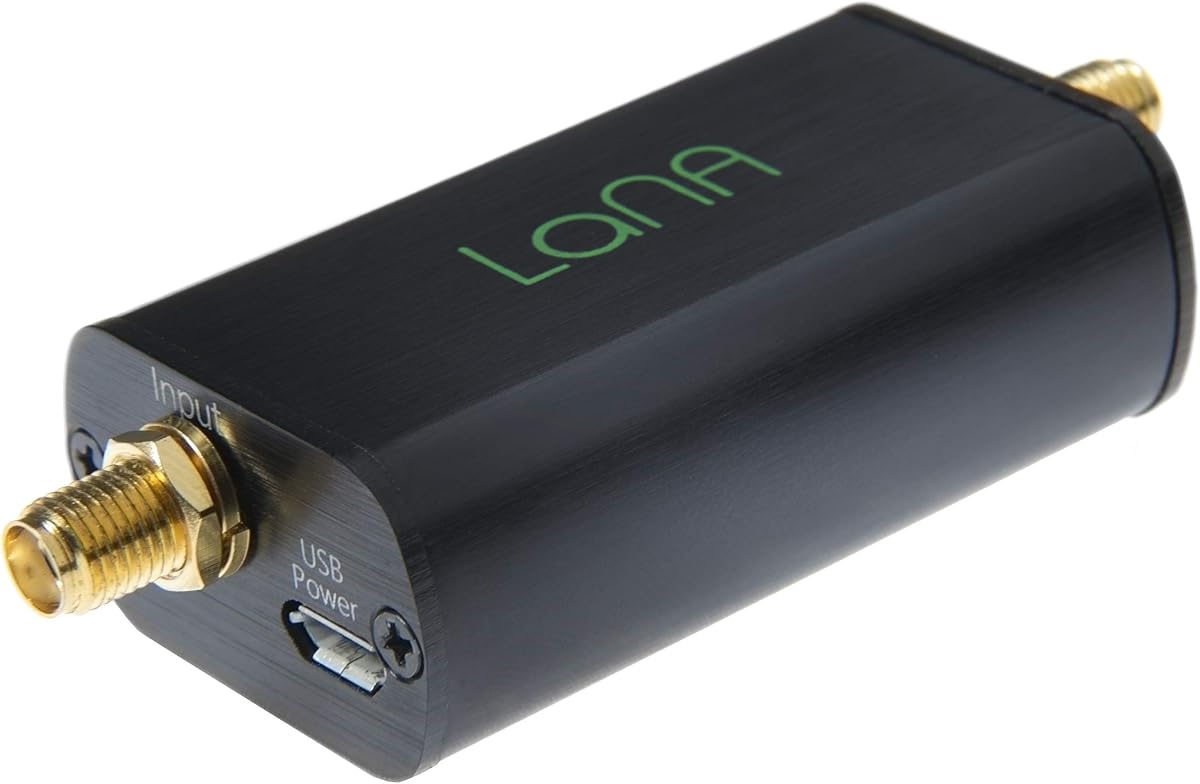
The Nooelec Lana module improves SNR and performance for SDR setups effectively. It operates across a wideband range of 20MHz to 4000MHz with extremely low noise figures. The unit is installed in a quality aluminum enclosure for durability.
We may earn a commission when you buy through this link, at no additional cost to you.
Power can be supplied through bias tee USB or DC adapter offering flexible integration. This flexibility allows users to choose the most convenient method for their specific SDR device. The module features higher gain and linearity compared to similar units.
Some SDRs may require a DC block between the LNA and the device. This adds a slight complexity to installation but ensures stable operation. The accessory kit includes necessary connectors for ease of use.
This module is recommended for SDR users needing reliable receive amplification. It suits setups where power options vary or require bias tee support. We suggest it for enthusiasts prioritizing performance and flexibility.
Support for bias tee USB and DC power allows adaptation to various station needs. This versatility ensures the module fits seamlessly into different operational environments.
The low noise figure significantly enhances reception clarity by reducing background noise. This improvement is essential for weak signal monitoring and analysis tasks.
We may earn a commission when you buy through this link, at no additional cost to you.
The Generic Taurus MK2 is a wideband scanner pre-amplifier designed for frequency monitoring. It covers a range of 25 to 2000MHz to support various scan bands. The unit comes with a BNC patch lead for straightforward connection.
We may earn a commission when you buy through this link, at no additional cost to you.
Gain varies from 6 to 20dB allowing adjustment based on signal strength needs. It can be powered by PP3 batteries or other compatible sources for portability. The design focuses on simplicity and ease of use for operators.
The PP3 battery requirement may limit longevity compared to rechargeable options. The basic build is functional but lacks premium features found in other models. However it serves well for general scanner applications effectively.
This amplifier is suitable for operators using scanners for monitoring and surveillance. It provides reliable signal boosting for standard frequency ranges. We recommend it for users prioritizing simplicity and affordability.
Designed specifically for scanners the unit integrates easily with standard receiver setups. This compatibility ensures immediate performance improvements for monitoring tasks.
The included BNC patch lead simplifies physical connections without extra tools. This reduces setup time and frustration for end users quickly.
We may earn a commission when you buy through this link, at no additional cost to you.
The BJ-300 Plus delivers high-power output with support for AM FM SSB and CW modes. It provides up to 100W FM and 150W SSB to extend communication range. The built-in cooling fan ensures stable operation during extended use.
We may earn a commission when you buy through this link, at no additional cost to you.
Electronic polarity reversal protection safeguards the unit from incorrect power connections. The large red aluminum heat sink aids in efficient heat dissipation. Simple controls and standard connectors make installation straightforward for most users.
User reviews indicate some variability in reliability and performance consistency. The cooling fan can be noisy during quiet operating sessions. These factors should be considered when prioritizing reliability for critical use.
This amplifier is suited for CB and ham radio operators needing high power boosts. It fits applications where output strength is the primary goal. We recommend it for users who can manage potential maintenance needs.
The output power supports long-distance communication by significantly boosting signal strength. This capability is essential for operators covering large geographic areas.
Polarity protection prevents damage from accidental reverse power connections. This safeguard increases operational safety for less experienced operators.
We may earn a commission when you buy through this link, at no additional cost to you.
The AURSINC ZK09‑UM module offers ultra-broadband coverage from 100kHz to 10GHz with 21dB gain. It is powered via USB for convenient operation in various setups. The shielded metal housing protects the electronics effectively.
We may earn a commission when you buy through this link, at no additional cost to you.
This unit serves as an external preamplifier for TinySA‑ULTRA devices effectively improving high-band performance. It has a built-in LDO suppressor to reduce power-supply noise significantly. The low noise floor improvement enhances detection of weak signals.
Excessive input power can cause saturation or permanent damage requiring careful handling. Damp environments may lead to rusting of the metal shell over time. Proper care ensures longevity and consistent performance.
This amplifier is ideal for technical users using TinySA or SDR for spectrum analysis. It suits environments where portable USB power is readily available. We recommend it for precision measurement and testing needs.
The built-in LDO suppressor significantly lowers power-supply noise interference. This reduction improves clarity and signal detection accuracy substantially.
Direct USB power removes the need for separate adapters in field testing. This simplifies portability and setup for technicians on the go.
We may earn a commission when you buy through this link, at no additional cost to you.
The BJ-300 Plus supports multiple modulation modes including AM FM SSB and CW effectively. It delivers up to 150W SSB output to extend communication range significantly. The cooling fan and heat sink protect internal components from overheating.
We may earn a commission when you buy through this link, at no additional cost to you.
Electronic polarity reversal protection and dual fuses provide electrical safety. The simple controls allow easy adjustment of power levels by users. Standard connectors ensure compatibility with most radio equipment setups.
Some users report inconsistency in build quality which impacts long-term reliability. The fan noise can be a distraction during quiet reception periods. These factors may affect suitability for sensitive monitoring tasks.
This amplifier is recommended for operators seeking high power output in standard setups. It works well for general-purpose radio use where durability is expected. We suggest it for users prioritizing output over refinement.
Support for various modulation modes allows versatile use across different communication protocols. This flexibility increases the utility for diverse operating scenarios.
Protection against reverse polarity and overcurrent ensures device and user safety. These safeguards are critical for preventing costly electrical damages.
We may earn a commission when you buy through this link, at no additional cost to you.
The BJ-300 linear amplifier supports HF transceiver applications with up to 150W SSB output. It includes overvoltage protection and HI/LO power selection switches for control. Standard ports allow quick installation with typical radio setups.
We may earn a commission when you buy through this link, at no additional cost to you.
The aluminum heat sink aids in efficient heat dissipation during transmission. LED indicators provide visual feedback for power states. This unit is designed for ease of use by both new and experienced operators.
Lack of user ratings makes it difficult to predict real-world reliability. The basic feature set may limit advanced customization needs. It is suitable for entry-level amplification requirements effectively.
This amplifier is recommended for operators needing a simple and robust boost solution. It works well for HF transceiver setups where standard connectors are used. We suggest it for users prioritizing value and simplicity.
The HI/LO power switches allow operators to adjust output strength as needed. This helps in managing power consumption and signal range effectively.
The aluminum alloy heat sink construction ensures effective thermal management. This protects the internal electronics from excessive heat buildup.
We may earn a commission when you buy through this link, at no additional cost to you.
Selecting the right amplifier requires understanding your specific needs and the technical capabilities of the unit. We explore key factors to consider before making your decision.
The frequency range of an amplifier determines which signals it can boost effectively. Ensure the unit covers your operating bands such as HF VHF or UHF to avoid limitations. Check specifications carefully to confirm compatibility with your radio gear.
Always verify that the amplifier supports the specific frequencies you plan to use.
Gain measures how much the amplifier boosts the input signal in decibels. Higher gain improves weak signal reception but excessive levels can overload receivers. Output power matters more for transmission amplifiers used to extend reach over distances.
Balance gain and output power based on whether you need reception or transmission boosts.
Amplifiers require different power inputs such as DC USB or batteries. Portable units benefit from battery or USB power for field work and remote locations. Stationary units often use fixed adapters to ensure stable performance over time.
Choose a power option that fits your intended environment and mobility needs.
A robust build protects internal components from environmental factors and interference. Metal casings provide better shielding and heat dissipation than plastic alternatives. Look for units with adequate cooling features to prevent overheating during long use.
Invest in quality construction to ensure reliability and safety in operation.
Standard connectors like BNC or PL-259 ensure easy integration with your antennas and radios. Mismatched connectors may require adapters that add complexity and signal loss. Verify the input and output ports match your existing equipment before buying.
Confirm connector types to simplify installation and maintain signal integrity.
Low noise figure amplifiers preserve signal clarity while boosting strength effectively. A low noise figure reduces background hiss which is vital for weak signal monitoring. Prioritize units with documented noise figures for best performance.
Opt for lower noise figures to maintain clean reception quality.
Protection features like overvoltage and polarity reversal guard the device from electrical damage. These features extend the lifespan and safety of the amplifier during use. Units with advanced cooling and safety systems are preferred for reliability.
Ensure the amplifier includes essential safety protections to avoid damage.
Budget varies from affordable entry-level units to premium professional models. Higher price often correlates with better build quality and features for advanced users. Determine your priorities to balance cost with necessary performance levels.
Set a realistic budget that aligns with your operational requirements.
Proper installation is critical for optimal amplifier performance and safety. Connect the unit between your antenna and receiver ensuring correct polarity and impedance. Use quality cables to minimize signal loss and interference during transmission.
Regular maintenance helps prevent overheating and extends the lifespan of your device. Keep the cooling vents clear of dust and debris to allow airflow. Inspect connectors for wear and clean them periodically for good contact.
Protect the amplifier from moisture and extreme temperatures to avoid damage. Store the unit in a dry environment and avoid direct sunlight exposure. Follow manufacturer guidelines for power supply to ensure stable operation.
A Ham Radio Amplifier is a device designed to increase signal strength for radio communications. It boosts weak signals to improve reception clarity and extend transmission range. These units are essential for operators covering long distances or dealing with interference.
Some amplifiers are designed for transmission to increase power output while others focus on reception. Low noise amplifiers typically enhance signal quality for listening without overloading the receiver. Check specifications to ensure the unit meets your specific use case.
Match the amplifier frequency range to your radio operating bands for compatibility. Ensure the power supply requirements fit your available sources such as battery or adapter. Consider your budget and the specific features like gain or protection you need.
Yes a low noise figure is critical for maintaining signal clarity and reducing background noise. This feature is especially important for receiving weak signals in challenging environments. Prioritize units with documented low noise figures for better performance.
Look for protection against overvoltage polarity reversal and overheating to ensure safety. These features prevent electrical damage and extend the lifespan of the device. Built-in cooling fans and heat sinks help manage temperature during extended use.
Yes many amplifiers are designed for portable outdoor use with battery or USB power. Ensure the unit has a robust casing and adequate cooling for field environments. Protect the amplifier from moisture to avoid corrosion and damage over time.
Choosing the right amplifier involves balancing your specific needs with technical capabilities effectively. Our top picks offer reliable solutions for different budgets and operational requirements. Evaluate each model carefully to find the best fit for your station.
Prioritize factors like frequency range gain and build quality when making your decision. Ensure the unit supports your specific radio modes and power supply options. These considerations will help you achieve optimal performance results.
Always verify current prices and availability before purchasing any product. Specifications and deals can change so check retailer details for accuracy. We hope this guide helps you select the right amplifier for your needs.