
Creality Otter Lite Basic
4.5Editor score
0.05mm high precision
Portable plug-and-play design
Full-color texture mapping
This guide compares the top 3D scanners for reverse engineering, evaluating accuracy, speed, and portability to help professionals choose the ideal tool.
Selecting the right 3D scanner for reverse engineering requires balancing precision, speed, and ease of use. Professionals need devices that capture intricate details without compromising workflow efficiency in demanding industrial environments.
We analyzed ten leading models based on technical specifications, software compatibility, and real-world performance. Our comparison highlights key features like laser types, accuracy metrics, and connectivity options to streamline your decision-making process.
Each pick showcases specific strengths for different applications ranging from automotive parts to complex machinery. Please note that pricing and availability may fluctuate, so verify current details before making your final purchase decision.
4.5Editor score

4.8Editor score

4.9Editor score
This table provides a side-by-side overview of the top ten scanners, highlighting core specifications to help you quickly identify the model that best fits your reverse engineering needs.


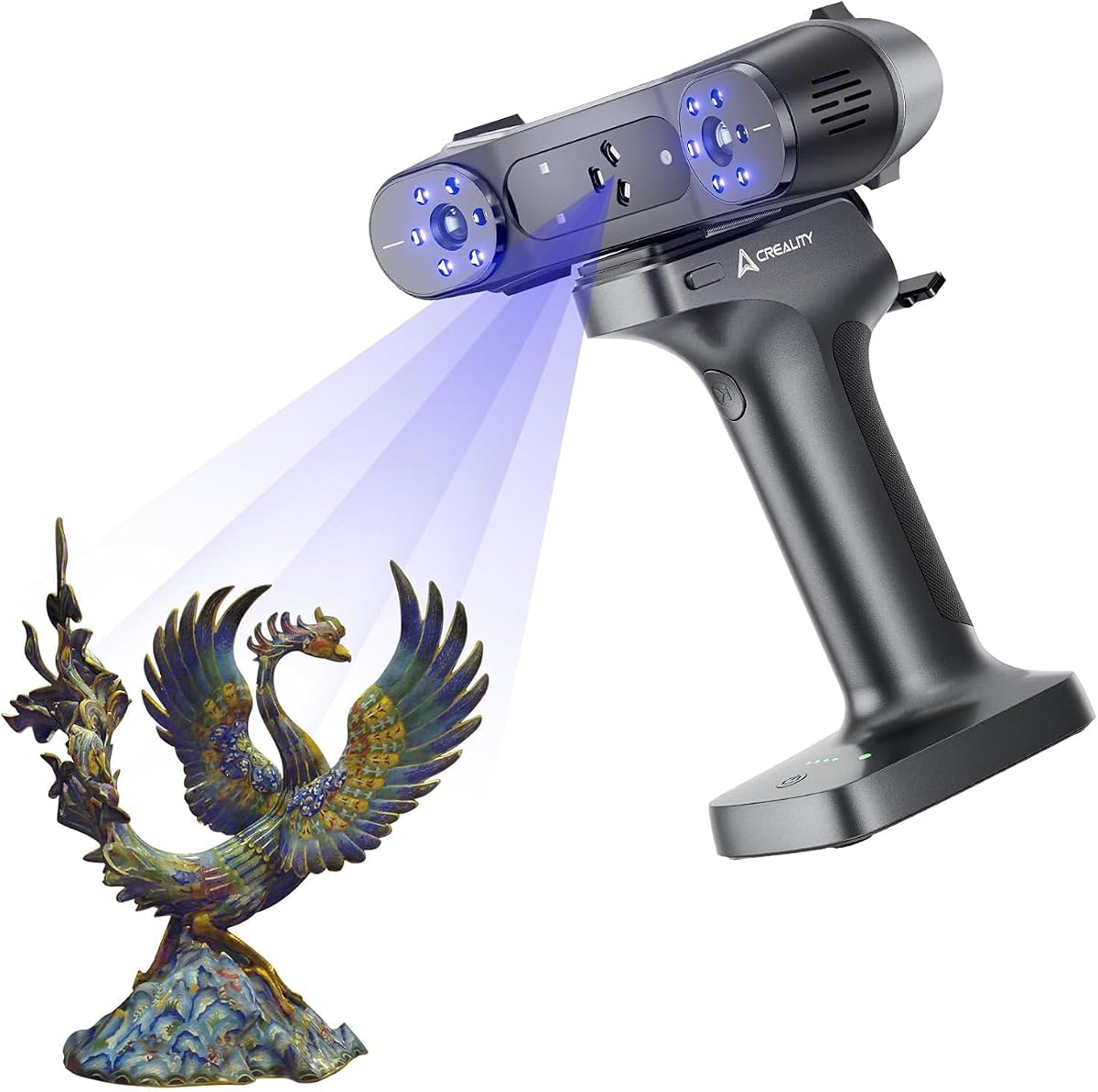

The Revopoint MetroX Pro stands out as a top-tier solution for professionals needing exact measurements. It captures every detail with industrial-grade blue laser scanning that ensures high fidelity in reverse engineering tasks.
We may earn a commission when you buy through this link, at no additional cost to you.
Its single-frame precision of up to 0.01 mm makes it ideal for tight tolerance measurements. The device supports multiple scanning modes including cross-line lasers for shiny surfaces and full-field structured light for marker-free operation.
While the software ecosystem relies on Windows compatibility which might limit Mac users the workflow efficiency gained through real-time PC-to-mobile streaming is significant. This allows operators to monitor scans remotely without holding a laptop.
This scanner is best suited for industrial inspection and precision modeling where accuracy cannot be compromised. The ability to scan dark or reflective surfaces without spray saves time and protects delicate components during the process.
With volumetric accuracy of 0.02 mm + 0.04 mm × L (m) this device meets strict industrial standards for quality control and part verification.
Advanced laser modes allow users to bypass the need for scanning spray on shiny or dark surfaces which simplifies the workflow significantly.
We may earn a commission when you buy through this link, at no additional cost to you.
The MetroY Ultra is designed for users who prioritize speed without sacrificing accuracy. Its ability to capture scans at up to 90 frames per second drastically reduces data acquisition time in busy production environments.
We may earn a commission when you buy through this link, at no additional cost to you.
Industrial-grade accuracy ensures that intricate geometric details are captured flawlessly. The use of blue laser technology allows for scanning complex objects like automotive parts without the need for spray markers.
Portability is enhanced by the included 5500 mAh battery grip which provides about 2.5 hours of stable power. This makes it possible to perform field work in environments without immediate access to power outlets.
This model is ideal for reverse engineering applications where large areas need to be scanned quickly. The wireless freedom via Wi-Fi 6 adds another layer of flexibility for mobile scanning operations.
The 34 laser cross-line mode enables quick large-area scans which boosts productivity without compromising data quality during rapid prototyping phases.
Users can move freely without restrictive cables while monitoring progress in real time on tablets or mobile devices via the Revo Mirror software.
We may earn a commission when you buy through this link, at no additional cost to you.
The EinScan Rigil offers a unique all-in-one experience with Wi-Fi 6 and onboard computing that removes the need for a PC connection. This makes it exceptionally versatile for scanning anywhere without compromising speed or accuracy.
We may earn a commission when you buy through this link, at no additional cost to you.
Its advanced hybrid light source technology combines Blue Laser and IR VCSEL for ultra-precise 0.04mm accuracy. This system captures vibrant textures in high definition making it ideal for automotive and design applications.
Powered by a robust 2.4GHz CPU and 32GB DDR5 RAM the scanner ensures smooth operation and fast processing speeds. The replaceable batteries and sunlight compatibility allow for scanning on-the-go even in challenging lighting conditions.
This device is best for teams needing maximum portability and processing power in a single handheld unit. It includes personal training with every purchase which helps users get the most out of its advanced features.
Enjoy seamless 3D scanning without markers or cables thanks to its triple modes including Standalone and Wireless PC connectivity options.
The 5MP camera captures vibrant textures in high definition ensuring that scans look realistic and are suitable for detailed design work.
We may earn a commission when you buy through this link, at no additional cost to you.
The Creality CR-Scan Raptor Pro is equipped with a unique combination of crossed and parallel blue lasers. This configuration allows it to handle objects ranging from 5mm to 4000mm with remarkable efficiency and detail.
We may earn a commission when you buy through this link, at no additional cost to you.
Its scanning speed reaches up to 660,000 dots per second ensuring accurate capture of details even on complex surfaces. The built-in anti-shock algorithm reduces scanning interruptions for a smoother handheld experience.
True-color rendering is supported by a built-in RGB camera which perfectly restores true colors. Compatible with major 3D design software like Geomagic and SolidWorks it connects seamlessly to professional workflows.
This scanner is perfect for automotive modification and industrial design where adaptability is key. The ability to scan black and metal objects directly without powder spraying simplifies the process significantly.
Support face and body scanning modes which take only two minutes making it suitable for medical applications and rapid prototyping as well.
Blue laser technology ensures no need to spray powder allowing direct scanning of difficult surfaces like high-gloss or metallic components.
We may earn a commission when you buy through this link, at no additional cost to you.
The INSPIRE 2 is built for flexibility with a lightweight design that weighs only 190g. It features dual scanning modules that make it easy to handle different materials and environments efficiently.
We may earn a commission when you buy through this link, at no additional cost to you.
Its accuracy of up to 0.05 mm is suitable for many reverse engineering tasks. A high-precision calibration board boosts point cloud accuracy by ensuring consistent data for 3D printing and modeling.
Outdoor scanning is a standout feature allowing performance in environments with up to 20,000 lux lighting. This ensures reliable results in shaded or semi-bright conditions where other scanners might struggle.
This scanner is best for hobbyists and professionals needing portability without heavy gear. The included outdoor filters and mini turntable provide everything needed for a complete start out of the box.
At only 190g the device offers increased durability and portability due to its aerospace-grade aluminum alloy front panel design.
The adjustable optical zoom allows users to focus the projected light on mixed-geometry surfaces to capture more detail across various sizes.
We may earn a commission when you buy through this link, at no additional cost to you.
The Otter Lite Basic achieves professional-grade accuracy with 0.05mm resolution at an accessible price point. It supports both close-range and long-range scanning modes allowing you to capture fine details on small objects.
We may earn a commission when you buy through this link, at no additional cost to you.
Equipped with RGB and infrared cameras this scanner captures true-to-life color textures at up to 30 fps. Export your 3D models in OBJ STL or PLY formats ideal for 3D printing and animation.
Its lightweight design makes it easy to handle for extended periods without fatigue. The intuitive button controls and multi-color LED indicators guide optimal scanning distance and status for beginners.
This is the ideal choice for DIY enthusiasts and small businesses starting their reverse engineering journey. The comprehensive package includes everything you need to start scanning immediately right out of the box.
Compatible with Windows and macOS via Creality Scan software and includes QR code access to quick-start tutorials for a smooth onboarding experience.
Connect via USB 3.0 or USB 2.0 with optional auxiliary power for added flexibility depending on your available setup.
We may earn a commission when you buy through this link, at no additional cost to you.
The MetroX Pro Standard offers industrial-grade high-precision scanning tailored for everyday professional use. It captures every detail with single-frame precision of up to 0.01 mm for accurate modeling.
We may earn a commission when you buy through this link, at no additional cost to you.
Four scanning modes including cross-line lasers allow efficient capture of flat shiny or dark surfaces. The auto turntable mode automates 3D scanning of complex objects with just one click.
Intelligent software allows scanning editing and merging making your data ready for your workflow. Scan data can be seamlessly transferred to other 3D software for reverse engineering and quality inspection.
This scanner is a solid choice for precision modeling and manufacturing environments where reliability is paramount. It handles all scanning needs across industrial and design applications effectively.
Three tracking modes including feature marker and global marker mode enhance accuracy for complex shapes and flat surfaces respectively.
Capture color-accurate scans for added realism using the HD RGB camera in Auto Turntable mode for better visualization.
We may earn a commission when you buy through this link, at no additional cost to you.
The Creality Raptor Pro achieves measurement-grade accuracy up to 0.02mm with advanced blue laser technology. It is designed to capture intricate details at up to 660,000 points per second efficiently.
We may earn a commission when you buy through this link, at no additional cost to you.
It works flawlessly outdoors where parallel 7-line lasers withstand 50,000 lux and crossed 22-line lasers withstand 100,000 lux. This makes it suitable for any project from automotive to medical applications.
Innovative software like CrealityScan simplifies the entire process with tutorials and one-click model processing. The ability to scan face and body in two minutes highlights its versatility beyond industrial parts.
This scanner is ideal for reverse engineering tasks requiring high precision and flexibility. It protects delicate parts from spray saving prep time and keeping the inspection environment clean.
The CrealityScan app includes advanced editing tools and tutorials that simplify the workflow from initial capture to final model refinement.
Take high-precision scanning anywhere without a lab required thanks to its robust performance in bright sunlight.
We may earn a commission when you buy through this link, at no additional cost to you.
The Raptor X features a wireless handle and lossless data compression algorithm for rapid data transfer. It enables rapid and effortless capture of complete and accurate 3D data from medium to large objects.
We may earn a commission when you buy through this link, at no additional cost to you.
A large capacity 35400mWh battery allows outdoor scanning to be more convenient. Combining blue laser lines with infrared structured light it can scan objects ranging from 5mm to 4000mm.
It utilizes speckle matching 3D imaging for markerless and anti-shake scanning. One-Shot 3D imaging technology ensures natural anti-shake making handheld scanning smoother and faster.
This scanner is best for engineers needing a reliable and portable device for field work. The unique face and body algorithm captures more details in just two minutes for specialized tasks.
Real-time scanning can be seen easily and wirelessly from the phone thanks to its mirroring function over Wi-Fi 6.
No powder spraying is required to scan black or metal objects which helps protect delicate parts from unnecessary handling.
We may earn a commission when you buy through this link, at no additional cost to you.
The Creality Raptor Pro achieves metrology-grade accuracy up to 0.02mm with advanced blue laser technology. It offers scan speeds of 660,000 points/s perfect for industrial inspection and detailed modeling.
We may earn a commission when you buy through this link, at no additional cost to you.
Upgraded dual blue laser modes enable comprehensive coverage for medium and large objects. NIR structured light scanning utilizes speckle matching for marker-free feature-rich workpieces that are scanned quickly.
It scans objects ranging in size from 5mm to 4000mm. The ability to scan engineering parts molds and automobile components effortlessly makes it a versatile tool for professionals.
This scanner is ideal for reverse engineering and artifact scanning where high precision is required. Professional software integration offers multi-project stitching and real-time preview for seamless workflows.
22 cross laser lines provide comprehensive coverage for medium and large objects minimizing the need for multiple passes.
The unique face mapping algorithm captures more details and easily scans hair in just two minutes.
We may earn a commission when you buy through this link, at no additional cost to you.
Choosing the right scanner involves evaluating several key factors to ensure it meets your specific reverse engineering needs and workflow requirements.
Accuracy refers to how close the scan is to the real object while precision refers to the resolution of the scan. For reverse engineering you typically need accuracy below 0.1 mm to ensure functional parts can be replicated.
Look for scanners that specify both single-frame and volumetric accuracy to understand their full range of performance.
Scan speed determines how quickly you can capture data. Faster scanners are ideal for large objects or production environments where time is critical. Frame rates measured in FPS affect how smoothly you can scan.
Choose a speed that matches your workflow demands without compromising data quality or causing interruptions.
Different materials reflect light differently. Some scanners struggle with shiny dark or transparent surfaces unless you apply spray. Modern devices often use blue laser or IR light to handle these surfaces without extra steps.
Ensure the device can scan your target materials without requiring additional prep like marking or coating.
Portability matters if you need to scan large or heavy items that cannot be moved. Handheld scanners with built-in batteries allow for field work. Check the weight and battery life for comfort during long sessions.
A lighter unit with good battery life enhances mobility and reduces user fatigue significantly.
Software plays a crucial role in processing raw data into usable 3D models. Ensure the software supports export formats compatible with your CAD tools like STL OBJ or PLY.
Review software features like editing and alignment tools before buying to confirm they meet your needs.
Connectivity impacts your setup flexibility. Wireless options via Wi-Fi allow more movement but may need strong signals. Wired connections provide stability but limit movement around your workspace.
Consider your workspace constraints and choose connectivity that supports your preferred workflow style.
Regular calibration maintains accuracy over time. Some scanners require manual calibration boards while others have self-checking features. Automated calibration saves time and ensures consistent results.
Select a scanner with easy calibration processes to minimize downtime and maintain precision.
Manufacturer support can help resolve issues quickly. Look for companies offering detailed documentation tutorials or live support channels. Training resources help new users learn faster.
Prioritize brands with reliable support to ensure long-term satisfaction with your purchase.
Before scanning ensure the lens is clean by wiping it gently with a microfiber cloth. Dust or smudges can distort data so keeping optics clean is essential for accuracy.
Follow the manufacturer recommended calibration process before every session. Place the calibration board on a flat surface and run the calibration software to align the internal sensors properly.
After scanning store the device in its protective case and avoid exposure to extreme temperatures. Proper storage protects delicate components and ensures longevity for repeated professional use.
Reverse engineering involves capturing the physical shape of an object to create a digital CAD model. This allows designers to modify existing parts or produce new ones with compatible specifications using 3D scanning technology.
Advanced scanners using blue laser or IR light can often scan dark or shiny surfaces without spray. However some older models may still require matte powder to improve contrast and capture quality effectively.
Scan times vary based on object size and detail level. Small parts may take minutes while large vehicles can require hours. Speed modes help reduce time without significant loss in resolution.
Many modern handheld scanners are designed for outdoor use with features like high light tolerance. Check specs for lux ratings to ensure reliable performance in sunlight without interference from ambient light.
Most scanners export to formats like STL OBJ PLY or ASC. These files can be imported into major CAD software including SolidWorks Rhinoceros and Autodesk Fusion 360 for modeling workflows.
Some premium models include online training or onboarding sessions. However basic tutorials are often available via official support sites. Review product packages to confirm if training is provided.
We have reviewed ten leading scanners each offering unique benefits from budget-friendly options to premium standalone units. The Revopoint MetroX Pro and EinScan Rigil stand out for their precision and wireless capabilities.
Prioritize accuracy and surface compatibility based on your specific project requirements. Consider the software ecosystem and connectivity options to ensure the tool fits smoothly into your existing workflow without unnecessary friction.
Prices and availability for these high-tech devices can change quickly due to market demand. Always verify current listings and specifications before purchasing to get the best value for your investment.