
SUNLU S1 Plus Filament Dryer
4.7Editor score
Compact and affordable design
Quiet operation under 10db
Supports multiple filament types
Discover the top 3D Printer Filament Dryer Box models for 2026. We compare features, capacity, and drying efficiency to help you choose the right storage
Moisture is the silent enemy of high quality 3D printing, causing stringing, clogging, and poor layer adhesion. A reliable filament dryer box ensures your materials remain dry and consistent, leading to smoother surfaces and fewer failed prints. Choosing the right unit involves considering capacity, heating speed, and sealing technology to match your specific printing needs effectively.
We evaluated ten leading filament dryer boxes based on heating efficiency, storage capacity, ease of use, and overall build quality. Our analysis focused on real-world performance metrics such as temperature stability, humidity monitoring accuracy, and the ability to handle various filament types. Each product offers unique features designed to protect your investment and streamline your workflow during active printing sessions.
Every pick in this guide highlights key strengths, potential limitations, and ideal use cases to help you make an informed decision. You will find options ranging from compact single spool units to large multi-spool systems suitable for professional environments. Please note that prices and availability can change frequently, so checking the latest listings is always recommended before purchasing.
4.7Editor score

4.7Editor score

4.6Editor score
This table provides a side by side comparison of all ten filament dryer boxes reviewed in this guide. Use these specs to quickly identify capacity, heating technology, and compatibility features that matter most for your printing setup and material requirements.
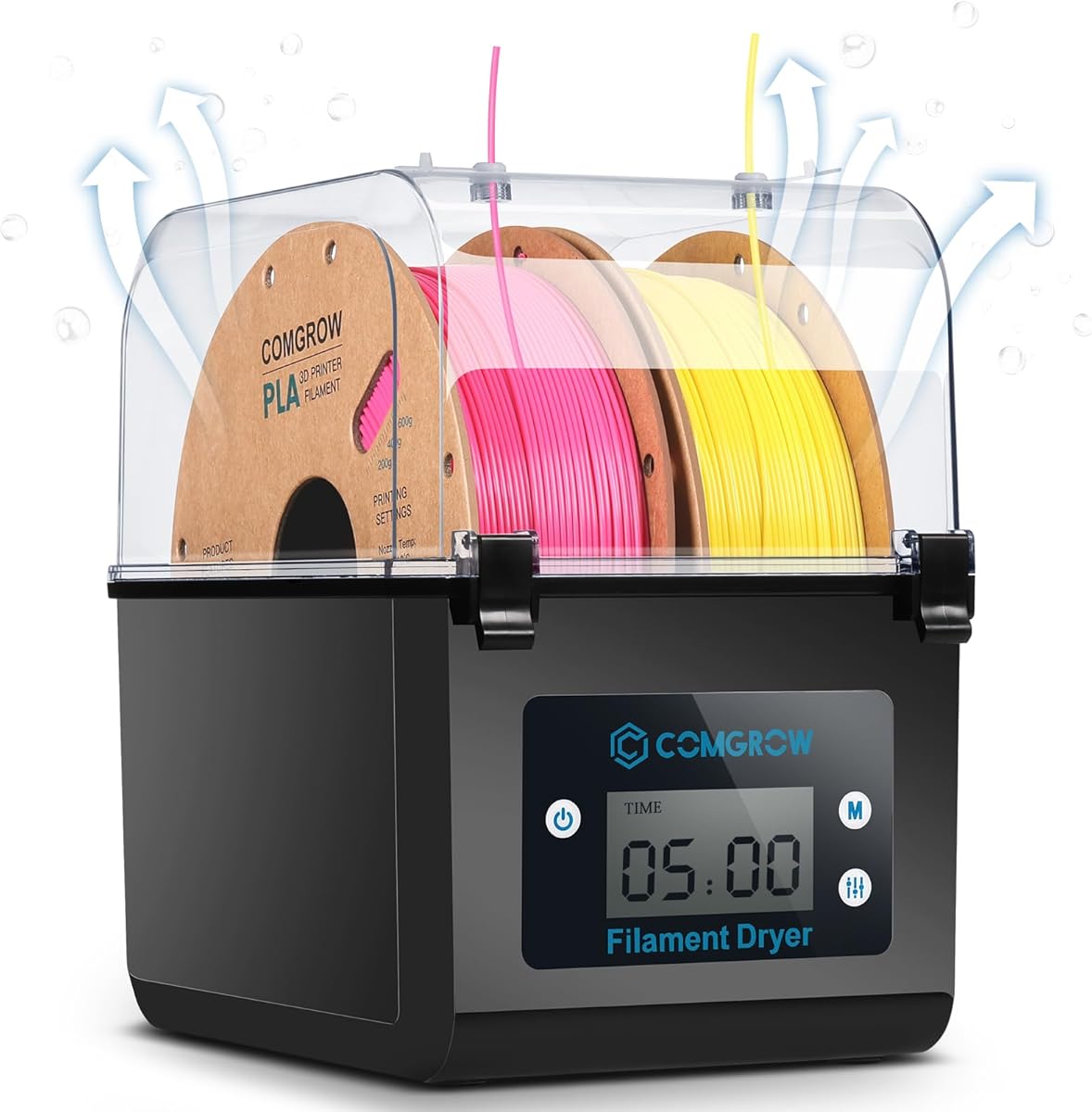


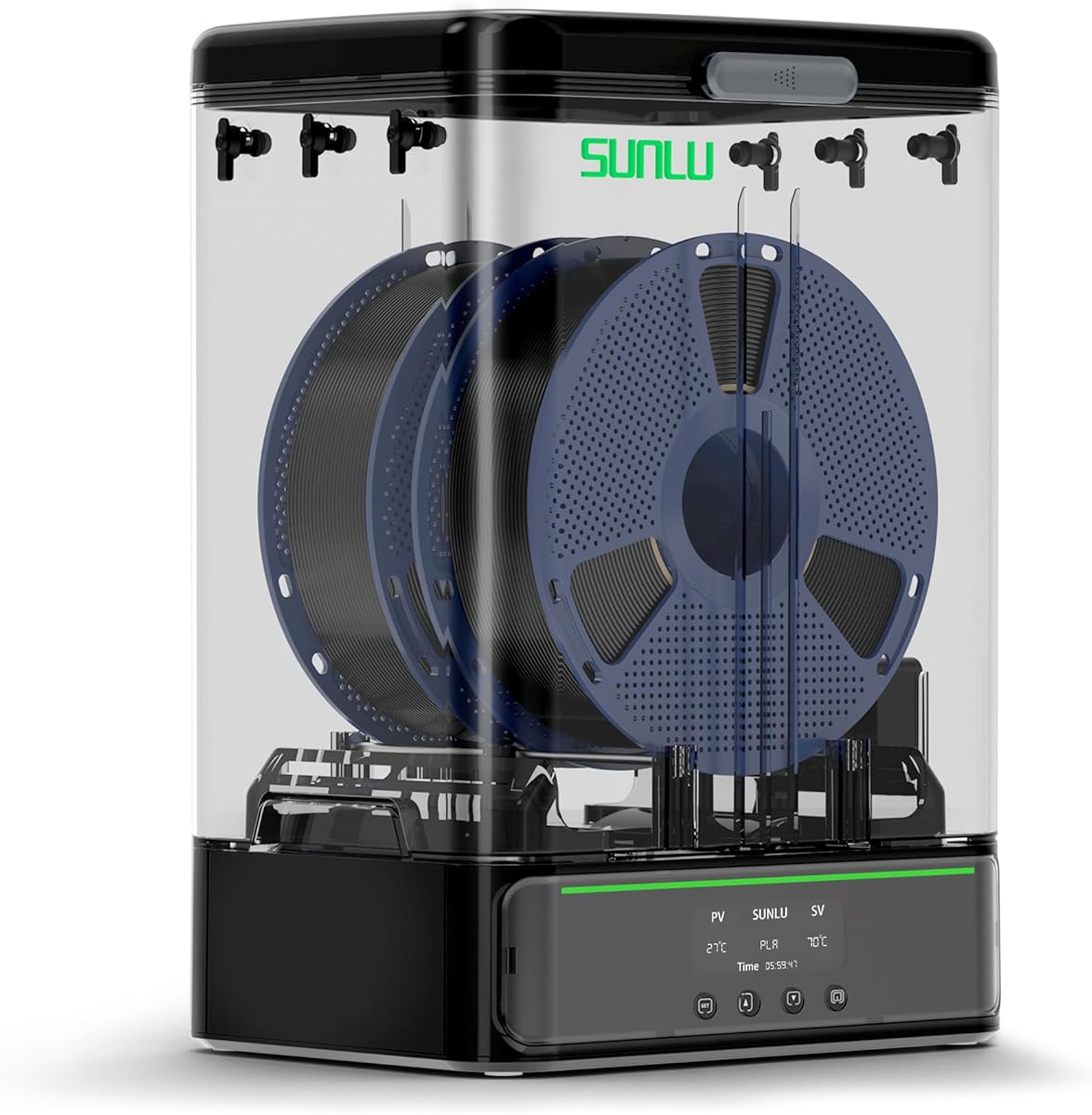

The Comgrow 3D Printer Filament Dryer Box is a solid entry level option for hobbyists needing basic moisture protection. It holds two standard 1kg spools and features a simple LCD screen for monitoring temperature and humidity. While not the fastest on the market, it provides reliable sealing and consistent drying for common materials like PLA and ABS. Its compact footprint makes it ideal for smaller workspaces where space is at a premium.
We may earn a commission when you buy through this link, at no additional cost to you.
Key strengths include its straightforward interface and effective sealing mechanism that prevents moisture reabsorption during storage. The outlet structure uses silicone sheaths and Teflon tubes to ensure smooth filament feeding without tangling. Temperature settings are adjustable between 40 and 50 degrees Celsius, which covers most standard filaments adequately. The touch buttons make operation intuitive even for users new to filament management systems.
However, the unit is limited to two spools and lacks the high heat capacity needed for engineering materials like nylon or polycarbonate. The maximum temperature of 50 degrees Celsius may require longer drying times compared to premium models with higher wattage heaters. Additionally, the motherboard auto shuts down after three minutes if the work state is not properly displayed, which could interrupt long drying cycles.
This dryer box is best suited for casual makers who primarily print with PLA and need a cost effective storage solution. It balances functionality with affordability, offering essential features without unnecessary complexity. For those printing occasionally or with limited desk space, it provides reliable protection against humidity while maintaining a tidy printing environment.
The outlet design prevents moisture ingress during printing, ensuring consistent filament quality throughout long print jobs.
Touch buttons and an LCD screen make temperature and timer adjustments quick and easy without complex menus.
We may earn a commission when you buy through this link, at no additional cost to you.
The Creality Space Pi X4 Filament Dryer Box stands out for its dual chamber design, which significantly accelerates drying times compared to single chamber units. It accommodates four standard 1kg spools or two larger 2kg spools, making it ideal for users with extensive filament libraries. The ability to reach up to 85 degrees Celsius opens up drying for high performance materials like ABS and polycarbonate that require higher heat. An illuminated window allows you to monitor spools without breaking the humidity seal during pauses.
We may earn a commission when you buy through this link, at no additional cost to you.
Key strengths lie in its industry first touch UI and dual independent heating zones that ensure even moisture removal across all stored filaments. The precise temperature control allows customization between 50 and 85 degrees Celsius depending on material needs. This flexibility ensures that sensitive filaments like PLA do not overheat while tougher materials receive the intense heat they require. The silicone sealed enclosure maintains dry conditions 24/7 even when not actively drying.
The higher price point and larger footprint may be a consideration for casual users with limited budgets or workspace. Additionally, managing two independent chambers requires careful setup to ensure both are utilized efficiently. The complexity of the interface might also be slightly overkill for those who only need basic drying functions occasionally. However, for serious enthusiasts, the speed and capacity justify the investment in most cases.
This unit is perfect for makers who print daily and need to maintain a constant supply of dry, ready to use filament. It eliminates bottlenecks in production by drying spools in hours rather than days. If you work with a variety of materials including high temp engineering plastics, this dryer offers the versatility and performance needed to support advanced 3D printing workflows consistently.
Independent heating zones remove moisture 30 percent faster than single chamber alternatives for quicker turnaround times.
Touch UI enables custom temperature settings tailored to specific filament types for optimal drying without damage.
We may earn a commission when you buy through this link, at no additional cost to you.
The SUNLU S1 Plus Filament Dryer is an exceptional budget friendly choice that delivers essential drying performance without breaking the bank. It features a compact design that accommodates most standard spool dimensions, making it versatile for various filament types. The ultra quiet operation under 10 decibels ensures it does not disturb your work or sleep environment. A clear LCD screen provides real time feedback on temperature and drying time, simplifying the user experience.
We may earn a commission when you buy through this link, at no additional cost to you.
Its main strengths are its affordability and ease of use, appealing to beginners and hobbyists alike. The rollers inside the box facilitate smooth feeding while drying, preventing tangling issues common with cheaper dryers. Temperature settings are adjustable between 35 and 55 degrees Celsius, covering the needs of most common filaments like PLA PETG, and TPU. The default six hour drying cycle is sufficient for most situations, with the option to extend up to 99 hours.
The primary limitation is its single spool capacity, which means you must dry filaments sequentially if you have multiple types in use. It also lacks the higher heat capabilities needed for engineering plastics like nylon or polycarbonate. Additionally, the plastic build feels light compared to more premium options, though it remains durable for normal household use. These trade-offs are acceptable given the low entry price and reliable core functionality.
This dryer is ideal for beginners or those with limited space who need a reliable way to prevent moisture issues. It removes the guesswork from filament storage, ensuring consistent prints without investing in expensive equipment. If you primarily print with standard materials and want a hassle free solution that is quick to set up, the S1 Plus offers outstanding value and performance for the price.
Less than 10 decibels ensures the unit runs silently, making it perfect for bedroom or office environments.
Internal rollers ensure smooth filament feeding during drying to prevent tangles and jamming.
We may earn a commission when you buy through this link, at no additional cost to you.
The Creality Space Pi SE is a cost effective upgrade that focuses on rapid heating and even temperature distribution. Its built-in fan circulates hot air throughout the chamber, ensuring every part of the filament dries uniformly. The interface is simple yet effective, combining a display screen with a knob for easy adjustments. This model requires no assembly and works right out of the box, making it convenient for immediate use.
We may earn a commission when you buy through this link, at no additional cost to you.
Key strengths include its quick heating time, reaching 65 degrees Celsius within 15 minutes. The real-time humidity monitoring helps you track drying conditions accurately. You can set drying times from zero to 24 hours, offering flexibility for different materials. The design accommodates most 1kg spools and supports a wide range of diameters and materials, from PLA to nylon.
The knob interface might feel less modern compared to touch screens found on other models. It is also limited to single spool storage, which restricts capacity for larger collections. However, the performance per dollar is excellent, offering efficient drying without unnecessary features. This makes it a strong contender for those who prioritize efficiency and ease of use over advanced functionality.
This dryer is well suited for general users who want reliable performance without complexity. It handles common materials with ease and ensures consistent prints by eliminating moisture issues. If you need a straightforward, fast drying solution that integrates easily into your workflow, the Space Pi SE is a practical choice.
Fan circulation and PTC heating achieve uniform drying quickly, saving time before printing starts.
Knob and screen make adjustments intuitive without complex menus or programming.
We may earn a commission when you buy through this link, at no additional cost to you.
The Creality Space PI Filament Dryer offers a balance of speed and convenience with its one key presets for 12 filament types. The 360 degree hot air heating ensures even drying, while the 48 hour timer supports extended cycles for stubborn materials. It also features power-off memory, saving your settings during unexpected outages. The 3.7 inch touch screen makes control intuitive, with options to switch between Celsius and Fahrenheit.
We may earn a commission when you buy through this link, at no additional cost to you.
Its key strengths lie in its adaptability to various materials, including composites like PA CF and ASA. The PTC heater provides efficient, eco-friendly warming without uneven spots. This unit is robust enough for daily use, delivering reliable results for both beginners and experienced users. The touch interface adds a premium feel without a steep learning curve.
While the single spool capacity is limiting for heavy users, the flexibility and ease of use compensate well. The power-off memory depends on a stable power source to function correctly, which could be a minor risk in some areas. Overall, this dryer provides excellent value with features typically found in higher-end models.
This is an ideal choice for users who need a single dryer that handles diverse materials with minimal fuss. It simplifies the drying process with smart presets and ensures consistent results. If you print a variety of filaments and want a user-friendly, reliable dryer, the Space PI delivers outstanding performance.
One key settings for multiple filament types remove guesswork and optimize drying automatically.
360 degree hot air circulation ensures no part of the filament remains damp.
We may earn a commission when you buy through this link, at no additional cost to you.
The SUNLU S1 Plus in black is a compact dryer with an upgraded fan design that accelerates moisture removal. The 2 inch LCD screen clearly displays temperature, time, and humidity, making monitoring straightforward. It accommodates various filament diameters, including 3.00mm, and supports common materials like PLA and TPU. The visual feedback helps you track progress easily without opening the box and compromising the seal.
We may earn a commission when you buy through this link, at no additional cost to you.
Its main strengths are its affordability and ease of use, perfect for casual users. The fan design addresses a common issue in standard dryers where heat does not circulate well. Adjustable settings allow customization for different filaments, ensuring optimal results. The compact design fits well in most workspaces without taking up much room.
The temperature limit of 55 degrees Celsius is insufficient for high-performance materials, restricting versatility. Single spool capacity means you must dry multiple spools sequentially. However, for standard PLA and PETG users, this limitation is rarely an issue. The unit remains a reliable choice for basic drying needs at a competitive price.
This dryer is recommended for beginners or those with standard printing needs who want an effective solution. It simplifies filament storage and ensures prints are not compromised by moisture. If you need a straightforward, budget-friendly option that works well for common materials, the S1 Plus Black offers solid performance.
Upgraded fan design increases airflow to speed up drying cycles significantly.
Large LCD screen displays real-time data for easy tracking of drying conditions.
We may earn a commission when you buy through this link, at no additional cost to you.
The Polymaker Polydryer differs from others by focusing on passive storage, requiring no electricity. Its airtight seal combined with a hygrometer lets you monitor humidity levels without power. This makes it ideal for long-term storage where active drying is not necessary. It is designed to keep moisture-sensitive materials like nylon in a better printing state between uses.
We may earn a commission when you buy through this link, at no additional cost to you.
Key strengths include its simplicity and effectiveness for static storage. The desiccant support locks out moisture, ensuring consistent results over time. The hygrometer reading helps you judge when to replace desiccants, maintaining optimal conditions. It is compact and fits well in any workspace without needing an outlet.
Without active heating, it is not suitable for drying wet filaments quickly. You must rely on desiccants, which need periodic replacement. However, for maintaining dry storage conditions, it excels in simplicity. This makes it a perfect companion for active dryers, ensuring filaments stay dry once processed.
This storage box is best for users who need a reliable way to keep spools dry during idle periods. It prevents moisture absorption and ensures consistency over time. If you want a passive, hassle-free solution for filament storage, the Polydryer is an excellent choice.
Sealed design with hygrometer maintains stable humidity without electricity.
Integrated support for desiccant packets enhances moisture protection during long storage.
We may earn a commission when you buy through this link, at no additional cost to you.
The SUNLU SP2 is designed for users with larger spool needs, accommodating up to 3kg weights comfortably. Its detachable base allows it to function as both a dryer and storage box, increasing versatility. The 250W PTC heater reaches 70 degrees in just 15 minutes, ensuring fast preparation. The unit operates quietly and includes rollers to support different spool sizes effectively.
We may earn a commission when you buy through this link, at no additional cost to you.
Its strengths include robust construction and the ability to handle larger filament rolls without issues. The sealing system ensures moisture is kept out even when not in use. The HD LCD screen is clear, showing temperature, time, and humidity. This makes monitoring simple during long drying sessions.
The larger size might be an issue for users with limited desk space. It is also more expensive than single spool models, but the capacity justifies the cost for heavy users. The detachable design adds convenience for long-term storage needs after drying is complete.
This dryer is ideal for professionals or makers who use bulk filament and need reliability. It handles large spools well and ensures consistent drying without frequent refills. If you prioritize capacity and durability, the SP2 delivers outstanding value and performance for your 3D printing workflow.
Rollers and spacious design accommodate up to 3kg spools without tangling or stress.
Base separates from heater for easy storage once drying is complete.
We may earn a commission when you buy through this link, at no additional cost to you.
The Sovol SH02 stands out for its ability to dry two spools simultaneously, doubling efficiency. The 150W PTC heater reaches 70 degrees in 25 minutes and supports nine preset filament types. It uses thicker sealing materials to protect against moisture even when powered off. Safety features include auto cutoff if temperature exceeds limits, ensuring reliability and peace of mind.
We may earn a commission when you buy through this link, at no additional cost to you.
Its strengths include the dual spool design, which saves time for users with multiple printers. The sealing improvements over previous models ensure better long-term protection. One key settings simplify operation, making it accessible for all users. The 360-degree circulation ensures even drying for both spools.
The interface is basic compared to modern touchscreens, but functional for core needs. Desiccants are not included, which may be an oversight. However, the capacity and heating speed are strong points that justify these minor issues. It is a practical solution for moderate volume printing.
This dryer is well suited for users who need efficient dual spool drying without high cost. It provides strong protection and quick results. If you print with two materials often, the SH02 offers a balanced mix of performance and value.
Dual slots allow simultaneous drying of two spools, reducing waiting time.
Auto protection cuts heating if temperature exceeds safe limits to prevent damage.
We may earn a commission when you buy through this link, at no additional cost to you.
The SUNLU S4 brings advanced automation to filament drying with its auto humidity control mode. It holds four 1kg spools, supporting multi-color or multi-machine printing. The 350W heater provides 50 percent faster heating, and triple fans ensure uniform temperature within three degrees. Safety features include triple layers, protecting against unexpected temperature changes.
We may earn a commission when you buy through this link, at no additional cost to you.
Its strengths include robust capacity and smart automation that reduces manual intervention. The auto humidity mode starts drying when needed and stops when humidity is low, preventing waste. It connects to up to four printers simultaneously, offering unmatched versatility. The triple security system ensures safe operation during long cycles.
The complexity of settings may be overwhelming for casual users. The unit requires significant desk space and electrical outlets for its advanced features. However, for professional users, these are acceptable trade-offs for the efficiency. It delivers premium performance that supports high-demand environments.
This dryer is ideal for professional makers or studios needing reliable automation. It handles multiple spools and printers seamlessly. If you prioritize capacity and smart features, the S4 sets a new standard for filament management.
System starts and stops based on humidity levels to optimize drying automatically.
Can connect to four printers simultaneously for efficient multi-material workflows.
We may earn a commission when you buy through this link, at no additional cost to you.
Selecting the right filament dryer box depends on your printing volume, material types, and workspace constraints.
PTC heaters offer faster, more efficient heating than standard pads. Look for models with fans for 360-degree circulation to ensure uniform drying and prevent hot spots.
Prioritize units with higher wattage if you need quick turnaround times.
Single spool boxes are compact and affordable, while dual or quad spool models support high volume workflows. Consider how many filament types you frequently use at once.
Larger capacity units save time but require more space and power.
Most common filaments like PLA require up to 50 degrees Celsius, but engineering materials like ABS need higher heat. Ensure the dryer supports your required temperature range.
Check max temp specifications to avoid overheating sensitive materials.
Effective sealing prevents moisture reabsorption during storage and printing. Silicone gaskets and Teflon tubes at outlets ensure a tight seal while allowing filament feeding.
Strong seals reduce waste and improve print consistency over time.
Touchscreens offer precision, while knobs and buttons provide simplicity. One-key presets for filament types streamline operation and reduce manual configuration.
Choose an interface that matches your comfort level with technology.
Overheat protection and auto shutoff prevent damage to filament and the unit. Safety is critical when running dryers for extended periods.
Look for units with reliable thermal protection mechanisms.
Fans for air circulation can add noise. Models with quiet operation are better for shared spaces or overnight drying.
Decibel ratings are rarely specified but user reviews provide insight.
Prices vary widely based on features. Determine which capabilities you need versus those you can skip to stay within budget.
Investing in reliability can save money long term by protecting expensive filament.
First, set the correct temperature based on your filament type. PLA typically needs 45-50 degrees Celsius while ABS may require up to 70 degrees Celsius. Always check manufacturer guidelines to avoid damaging your material.
Second, place the filament spool securely inside ensuring it rotates freely on the rollers. Feed the end through the outlet tube and seal the hole tightly to prevent moisture ingress during drying.
Third, monitor drying times typically 4 to 6 hours for most materials. After drying, store filaments in vacuum bags or airtight containers to maintain dryness until ready to print.
Drying frequency depends on ambient humidity and usage. If you live in a humid climate or notice stringing during prints, dry spools before every use. For dry environments, weekly or as needed is sufficient.
It is best to dry one material type at a time to ensure correct temperature settings. Mixing types may lead to under-drying for high heat materials or overheating for sensitive ones.
Damp filament causes bubbling, poor layer adhesion, and frequent clogs. Moisture expands when heated, disrupting extrusion and surface finish. Using a dryer ensures consistent quality.
Yes for active users who print frequently or with hygroscopic materials. The investment pays for itself by reducing wasted prints and improving reliability of every print job.
Desiccants are helpful for long-term storage after drying. Dryers actively remove moisture, but keeping spools in sealed containers with desiccant maintains dryness between print jobs.
Only if temperature settings are too high or left running too long. Always follow recommended temp ranges and avoid extended exposure to excessive heat to preserve filament properties.
Most PLA works well at 45-50 degrees Celsius while PETG requires 50-60. ABS and nylon benefit from higher temps up to 70 degrees. Always start low and test.
Passive storage like airtight boxes helps maintain dryness but cannot remove existing moisture. Active drying is necessary for wet spools before printing or long-term storage.
Choosing a filament dryer box significantly improves print quality by eliminating moisture issues. Our top picks offer a range of options from budget-friendly units to premium multi-spool systems. The SUNLU S4 and Creality Space Pi X4 excel for high volume users while the SUNLU S1 Plus is perfect for beginners.
Prioritize heating speed, capacity, and sealing quality based on your specific workflow needs. Active drying is essential for consistent prints, and proper storage maintains filament integrity over time. Match the dryer to the materials you use most often to maximize value and performance.
Remember to check current prices and availability before making a final purchase. Technology and pricing in this category can evolve quickly, so staying updated ensures you get the best deal possible for your setup.