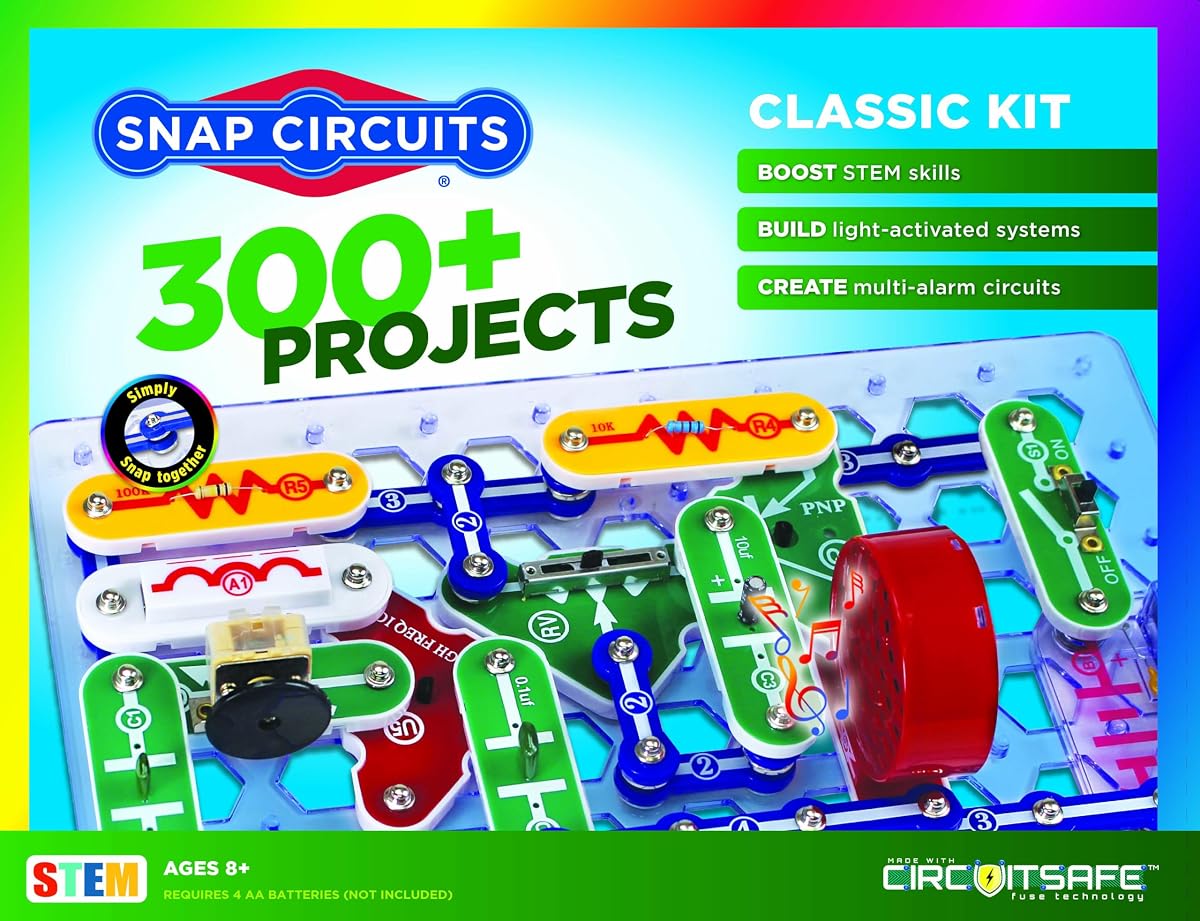
SNAP CIRCUITS Classic SC-300 STEM Electronics Kit
4.8Editor score
300 plus projects
No tools required
Safe for ages 8 plus
This guide compares the top electronics kits for teens including Arduino starters, soldering projects, and robotics sets to help you find the perfect STEM
Finding the right electronics kit for teens can transform a casual interest into a serious hobby. These kits provide hands-on experience with circuits, coding, and engineering principles. They are designed to be engaging while teaching valuable technical skills.
We compared ten top-rated kits based on project variety, component quality, and learning resources. Each option offers unique strengths for different skill levels and interests. Our analysis focuses on safety, educational value, and long-term engagement potential.
Each pick highlights specific features that make it stand out for teenage learners. Prices and availability change frequently so check current listings before purchasing. We aim to provide clear guidance to help you choose the best fit for your needs.
4.8Editor score

4.7Editor score

4.5Editor score
The following table provides a side-by-side comparison of all ten selected electronics kits. It highlights key specifications and features to help you quickly identify which kit aligns best with your learning goals and technical requirements.


This kit stands out as the most comprehensive option for teens interested in deep electronics learning. With a 4.7 rating it offers exceptional value through its sheer volume of components and structured lessons. It provides a robust foundation for both coding and hardware assembly.
We may earn a commission when you buy through this link, at no additional cost to you.
The MEGA 2560 R3 board delivers significantly more I/O pins and memory than standard boards. This allows teens to connect numerous sensors and displays simultaneously without running out of resources. The included tutorials guide users from simple LED blinks to complex interactive systems involving RFID and motor control.
While the board size is larger and might seem daunting at first the organization of the kit mitigates this. Components are neatly stored and labeled making it easy to find parts between projects. The only trade-off is that absolute beginners might find the scope overwhelming but the guided lessons help ease into it.
We recommend this kit for teens who want to commit to long-term learning or participate in robotics clubs. It scales well from basic lessons to custom projects making it a versatile tool for years of experimentation. It is an investment that pays off through extended engagement and skill development.
The extra pins and memory allow for complex builds like environmental monitoring stations or interactive art installations.
The 35 plus lessons ensure steady progress so teens never feel stuck or lost during the learning process.
We may earn a commission when you buy through this link, at no additional cost to you.
This UNO-based kit is arguably the most balanced choice for teens new to electronics. It maintains the high quality expected from the brand while keeping the complexity manageable. The included components cover everything needed to learn fundamental concepts like input output and signal processing.
We may earn a commission when you buy through this link, at no additional cost to you.
Teens will appreciate the variety of modules like RFID readers and ultrasonic sensors which enable fun projects like access control systems. The inclusion of a battery and power supply means they can take projects on the go without relying on a computer connection. The tutorials are clear and encourage modification of code.
The only limitation is the reduced pin count compared to the Mega board but for most starter projects this is sufficient. It is ideal for those who want to understand core concepts before moving to more complex hardware. The organized case ensures all small parts remain secure and accessible.
We suggest this for teens who want a reliable introduction to Arduino programming and hardware. It is a solid foundation that can easily be expanded with additional sensors later. The focus on hands-on building combined with coding makes it a top choice for STEM education.
Including a battery and power module means teens can run projects independently without constant USB connectivity.
The lessons are designed to be tweaked allowing teens to customize behaviors and see immediate results of their changes.
We may earn a commission when you buy through this link, at no additional cost to you.
This robot car kit transforms the learning experience into an interactive and dynamic project. Unlike static electronics this model moves and reacts to its environment in real time. The integration of a camera allows teens to see what the robot sees via FPV streaming.
We may earn a commission when you buy through this link, at no additional cost to you.
The kit includes sensors for obstacle avoidance and line tracking which teach autonomous navigation concepts. Teens can program the car to follow specific paths or avoid objects using logic they wrote themselves. The rechargeable battery ensures multiple uses without the hassle of disposable cells.
While the price is higher than basic component kits the added functionality justifies the cost for many users. It might require some WiFi setup which can be tricky for some networks but the benefits are substantial. The visual feedback from the camera makes debugging code much more intuitive.
We recommend this for teens who are ready to step beyond static circuits into mobile robotics. It bridges the gap between hobbyist projects and real-world engineering applications. It is an exciting tool that keeps engagement high through play and discovery.
The FPV camera allows teens to see exactly what the robot sees making debugging logic much more intuitive.
App integration enables remote operation which adds a layer of fun and practical testing for mobile projects.
We may earn a commission when you buy through this link, at no additional cost to you.
Snap Circuits offers a unique approach to electronics by removing the need for tools entirely. This makes it incredibly accessible for teens who want immediate results without technical barriers. The colorful grid and snap-together design simplify the understanding of circuit paths.
We may earn a commission when you buy through this link, at no additional cost to you.
With over 300 projects this kit provides an endless variety of experiments ranging from simple alarms to complex radio receivers. The high rating reflects its reliability and ease of use for both educators and students. It serves as a fantastic introduction to electrical concepts without the frustration of loose wires.
The main limitation is the lack of coding integration which limits its appeal for software focused learners. However for pure hardware understanding it is unmatched in simplicity and safety. The pieces are durable and designed to withstand repeated assembly and disassembly over years.
We suggest this for teens who are intimidated by soldering or complex wiring. It builds confidence in understanding how electricity flows before moving to more technical kits. It is a fun and educational gift that works well for group activities or independent exploration.
Teens can focus purely on circuit logic without worrying about wires or tools making it safer and faster.
With 300 plus unique builds the possibilities are nearly endless ensuring long-term interest and engagement.
We may earn a commission when you buy through this link, at no additional cost to you.
This kit focuses on teaching soldering skills through the creation of a functional Bluetooth speaker. It provides a tangible reward for the effort put into assembling the components. Teens can use the speaker to play music which makes the learning process immediately gratifying.
We may earn a commission when you buy through this link, at no additional cost to you.
The manual guides users through every step of the soldering process with clear diagrams. It supports multiple playback modes including Bluetooth and USB which adds versatility to the final product. The acrylic case gives it a sleek look that feels like a finished product rather than a prototype.
The rating is slightly lower likely due to the learning curve associated with soldering for some users. Beginners might find the soldering steps challenging without prior guidance but the detailed manual helps mitigate this. It is best suited for teens ready to move past breadboards.
We recommend this for teens who want to learn practical hardware skills that apply to real-world repairs. The combination of coding and physical assembly provides a well-rounded STEM experience. It is a great value for those looking to build a functional device.
Teens learn how to join components permanently a skill useful for future repair or design projects.
The finished speaker plays music allowing users to immediately test and enjoy their soldering work.
We may earn a commission when you buy through this link, at no additional cost to you.
This kit is designed specifically for beginners who want a streamlined introduction to Arduino. It strips away unnecessary complexity to focus on core skills and concepts. The price point makes it accessible for students or families wanting to try electronics without a large investment.
We may earn a commission when you buy through this link, at no additional cost to you.
The lessons are structured to build skills progressively starting with LEDs and moving to sensors and motors. Teens can control fans and displays which adds immediate physical feedback to their coding efforts. The components are organized efficiently to minimize setup time and frustration.
While it offers fewer projects than the Mega kit it covers all the essentials for a strong start. It might lack some advanced sensors found in other kits but the basics are well covered. This makes it a safe choice for those who want to dip their toes in first.
We suggest this for teens who need a clear and concise path into electronics. It removes the decision fatigue of too many parts by curating the most useful components. It is a high-quality entry point that prepares users for more advanced challenges later.
By focusing on essential components it prevents beginners from feeling overwhelmed by too many choices.
The lower price point allows for easy adoption in schools or homes without significant budget concerns.
We may earn a commission when you buy through this link, at no additional cost to you.
This kit adds a visual flair to the standard speaker build with an integrated LED light show. The lights pulse and flash with the music creating an engaging and modern aesthetic. It appeals to teens who want a finished product that looks as good as it sounds.
We may earn a commission when you buy through this link, at no additional cost to you.
The instructions are highly visual which helps mitigate the risks associated with soldering for beginners. It includes all necessary parts for a complete build including the case and PCB board. The result is a robust speaker that serves as a great desk accessory or gift.
The LED feature adds a layer of complexity that makes the assembly feel more like an engineering task than a simple craft. While it requires soldering the steps are clearly demonstrated to ensure success. It is a perfect blend of technical skill and creative design.
We recommend this for teens who enjoy audio and visual customization in their projects. It is a satisfying build that results in something they can use daily. The combination of sound and light makes it a standout project for hobbyists.
The LED visualizer responds to audio which adds a fun layer to the standard speaker building experience.
High resolution images in the manual make it easier to place components correctly during soldering.
We may earn a commission when you buy through this link, at no additional cost to you.
The Theremin kit offers a unique opportunity to build a musical instrument based on electric fields. It teaches physics concepts like capacitance in a way that feels like magic to beginners. The hands-on assembly allows teens to understand the science behind sound production.
We may earn a commission when you buy through this link, at no additional cost to you.
This kit requires no soldering which makes it safe and quick to assemble. The instructions are colorful and step-by-step ensuring that users can follow along easily. It is a great addition to a broader electronics curriculum focusing on signal processing.
The scope is narrower than broader kits so it may not sustain long-term interest on its own. However as a specific project to explore sound and physics it is excellent. It is a great choice for those interested in music technology or physics.
We suggest this for teens who want a unique project that combines art and science. It adds variety to a collection of electronics kits by focusing on sound and waves. It is a fun and educational experience that yields a playable instrument.
Building a Theremin teaches concepts about capacitance and fields that are rarely covered in standard kits.
The resulting instrument allows teens to create music using hand gestures fostering creative expression.
We may earn a commission when you buy through this link, at no additional cost to you.
This kit is an ideal expansion pack for teens who already have an Arduino board. It provides a massive collection of modules that can be mixed and matched for any project idea. The variety allows for endless experimentation without buying extra parts later.
We may earn a commission when you buy through this link, at no additional cost to you.
Modules include everything from temperature sensors to flame detectors giving teens access to a wide range of inputs. The tutorials show how to connect these to common boards which simplifies the integration process. It is perfect for building custom IoT or monitoring stations.
The lack of a controller board means it must be paired with existing hardware to work effectively. This makes it less suitable as a standalone first kit for someone starting from scratch. However for existing users it is an invaluable resource for growth.
We recommend this for teens who want to take their projects to the next level. It empowers them to design complex systems without worrying about running out of sensor options. It is a high-value addition to any electronics library.
With 37 modules the possibilities for detection and interaction are nearly unlimited for custom projects.
Support for multiple board types allows it to grow with teens as they upgrade their hardware over time.
We may earn a commission when you buy through this link, at no additional cost to you.
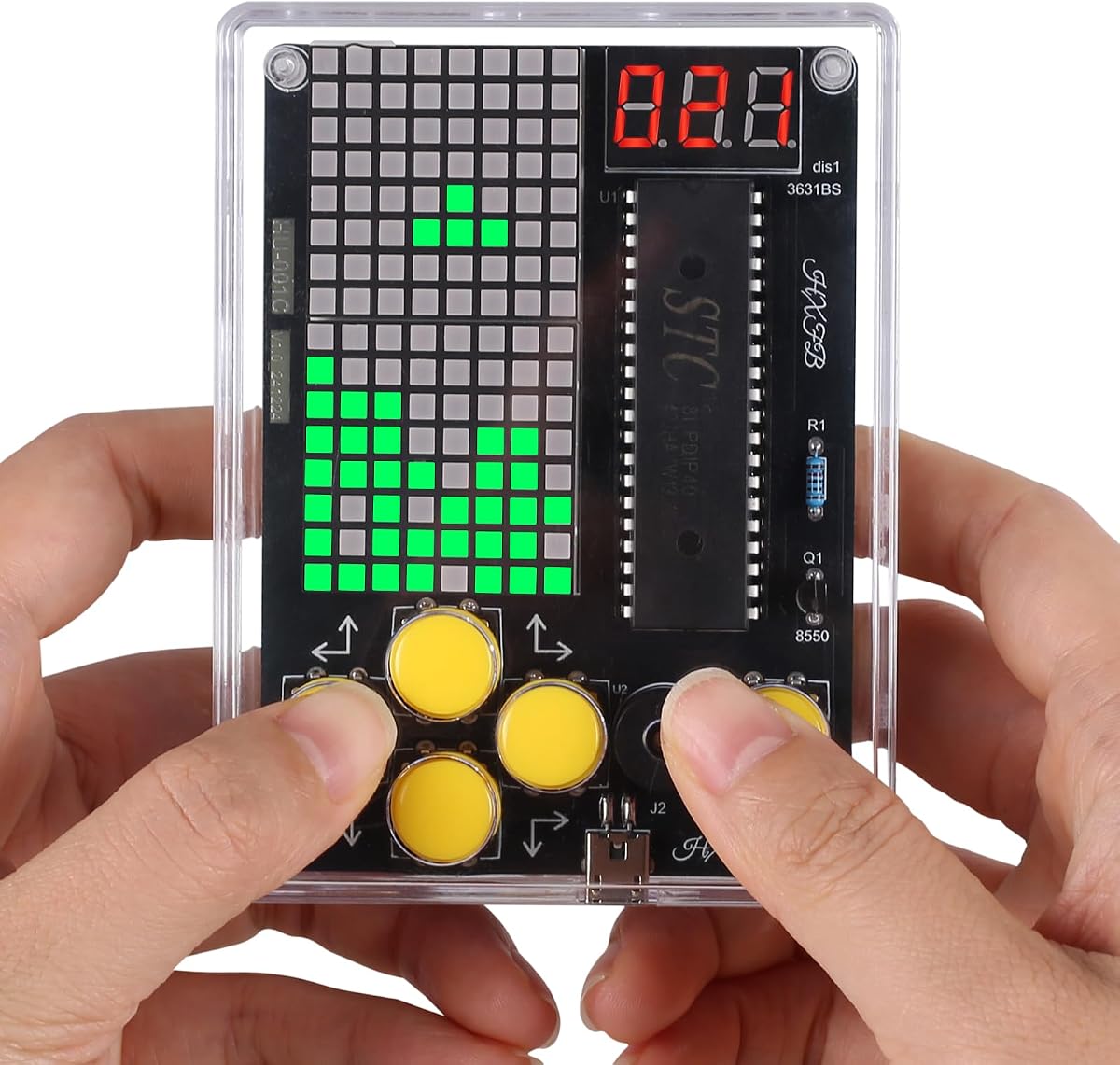
This kit focuses on building a dedicated game console with multiple interactive functions. It appeals to teens who enjoy gaming and want to understand the hardware behind it. The project involves soldering and assembly leading to a device that can be played with.
We may earn a commission when you buy through this link, at no additional cost to you.
The kit offers different difficulty levels so users can choose a challenge that matches their skills. Video guidance is available to assist with complex steps ensuring that teens can complete the project successfully. The result is a functional game box with buttons and lights.
While it is limited to game functions the interactive nature keeps teens engaged throughout the build process. It is a great way to learn basic electronics through a familiar and fun context. The price is accessible for a project that yields hours of entertainment.
We suggest this for teens who are gamers and want to explore the technical side of devices. It bridges the gap between playing games and understanding how they work internally. It is a fun and practical project for electronics beginners.
The finished kit includes buttons and lights that create a tactile gaming experience for the user.
Online video tutorials supplement the manual making it easier to understand complex assembly steps.
We may earn a commission when you buy through this link, at no additional cost to you.
Choosing the right electronics kit depends on a teen's experience level and interests. Consider these factors to ensure the kit matches their needs and learning goals.
Teens with no prior experience should start with kits that offer solder-free options or guided tutorials. Those with some coding knowledge might prefer boards like Arduino that support custom programming. Assessing their comfort with tools will help you select a kit that is challenging but not overwhelming.
Choose a kit that matches their current comfort level to prevent frustration and ensure continued engagement with the project.
Look for kits that offer a wide range of projects to sustain interest over time. A good kit should allow for expansion or customization so teens can build their own ideas. Simple kits might become boring quickly so check for advanced features like motors or screens.
A diverse project library ensures that teens remain interested and motivated as they progress through their learning journey.
High-quality components are essential for reliability and long-term use. Check that the parts are robust enough to handle repeated assembly and disassembly. Cheap plastic or brittle wires can lead to frustrating breaks that hinder the learning process.
Investing in durable materials ensures that the kit lasts longer and provides a smoother learning experience.
Detailed instructions and tutorials are crucial for guiding teens through complex steps. Look for kits that include PDF guides or video support to assist with troubleshooting. Good resources should explain why steps are taken not just how to do them.
Strong educational materials empower teens to learn independently and understand the principles behind their projects.
Safety should always be a priority when selecting electronics kits especially for younger teens. Check for age recommendations and warnings regarding tools like soldering irons. Ensure that batteries and power sources are safe and easy to handle.
Prioritizing safety features helps prevent accidents and ensures a secure learning environment for all users.
If a teen already owns a computer or development board ensure the kit works with it. Compatibility with common platforms like Arduino allows for easier integration with future projects. Check for required ports or connection types before purchasing.
Selecting compatible hardware prevents unnecessary purchases and streamlines the setup process for immediate use.
Kits that include batteries or portable power options allow teens to experiment anywhere. Portability encourages creativity outside the home or classroom setting. Check if the kit supports USB or battery power for flexibility in use.
Portable power options make learning more flexible and encourage experimenting in different environments.
Consider the total value offered by the kit relative to its price. A higher upfront cost might be justified by better components or more projects. Balance the budget against the long-term educational benefits of the kit.
A good value kit provides lasting educational benefits that justify the initial investment for families.
Always start by reading the instruction manual thoroughly before beginning any assembly. Organize components in the provided storage box to keep the workspace tidy and efficient. Ensure that the workspace is clean and free of liquids to prevent damage to electronics.
When working with soldering kits use a proper stand and eye protection to stay safe. Regularly clean the workspace and tools to maintain their condition. After building, test components gently to ensure they function correctly before final assembly.
Store kits in a cool dry place to prevent moisture damage to sensitive parts. Keep cables and wires neatly coiled to avoid tangling or breaking. Encourage teens to keep their project documentation safe for future reference or repairs.
Most kits are designed to be safe but supervision is recommended for younger teens especially when using soldering tools. Check the age recommendations on the packaging to ensure suitability. For kits requiring power tools or high heat adult guidance is essential.
Not necessarily. Many kits focus on hardware assembly without coding while others integrate simple programming. Beginners can start with solder-free kits that rely on physical connections. Coding can be learned alongside hardware assembly as skills develop.
Most beginner kits require no tools beyond a computer for programming. Advanced kits might need a soldering iron, wire cutters, or screwdrivers. Always check the kit description for a list of required tools before purchasing to ensure you have everything ready.
Yes, most boards like Arduino support expansion with additional sensors and modules. Kits often include compatibility guides for adding more hardware. This scalability allows teens to upgrade their projects as they learn new skills over time.
Completion time varies by kit complexity and experience level. Simple projects might take a few hours while complex builds could take several days. Encourage teens to take their time to understand each step thoroughly for better learning outcomes.
Most reputable manufacturers offer replacement parts for broken components. Check the product page for warranty or support policies before purchasing. Some sellers provide support forums where you can ask for help with broken parts or troubleshooting.
We have reviewed ten top electronics kits that offer diverse learning opportunities for teens. Each kit has unique strengths depending on whether you prioritize coding, hardware assembly, or robotics. Choosing the right one depends on your specific goals and the teen's experience level.
Prioritize kits that offer a balance of challenge and support to keep teens engaged. Look for high-quality components and clear instructions to ensure a smooth learning experience. Investing in a solid kit can inspire long-term interest in technology and engineering.
Remember to check current availability and pricing before making a purchase as these change frequently. Our guide provides a reliable starting point to find the best option for your needs. With the right tools teens can build a strong foundation for future technical success.