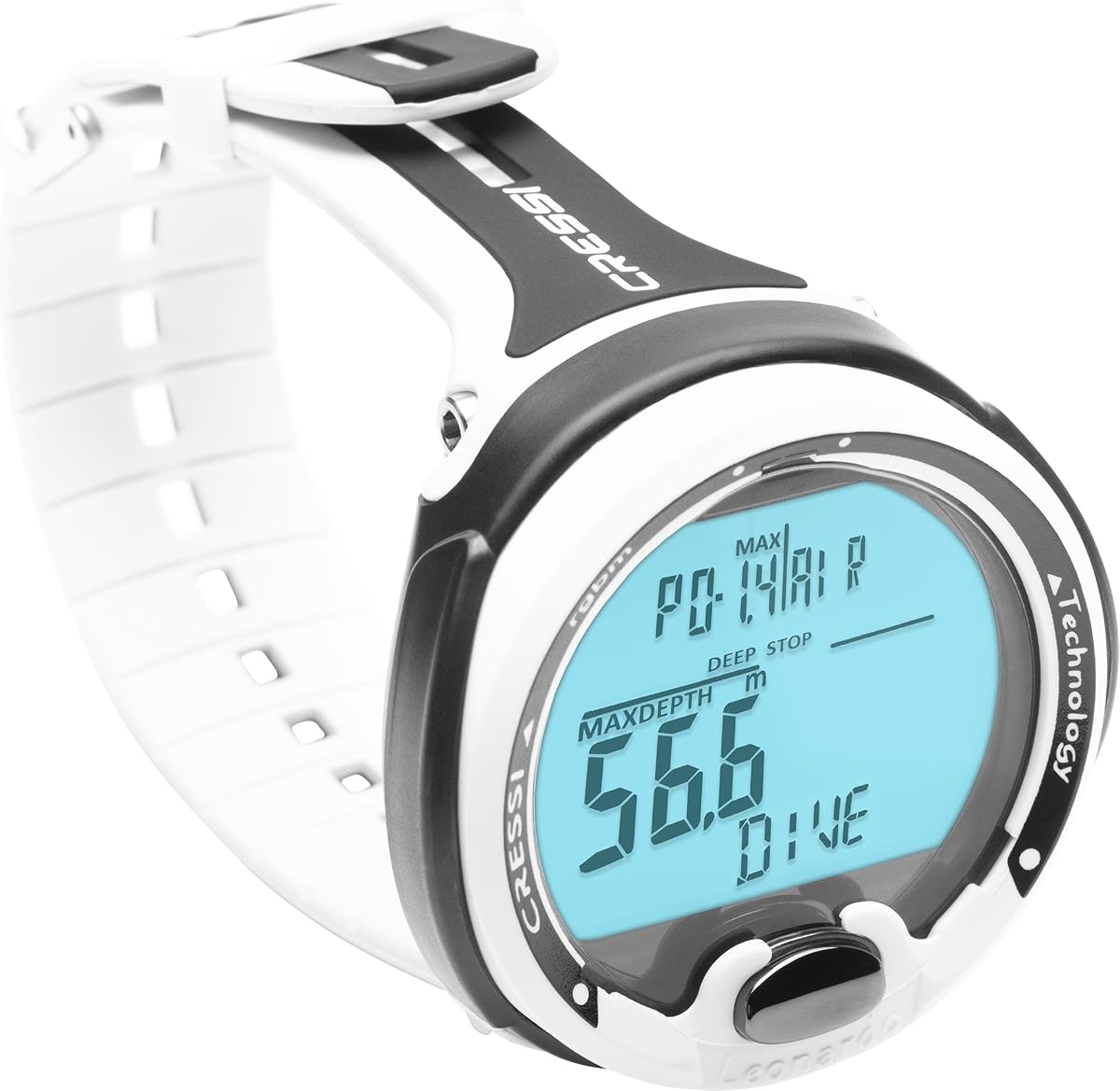
CRESSI Leonardo 2.0 G2 Dive Watch
4.2Editor score
One-button control interface
Air Nitrox and Gauge modes
iOS Android device pairing
This guide compares the top dive computers for beginners based on ease of use, safety features, and battery life to help you choose the right underwater
Choosing the right dive computer is crucial for new divers who need reliable safety data and easy navigation underwater. A good model simplifies complex calculations and provides clear alerts so you can focus on enjoying the underwater environment without stress.
We evaluated ten top-rated models based on interface simplicity, battery longevity, and essential safety features like depth alarms and no-decompression limits. Our comparison focuses on devices that offer clear displays, intuitive controls, and robust connectivity for tracking your diving progress.
Each pick highlights specific strengths for different diving styles and budgets ensuring you find a device that grows with your skills. Note that prices and availability may change frequently so verify current details before making your final purchase decision online.
4.2Editor score

4.7Editor score

4.7Editor score
The following table provides a side-by-side comparison of all ten models including their key specifications display types and connectivity options to help you quickly identify the best fit for your specific diving needs and budget constraints.

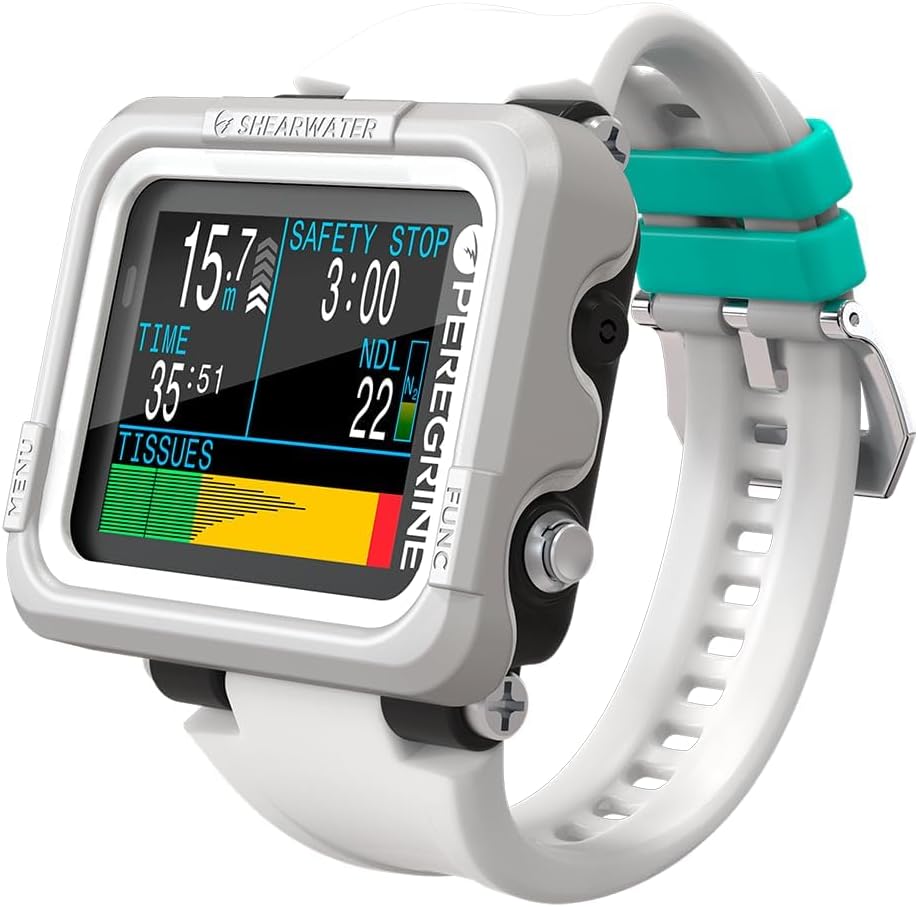


The Shearwater Research Peregrine stands out as a top choice for beginners due to its straightforward interface and reliable performance. With a 4.7 rating users appreciate how easy it is to navigate menus underwater without confusion or frustration.
We may earn a commission when you buy through this link, at no additional cost to you.
Its state-aware menu structure ensures you only see relevant options for your current dive mode reducing cognitive load. The two-button design is robust and the 30-hour battery life means you can dive multiple times without frequent recharging.
While the price is higher than entry-level models the durability and ease of use justify the investment for serious divers. The stainless steel buttons resist corrosion ensuring the device stays functional even after saltwater exposure.
This model is ideal for those who want a balance of simplicity and advanced features. It is recommended for beginners planning to grow their skills without needing to upgrade soon.
The state-aware menu structure automatically shows only relevant options for your current dive mode reducing cognitive load underwater.
With up to 30 hours of battery life on medium brightness this model supports multiple dives between charges.
We may earn a commission when you buy through this link, at no additional cost to you.
The CRESSI Leonardo 2.0 G2 offers an accessible entry point into dive computers with its simple one-button interface. It supports Air Nitrox and Gauge modes making it versatile for various scuba setups beginners might encounter.
We may earn a commission when you buy through this link, at no additional cost to you.
Its critical alerts are quick and audible ensuring you never miss important safety data underwater. The ability to pair with iOS and Android devices allows for detailed dive tracking and data analysis after your trip.
While the display is not as advanced as premium models it remains clear enough for essential readings. The affordable price makes it a great choice for those on a budget who still need reliability.
This watch is perfect for casual divers who want safety features without complex menus. It is recommended for beginners seeking an affordable tool for basic recreational diving.
Support for Air Nitrox and Gauge modes allows you to adapt the computer to different diving configurations easily.
Pairing with iOS and Android devices provides seamless connectivity for comprehensive dive tracking and log management.
We may earn a commission when you buy through this link, at no additional cost to you.
The Garmin Descent™ X30 provides a premium experience with its large 2.4-inch color display and surface GPS capabilities. It is designed for divers who need to navigate to dive sites and mark entry exit points accurately.
We may earn a commission when you buy through this link, at no additional cost to you.
Its rugged housing made from recycled ocean-bound plastics combines environmental responsibility with durability. The flip-screen mode allows you to orient buttons on top of the housing which is useful when wearing gloves.
While it comes at a premium price the added safety features like NDL Aware depth metrics justify the cost. The water temperature sensor helps you find thermoclines enhancing your dive planning capabilities.
This model is ideal for divers seeking top-tier navigation and display quality. It is recommended for those who want a comprehensive tool for multiple dives in one day.
Use the surface GPS to navigate to dive sites and mark entry and exit points with precision.
The housing and bezel are made with recycled ocean-bound plastics providing a rugged durable build.
We may earn a commission when you buy through this link, at no additional cost to you.
The Shearwater Peregrine Adventures Edition offers multiple diving modes including Air Nitrox and Gauge making it versatile. Its vivid 2.2-inch LED LCD display ensures high visibility even in darker underwater conditions.
We may earn a commission when you buy through this link, at no additional cost to you.
It uses the Buhlmann ZHL-16C algorithm with gradient factors allowing precise decompression calculations. Unlike some computers it never locks out for dive plan deviations which provides flexibility if conditions change underwater.
While the interface is straightforward the mixed-gas support might be more than beginners need initially. The wireless charging station included adds convenience for keeping your device ready for the next dive.
This model suits divers who plan to use multiple gases or want long-term flexibility. It is recommended for those who value algorithm precision and display clarity.
Uses Buhlmann ZHL-16C with gradient factors for precise decompression calculations during complex dives.
Shearwater dive computers never lockout for dive plan deviations offering freedom in your underwater navigation.
We may earn a commission when you buy through this link, at no additional cost to you.
The Cressi Raffaello stands out with its built-in digital compass eliminating the need for a separate instrument. This integration simplifies your gear setup and enhances precision during underwater navigation.
We may earn a commission when you buy through this link, at no additional cost to you.
It uses the RGBM mixed-gas planning system allowing meticulous preparation for multiple gas mixes. The dual Bluetooth and USB connectivity options make data transfer to smartphones or PCs effortless.
The user-replaceable battery offers an expected life of 4 years reducing maintenance downtime. However changing it yourself requires some basic maintenance skills compared to sealed rechargeable units.
This model is great for divers who want integrated navigation tools. It is recommended for those who value convenience and long battery intervals.
The built-in digital compass eliminates the need for a separate compass enhancing your dive experience with precision.
Bluetooth and USB connectivity options let you seamlessly transfer dive logs to smartphones or PCs for review.
We may earn a commission when you buy through this link, at no additional cost to you.
The Garmin Descent™ G2 combines a watch-style design with full dive computer capabilities. It supports all types of diving from recreational to technical and includes advanced health monitoring features.
We may earn a commission when you buy through this link, at no additional cost to you.
The dive readiness feature provides insights into your physical preparation based on sleep stress and recent exercise. This helps you plan safely and avoid diving when your body is not fully recovered.
While it is expensive the smart notifications and Connect IQ app personalization add daily value. The 24/7 heart rate tracking keeps you informed about your wellness even on the surface.
This model is ideal for tech-savvy divers who want an all-in-one wrist device. It is recommended for those who value health metrics alongside diving data.
Provides insights into how physically prepared you are for your next dive based on sleep and exercise.
Tracks heart rate pulse ox and sleep score 24/7 to help you understand your overall wellness.
We may earn a commission when you buy through this link, at no additional cost to you.
The CRESSI Giotto features a comprehensive dive log capable of storing up to 70 hours of dive data. This makes it useful for divers who need to keep a detailed record of their training or trips.
We may earn a commission when you buy through this link, at no additional cost to you.
It supports up to three Nitrox gas mixes during a single dive simplifying complex multi-mix profiles. The high depth support of 393 feet ensures you are covered for deeper adventures.
Altitude diving support makes it versatile for mountain lake expeditions. However the design is older and lacks modern smart connectivity compared to newer competitors.
This model is good for those who prioritize data storage. It is recommended for divers diving in varied elevations.
With the capacity to store up to 70 hours of dive data the Giotto keeps a detailed logbook at your fingertips.
Managing up to three Nitrox gas mixes during a single dive simplifies complex multi-mix profiles.
We may earn a commission when you buy through this link, at no additional cost to you.
The Mares Puck Lite utilizes the Bühlmann ZH-L16C algorithm allowing divers to customize their gradient factors. This enhances safety and precision during decompression dives adapting to various diving conditions.
We may earn a commission when you buy through this link, at no additional cost to you.
Its user-friendly display features 800 segments and chip-on-glass technology ensuring visibility in various underwater conditions. The intuitive single-button navigation simplifies operations even while wearing gloves.
The user-replaceable power source lasts through 100 dives ensuring reliability during underwater adventures. Bluetooth connectivity allows for easy firmware updates and data syncing directly to your devices.
This model is great for freedivers needing basic reliability. It is recommended for divers prioritizing simplicity.
Utilizes the Bühlmann ZH-L16C algorithm allowing divers to customize their gradient factors for precision.
The crystal-clear segment display with chip-on-glass technology ensures visibility in various underwater conditions.
We may earn a commission when you buy through this link, at no additional cost to you.
The Descent™ G1 offers up to 21 days of battery life in smartwatch mode which is rare for dive computers. It features a rugged design with a sapphire lens ensuring durability against scratches.
We may earn a commission when you buy through this link, at no additional cost to you.
You can store up to 200 dives on your wrist allowing for extensive tracking without needing to upload immediately. GPS support helps divers mark surface entry and exit points effectively.
While the display is monochrome it remains easy to read. The smart notifications and Garmin Pay capabilities add convenience for everyday wear between dives.
This model is great for those who want a watch they can use daily. It is recommended for divers seeking long battery life.
Battery life of up to 21 days in smartwatch mode ensures readiness without frequent recharging.
Store up to 200 dives on your wrist allowing for extensive tracking without needing immediate uploads.
We may earn a commission when you buy through this link, at no additional cost to you.
The SUUNTO D5 features a wireless tank pressure sensor allowing you to monitor air levels without extra gauges. Its compact design makes it comfortable for extended wear while diving.
We may earn a commission when you buy through this link, at no additional cost to you.
Vibration alarms ensure you stay informed even if you are not looking at the display. The digital compass provides essential orientation capabilities underwater.
While it is waterproof to 100m the rating is lower than some competitors. The wireless mobile connection helps with data transfer but can be inconsistent.
This model is suitable for divers who want simplicity. It is recommended for those preferring wrist-style computers.
Wireless Tank Pressure allows you to monitor air levels without extra gauges reducing dive equipment weight.
Vibration alarms keep you informed even when you are not looking at the display during dives.
We may earn a commission when you buy through this link, at no additional cost to you.
Selecting the right dive computer depends on your specific diving needs budget and comfort preferences. This section breaks down the key factors to consider before purchasing.
Beginners often find complex menus confusing underwater. Look for devices with clear displays and simple navigation like single-button or two-button interfaces.
Choose a model with intuitive controls to reduce stress during your dive.
Color displays provide better visibility and allow for more data fields than monochrome screens. However monochrome screens often consume less power.
Select a display that balances readability with battery efficiency.
Battery longevity determines how often you need to recharge. Rechargeable units offer convenience while replaceable batteries can last years.
Consider your diving frequency when choosing a power solution.
Modern computers allow you to transfer dive logs to smartphones for analysis. Bluetooth and USB options are common.
Look for connectivity that matches your preferred logging method.
Ensure the computer supports your planned activities such as Air Nitrox and Gauge modes. Advanced divers may need mixed gas support.
Match the device modes to your current and future diving needs.
Materials like sapphire lenses and stainless steel buttons resist corrosion and scratches. Water resistance ratings should meet your depth requirements.
Invest in durable materials to protect your investment from wear.
Features like built-in compasses surface GPS and heart rate monitors add value. However they may increase complexity.
Decide which extras are essential for your safety.
Budget models offer basic safety while premium ones provide advanced navigation. Determine your budget range early in the process.
Balance cost against the features you will actually use.
Before each dive ensure your computer is fully charged or has a fresh battery. Review the settings to confirm your gas mix and maximum depth limits are correct.
Rinse your device with fresh water after every dive to remove salt and debris. Store it in a cool dry place away from direct sunlight.
Regularly update the firmware using the provided software to ensure accuracy. Review your dive logs to track progress and plan future dives safely.
Yes modern dive computers replace tables by calculating decompression in real-time. They provide dynamic updates which are safer than static tables for changing depths.
Yes many dive computers have surface modes for tracking time while snorkeling. Check the user manual to activate the specific mode if available.
You should update firmware whenever a new version is released to ensure safety algorithms are current. Check the manufacturer website regularly for updates.
With proper care a dive computer can last several years. Battery replacements and firmware updates help extend its functional life significantly.
Most modern computers support Air and Nitrox. However budget models may have limitations so check specifications before purchasing.
It is safe if the device has been maintained and updated. Ensure you verify its service history and battery condition before use.
Our top picks cover a range of needs from budget-friendly watches to premium computers with GPS. The Shearwater Peregrine offers the best balance while the CRESSI Leonardo is ideal for savings.
Prioritize ease of use and battery life when selecting a model. These factors impact your confidence and safety underwater more than advanced metrics.
Always check current prices and availability on Amazon before finalizing your purchase. Deals change frequently so staying flexible helps you get the best value.