
Acxico 3Pcs Mini Micro N20
4.6Editor score
Full metal gearbox
3V to 6V voltage
D-type shaft included
Explore top DC motors for robots including gear motors and encoders for DIY projects and smart cars with detailed comparisons and expert insights.
Choosing the right DC motors for robots is essential for building reliable and efficient robotic systems. Whether you are creating a simple line follower or an advanced autonomous vehicle, the motor selection dictates performance and durability.
We compared ten highly rated DC motors based on torque, voltage range, gear ratios, and user reviews. Our analysis highlights products suitable for beginners and advanced makers working on Arduino or Raspberry Pi projects.
Each pick showcases specific strengths like metal gears or encoder feedback to help you decide. Remember that prices and availability can change frequently so verify current details before placing your order online.
4.6Editor score

4.7Editor score

4.6Editor score
This side-by-side comparison highlights key specifications and use cases for each of the ten selected DC motors for robots to help you find the perfect match for your project.



This upgraded TT motor set stands out as a top choice for advanced robotics due to its robust all metal construction and integrated Hall encoder feedback for precise control.
We may earn a commission when you buy through this link, at no additional cost to you.
The 1:90 gear ratio delivers impressive torque of 1.0 kg cm rated and 1.8 kg cm stall while the 12PPR encoder allows for accurate speed and position tracking essential for autonomous systems.
While the motor requires a separate power supply for the encoder which adds complexity to wiring this trade off is acceptable given the level of control it provides over simple unencoded units.
Builders working on smart cars or heavy duty robots should choose this set for its reliability and performance ensuring your project handles complex motion tasks with ease and precision.
The all metal gearbox and shaft replace plastic parts offering superior strength and resistance to wear for heavy load applications.
Integrated AB phase Hall encoder provides real time measurement of speed and angular position for advanced motion control tasks.
We may earn a commission when you buy through this link, at no additional cost to you.
These mini micro N20 gear motors offer an affordable entry point for DIY robot car projects featuring a full metal gearbox that ensures longevity and reliability over time.
We may earn a commission when you buy through this link, at no additional cost to you.
Rated for 3V to 6V operation with a D-type shaft diameter of 3mm and length of 9mm they are perfect for lightweight platforms needing compact power without sacrificing structural integrity.
The main trade off is their low voltage range and torque which limits them to small light duty robots rather than heavy lifting or high speed applications requiring more power.
Beginners and hobbyists looking for a budget friendly solution for educational or small scale builds will find this 3 pack delivers excellent value and quality for the price.
The mini N20 form factor fits easily into tight spaces on small robot chassis where larger motors would not fit.
A full metal gearbox provides better heat dissipation and wear resistance than plastic alternatives found in cheaper gear motors.
We may earn a commission when you buy through this link, at no additional cost to you.
This 200W DC planet gear motor delivers exceptional torque of 90kg.cm making it a premium choice for demanding applications like rotating tables and heavy duty robotics requiring significant force.
We may earn a commission when you buy through this link, at no additional cost to you.
Operating across a wide voltage range from 6V to 22V with an 8mm D-shaft it provides the power and flexibility needed for industrial strength DIY projects or custom automation tasks.
While its larger physical size and higher cost may be excessive for small robot cars the performance benefits justify the investment for projects requiring reliable high torque output over time.
Users needing a robust motor for door locks curtain machines or large scale robots should prioritize this option to ensure their build handles heavy loads without overheating or failure.
The 200W rating and 90kg.cm torque enable this motor to drive large mechanical loads that standard hobby motors cannot handle.
Support for voltages up to 22V allows integration with various power systems without needing complex voltage conversion setups.
We may earn a commission when you buy through this link, at no additional cost to you.
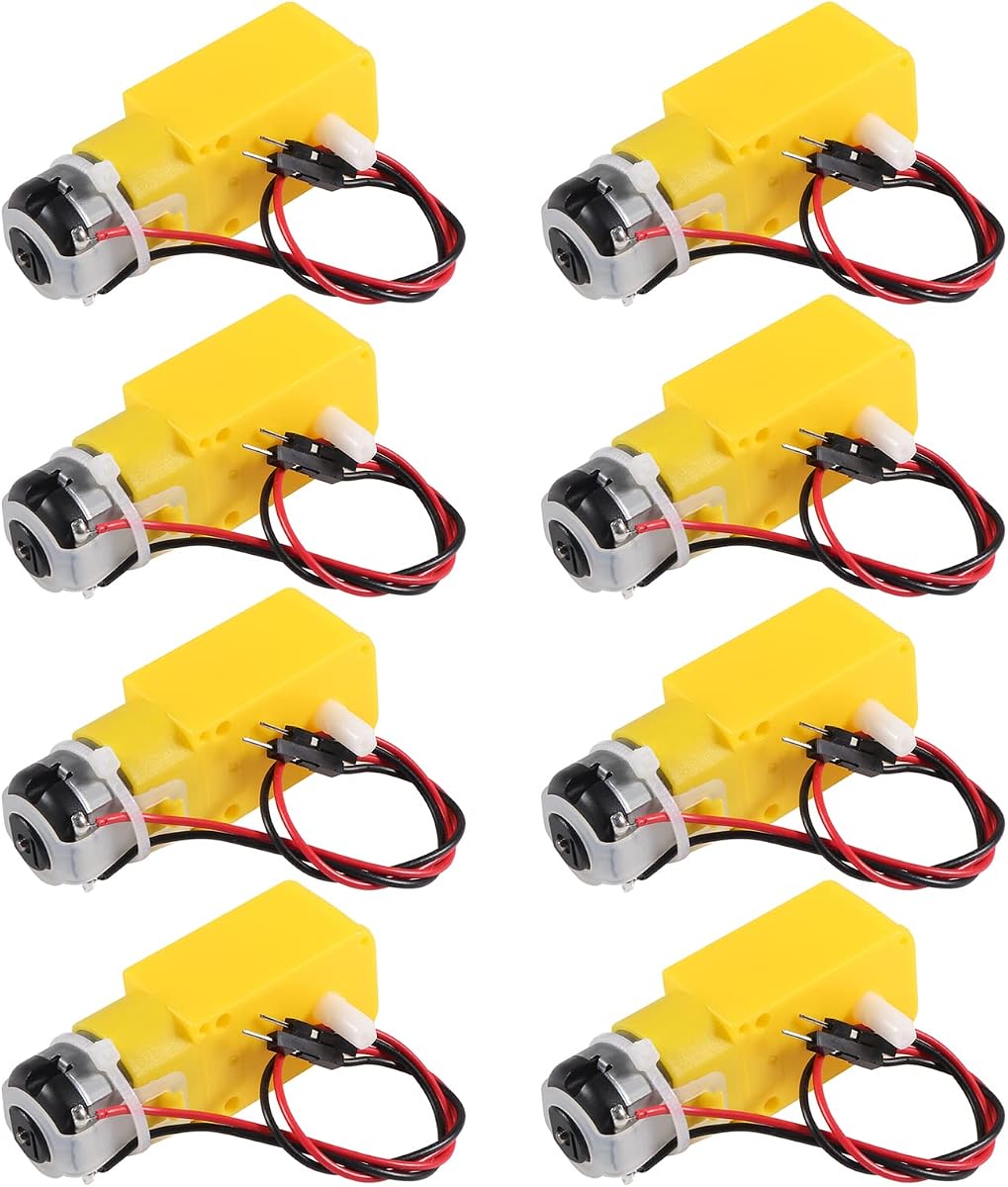
This set offers eight TT gearbox motors plus four wheels creating a complete solution for class projects or multi robot builds that require standardized affordable power units with high ratio gearing.
We may earn a commission when you buy through this link, at no additional cost to you.
Rated at 3V to 6V with a 1:48 gear ratio and 200mm wires these motors are designed for easy integration into Arduino systems supporting educational learning and distance measurement tasks.
The trade off is a modest stall torque of 0.8kg.cm which limits their use to lightweight smart cars rather than heavier platforms needing more raw power to move effectively.
Educators and DIYers needing multiple reliable motors for a class or group project will appreciate this all-inclusive package that simplifies procurement and setup for smart robot car competitions.
Includes four wheels alongside the motors allowing you to build a functional robot chassis without needing separate wheel purchases.
The 2.54mm male connector allows direct plug-in to breadboards or terminal blocks streamlining the wiring process for beginners.
We may earn a commission when you buy through this link, at no additional cost to you.
This 12V geared motor comes ready to use with a rubber tire wheel kit and mounting bracket making it an ideal choice for quick DIY robot builds without extra component sourcing.
We may earn a commission when you buy through this link, at no additional cost to you.
The full metal gear reduction ensures durability and quiet operation while the pure copper coil provides high power and stability for efficient thermal performance during extended runs.
A potential limitation is its fixed 12V rating which restricts flexibility for projects requiring different voltage levels compared to motors with wider input ranges available in the market.
Builders seeking a convenient package with wheels and brackets already included should select this model to save time on assembly and focus on the programming or electronics work.
The inclusion of rubber tire wheels and a mounting bracket allows immediate assembly of a functional robot chassis without extra purchases.
Full metal gears combined with a pure copper coil deliver long life and efficient operation for demanding applications.
We may earn a commission when you buy through this link, at no additional cost to you.
The CQRobot 70:1 gearmotor offers a robust balance of power and size with a torque of 15kg.cm and dual voltage options of 6V or 12V for flexible system integration.
We may earn a commission when you buy through this link, at no additional cost to you.
Features like a metal mounting bracket and D-shaped 6mm shaft simplify assembly and improve mechanical stability which is critical for smart balance cars and medical equipment projects.
Its larger physical dimensions compared to TT motors might not fit compact chassis designs so builders must verify available space before purchase to avoid fitment issues.
Users needing a reliable motor for custom servo or engine toy builds should choose this product for its strength and quality construction that supports diverse applications well.
With 15kg.cm stall torque this motor provides significant force for lifting or moving heavy objects in robotic applications.
Support for both 6V and 12V gives flexibility to match your power supply without needing additional voltage regulation.
We may earn a commission when you buy through this link, at no additional cost to you.
These 12V DC motors are designed for quiet and powerful performance delivering 350 RPM with high torque and low noise ideal for smart cars and DIY toys requiring smooth operation.
We may earn a commission when you buy through this link, at no additional cost to you.
The double-shaft design offers flexibility to connect wheels on both ends while the all-metal gears ensure long-lasting strength for heavy-duty use in robotics and electronic projects.
While they lack built-in encoders for precise speed control the efficient copper rotor and secure D-shaped shaft make them reliable for general purpose movement tasks without feedback loops.
Hobbyists working on RC cars or custom robots should consider these motors for their robust construction and ability to handle demanding applications quietly and efficiently.
The design minimizes noise output making these motors suitable for interactive robots or indoor environments where sound matters.
Strong magnetic double-shaft configuration provides flexibility for connecting wheels or gears on both ends of the motor.
We may earn a commission when you buy through this link, at no additional cost to you.
This pack of six Type 130 miniature DC motors provides high speeds up to 16000 RPM making them excellent for brush-bots fans and windmills where rapid rotation is key over torque.
We may earn a commission when you buy through this link, at no additional cost to you.
Operating between 1.5V to 6V with 6 inch wire leads these motors are easy to connect for hobby projects including solar powered cars and small electric tools requiring simple assembly.
Because they are ungeared they produce minimal torque limiting their use to light duty applications rather than robots needing force to move wheels or lift heavy payloads.
For those building high speed prototypes or needing replacement motors for existing hobby devices this case pack offers a convenient and cost effective solution with proven quality.
The 16000 RPM speed rating makes these motors ideal for applications like fans or propellers where fast rotation is required.
At 15 x 20 mm these miniature motors fit into tight spaces for small hobby projects and portable builds.
We may earn a commission when you buy through this link, at no additional cost to you.
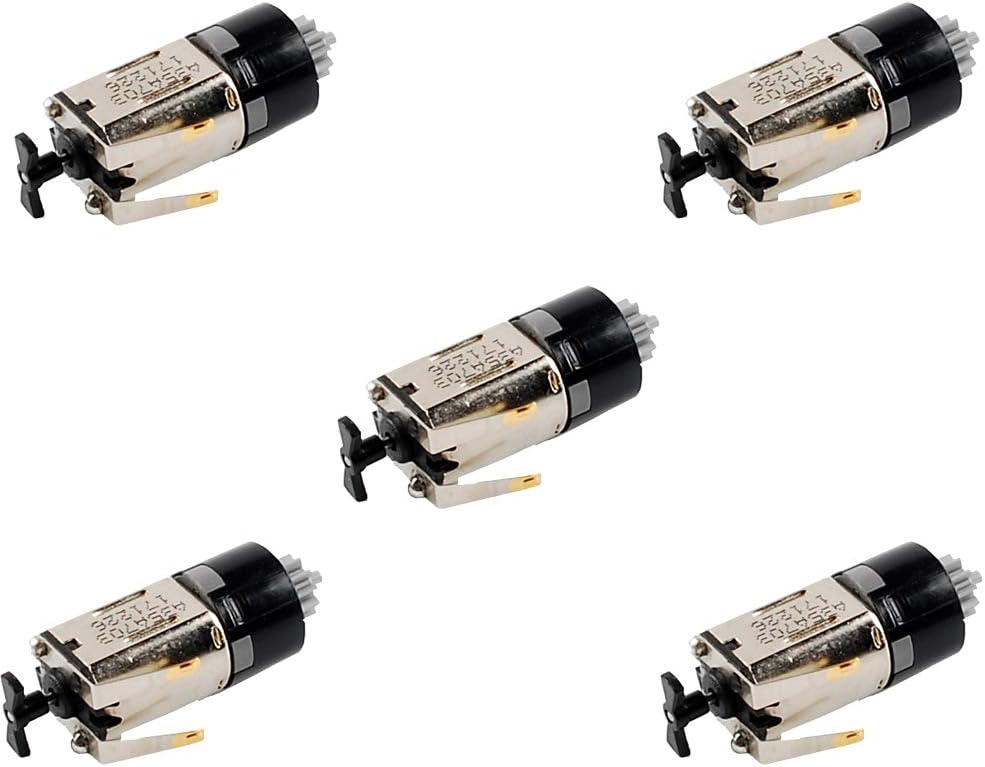
These micro planetary reducer motors are engineered for high torque in a small package making them perfect for battery powered robots needing force without excessive current draw from power sources.
We may earn a commission when you buy through this link, at no additional cost to you.
Operating from 3V to 5V with speeds ranging from 110 to 180 RPM they are well suited for precise slow movements required in specialized robotics or custom small scale builds.
The trade off is a low top speed which means they are not suitable for high mobility projects requiring rapid movement but excels in controlled torque applications.
Builders focusing on compact robot arms or small vehicles should choose this 5 pack to ensure enough spares and consistent performance across multiple motor units.
The planetary reducer design provides high torque output in a tiny footprint ideal for space constrained robotic joints.
Low current draw allows these motors to run longer on small batteries making them suitable for portable robotic devices.
We may earn a commission when you buy through this link, at no additional cost to you.
This compact brushed DC motor delivers high speed up to 12000 RPM making it a practical replacement or upgrade for RC cars power wheels and small electric tools in need of reliable power.
We may earn a commission when you buy through this link, at no additional cost to you.
Designed for 6V to 12V applications with a 2.3mm shaft it offers strong output in a small size that fits easily into custom DIY mechanical assemblies requiring standard components.
Because it is ungear the torque output is moderate compared to geared motors limiting its use to high speed low load tasks rather than heavy duty robotic movement needs.
Hobbyists looking to upgrade a small vehicle or repair existing equipment should consider this motor for its balanced performance and widespread compatibility with hobbyist projects.
The motor reaches speeds up to 12000 RPM which is ideal for applications requiring fast rotation over raw torque.
Suitable as a practical replacement for compatible Traxxas RC vehicles and toy cars requiring reliable power output.
We may earn a commission when you buy through this link, at no additional cost to you.
Selecting the right DC motors for robots involves evaluating several technical specifications to ensure your build performs reliably and meets your project goals.
Determine the power supply your robot uses whether it is 3V 6V 12V or higher to match the motor voltage range. Mismatched voltage can lead to poor performance or motor damage.
Choose a motor that operates efficiently within your system voltage to ensure stable operation and avoid needing extra regulators.
Evaluate the load your robot must carry or move to select a motor with adequate stall torque. Insufficient torque will result in sluggish movement or motor stall.
Ensure the motor torque rating exceeds your expected load by a safe margin to maintain performance under strain.
Higher gear ratios like 1:48 or 1:90 increase torque while reducing speed which is useful for robots needing to carry weight rather than move fast.
Select a gear ratio that matches your desired trade off between speed and force for your specific application.
Consider if you need precise speed or position control which requires a motor with an integrated encoder for feedback to microcontrollers.
If simple movement is sufficient skip encoders to save cost and complexity but include them for advanced navigation.
Metal gears offer superior durability and heat resistance compared to plastic which is crucial for heavy duty or continuous operation applications.
Opt for full metal gearboxes when longevity and reliability are priorities for your robotics project.
Check the shaft diameter and length to ensure it fits your wheels or pulleys and that the motor allows for secure mounting brackets.
Confirm the motor dimensions match your chassis space to avoid mechanical conflicts during assembly.
Calculate the total current draw of all motors to ensure your battery can sustain the operation time required for your robot.
Choose efficient motors that balance performance with low power draw to maximize runtime.
Look for kits that include wheels brackets or connectors to simplify your build process and reduce total cost of ownership.
Verify what accessories are included before purchasing to avoid needing extra components later.
Connect motor wires to a motor driver or controller to ensure correct polarity and avoid damaging the electronics or motor windings.
Secure the motor firmly using mounting brackets to prevent vibrations that could loosen connections or cause mechanical wear over time.
Regularly inspect gear alignment and shaft wear to maintain performance and replace parts when signs of wear appear.
Most beginner robots operate efficiently at 6V or 12V since these match standard battery packs. Always check your controller and battery specs before selecting a motor.
Encoders are needed if you require precise speed control or odometry. For simple line followers a motor without an encoder is often sufficient.
Metal gears last longer and handle higher torque than plastic. Choose metal for heavy load or continuous use to avoid gear stripping.
Measure the robot weight and wheel radius then apply a safety factor. This ensures your motor can move the load without stalling.
Yes most motors can interface with Arduino via motor drivers. Ensure the voltage and current ratings are within your driver limits.
DC motors rotate continuously and are better for wheels while steppers move in precise steps for controlled positioning in robotics.
Packs allow you to build multi-motor robots easily with matched performance. This is common for kits targeting DIY car builds.
Use metal brackets or 3D printed mounts designed for the motor size. Ensure the shaft is aligned properly to prevent vibration.
The top picks highlight a range of options from budget-friendly N20 motors to high-torque planetary gear units tailored to different robot projects and requirements.
Prioritize torque and gear ratio for moving heavy loads and consider encoders when precise control is necessary for your autonomous system.
Always verify current prices and availability online before purchase as stock levels and costs may change frequently for these components.