
Digital Soil pH Meter with App, Waterproof PH Tester
Connects to Mobile App
Automatic Temperature Compensation
Waterproof and Durable
Compare top Bluetooth Soil Ph Meters for accurate plant care. We review ten models with app connectivity, probes, and smart features for gardeners.
Smart gardening tools have evolved significantly, offering precise insights into soil health. Bluetooth Soil Ph Meters allow you to track vital parameters directly from your smartphone. These devices help optimize watering and fertilization for healthier plants.
We evaluated ten leading models based on accuracy, connectivity, and ease of use. Our analysis covers wired, wireless, and solar-powered options. Each product was selected for its ability to provide reliable data in various conditions.
Every pick includes key specifications and real-world performance notes. We highlight standout features and potential limitations for each unit. Please note that prices and availability may change over time.

4.4Editor score

4.0Editor score
This side-by-side comparison highlights the core capabilities of each selected model. Use this table to quickly identify the best fit for your gardening needs and budget constraints.





This 7-in-1 Digital Soil Tester Kit stands out for its versatility. It tracks moisture, pH, temperature, light, and fertility. With a 4.4 rating, it is a reliable choice for many gardeners.
We may earn a commission when you buy through this link, at no additional cost to you.
The large LCD screen with white backlight ensures readability in any lighting. The device includes TDS and EC functions for water quality checks. You can measure multiple parameters quickly without switching tools.
While the probe technology is advanced, the device is not designed for liquids. Dry or hard soil requires moistening before testing to protect the probe. These minor limitations are acceptable given the price point.
It is an ideal pick for general gardeners needing a complete toolkit. The clear display and intuitive symbols make it beginner-friendly. For those wanting comprehensive data, this kit delivers excellent value.
Seven distinct measurements provide a complete picture of soil health. This reduces the need for multiple devices in your gardening arsenal.
The white backlight and large numbers simplify data reading. You can check values even in low-light conditions without strain.
We may earn a commission when you buy through this link, at no additional cost to you.
This Digital Soil pH Meter offers excellent value for budget-conscious buyers. It connects to a mobile app for automatic data storage. The design includes a conical steel probe for durability.
We may earn a commission when you buy through this link, at no additional cost to you.
The Automatic Temperature Compensation feature ensures readings remain accurate. The backlight aids visibility in poor lighting. It works well for various liquids including pool water and wine.
While the rating is not available, the features suggest robust functionality. The waterproof design adds reliability for outdoor use. However, app support details should be verified before purchase.
It is a solid choice for those needing basic pH tracking. The affordable price makes it accessible for casual gardeners. For simple pH needs, it delivers practical performance.
Low cost does not mean compromised features. You get app connectivity and durability at a fraction of premium prices.
Beyond soil, it tests liquids like pool water and wine. This flexibility extends its utility beyond standard gardening tasks.
We may earn a commission when you buy through this link, at no additional cost to you.
This Wireless Soil Moisture Meter features a solar-powered probe. It tracks soil moisture, temperature, fertility, and pH. Air temp and humidity are measured by the controller.
We may earn a commission when you buy through this link, at no additional cost to you.
You can expand the system to support up to 32 probes. Data refreshes automatically every 20 minutes. The split design allows comfortable viewing without bending over.
The rating of 3.9 suggests mixed user feedback. Solar power is convenient but may depend on light exposure. For large areas, the expandability is a major advantage.
Ideal for greenhouse or large garden monitoring. It reduces the need to constantly insert probes manually. If you need long-term data, this system is worth considering.
Solar probes eliminate battery concerns for outdoor use. This supports continuous monitoring in well-lit garden areas.
Support for up to 32 probes is rare. You can track different zones without walking around or reinserting testers.
We may earn a commission when you buy through this link, at no additional cost to you.
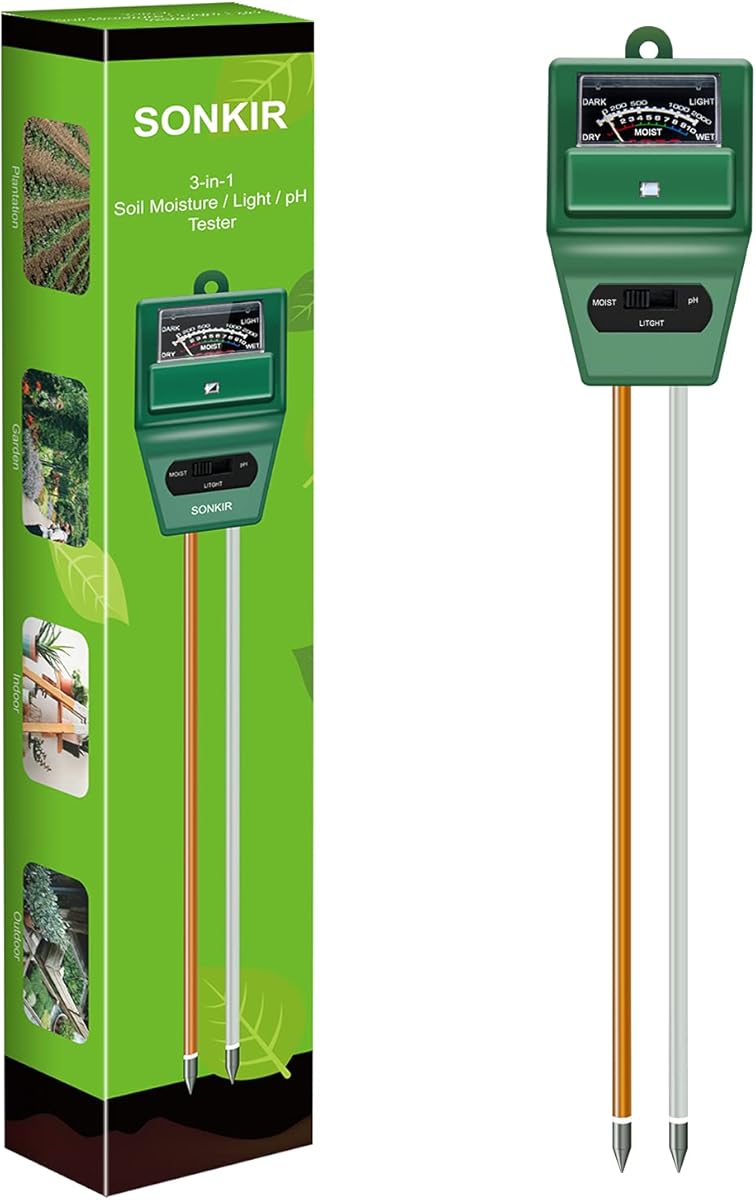
The SONKIR MS02 is a classic 3-in-1 soil tester. It measures moisture, pH, and sunlight levels. It operates without batteries using metal probe electrodes.
We may earn a commission when you buy through this link, at no additional cost to you.
Its sturdy design ensures long-term use. You simply insert the probe and wait for results. The analog dial shows readings clearly in natural light.
While it lacks Bluetooth, its simplicity is a strength. It avoids electronic failures associated with complex apps. However, it is not suitable for measuring liquids directly.
Best for basic gardening without digital features. It provides reliable data for routine checks. If you prefer simplicity, this model is a trusted option.
No batteries or power sources are required. This ensures the tool is always ready for use anytime.
The small size fits easily in your pocket or bag. You can carry it to any garden plot effortlessly.
We may earn a commission when you buy through this link, at no additional cost to you.
The YINMIK Digital pH Tester includes an app for 24-hour monitoring. You can store up to 1000 data points with notes. The package includes calibration powder for accuracy.
We may earn a commission when you buy through this link, at no additional cost to you.
It uses a tapered plastic dibber to protect the electrode. It works for soil, water, and hydroponic solutions. A 4.4 rating indicates consistent user satisfaction.
The need for an app may limit offline use. However, the data storage helps track trends over time. Calibration powder ensures you maintain accurate measurements.
Ideal for serious plant owners tracking soil health. It helps identify if you are on the right track. For data-driven care, this meter offers strong support.
Store up to 1000 readings to see progress. This helps you understand long-term soil health changes.
Calibration powder and a brush are provided. This ensures you can maintain the device properly from the start.
We may earn a commission when you buy through this link, at no additional cost to you.
This kit includes a pH meter and a 3-in-1 moisture meter. The FDR method enhances moisture measurement accuracy. The pH probe features a stainless steel dibber.
We may earn a commission when you buy through this link, at no additional cost to you.
It is designed for both soil and hydroponic systems. The 4.5 rating reflects strong performance. You get detailed moisture data to avoid overwatering.
The price is higher but justified by the dual tools. Managing two devices takes slightly more effort. For comprehensive care, the accuracy is valuable.
Great for hydroponic experts or serious gardeners. It ensures you know exactly when to water. If you want precision, this combo is an excellent investment.
The kit supports testing of nutrient solutions. This ensures optimal pH for soilless growing systems.
FDR method provides reliable soil moisture data. You can schedule watering with confidence based on real metrics.
We may earn a commission when you buy through this link, at no additional cost to you.
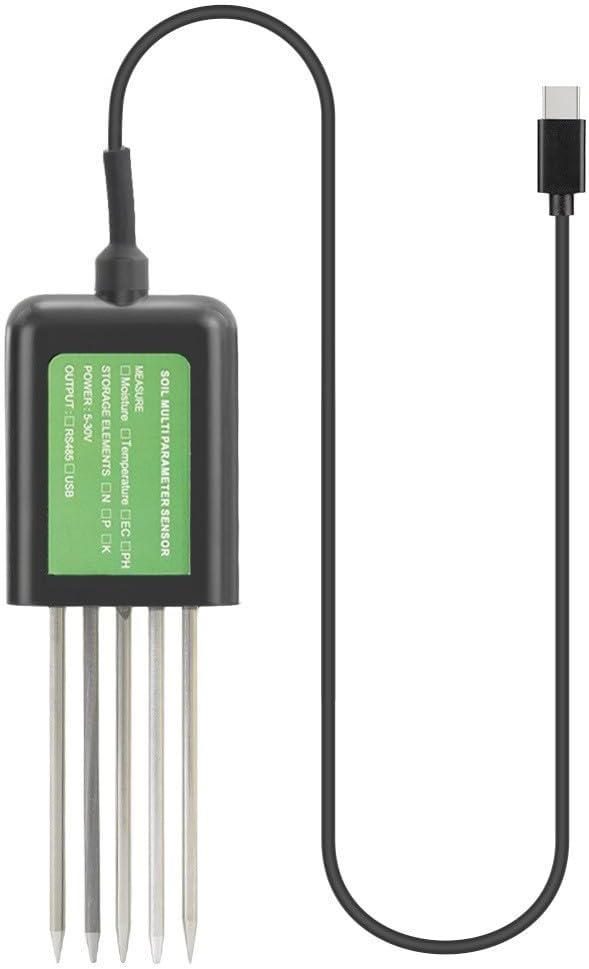
This USB Soil Sensor measures NPK nutrients and pH. It offers laboratory-grade accuracy for professional use. The device is IP68 rated for prolonged soil exposure.
We may earn a commission when you buy through this link, at no additional cost to you.
It connects directly to Android devices via USB. This allows instant viewing and exporting of data. No batteries are required as it draws power from USB.
The 2.6 rating indicates potential compatibility issues. USB connection may limit mobility compared to Bluetooth. It is best for fixed research or controlled setups.
Ideal for agriculture and scientific research. The NPK data is rare in standard testers. If you need nutrient details, this is a specialized tool.
Detects Nitrogen, Phosphorus, and Potassium. This level of detail supports precise fertilization plans.
Instantly view and save data to your phone. This facilitates data-driven decisions for crop health.
We may earn a commission when you buy through this link, at no additional cost to you.
The Bluelab OnePen delivers fast pH and conductivity readings. It features a replaceable double-junction probe. Data syncs to the Edenic app via Bluetooth.
We may earn a commission when you buy through this link, at no additional cost to you.
Accuracy is ±0.01, ensuring reliable metrics. The IP68 rating makes it waterproof and durable. It floats and is made from premium materials.
The price is high, reflecting its professional grade. The app requirement may limit simple use. But for hydroponic growers, quality matters most.
Best for professionals seeking top-tier tools. The 30 years of engineering expertise shows in build quality. If you value precision, this is the premium choice.
Extends device life and reduces replacement costs. You can maintain the probe without buying a new unit.
Floats and withstands water immersion. This ensures safety even in wet hydroponic environments.
We may earn a commission when you buy through this link, at no additional cost to you.
The Kelway HB-2 is a trusted tool for many. It measures pH and moisture without external power sources. It is widely used by professionals.
We may earn a commission when you buy through this link, at no additional cost to you.
It requires no distilled water or batteries. You take numerous readings quickly over a large area. The simplicity ensures reliability in field conditions.
While it lacks Bluetooth, its dependability is key. The 4.1 rating reflects its consistent performance. It is built for rigorous, routine agricultural use.
Best for professionals needing robust tools. It delivers accurate data in challenging environments. If reliability is priority, this is a solid option.
Designed for extensive outdoor use. It withstands daily handling without electronic complications.
No complex setup needed. Just insert into the soil and read results.
We may earn a commission when you buy through this link, at no additional cost to you.
This 7-in-1 Soil Tester measures NPK nutrients and more. It features a full-color interface and large data storage. The system availability rate is highly reliable.
We may earn a commission when you buy through this link, at no additional cost to you.
It is designed for agriculture, mining, and petrochemical fields. It can export data to Excel via computer. The 5.0 rating highlights its precision.
It is expensive for typical home gardening. However, its data capacity is unmatched. If you need extensive analytics, this device excels.
Best for industrial or large-scale farming. It tracks 1000000 data points easily. For deep analysis, this is a top-tier professional tool.
Support for massive data storage. This enables long-term tracking across multiple fields.
Export to Excel for custom reporting. You can print and edit data easily for planning.
We may earn a commission when you buy through this link, at no additional cost to you.
Selecting the right soil tester depends on your specific needs. Consider these factors to find the best model.
Bluetooth connectivity allows data storage and tracking via apps. Wired USB models are better for industrial use. Choose based on whether you need digital records.
If you need digital trends, opt for Bluetooth models. Otherwise, analog tools may suffice for simple tasks.
Probes face wear from soil moisture and debris. Look for stainless steel or protected electrodes. Replaceable probes extend device life.
Invest in models with durable or replaceable probes. This ensures longevity even with daily use.
Some testers measure just pH and moisture. Others include temperature, light, or NPK nutrients. Determine which data you need for your plants.
Choose 7-in-1 testers if you want comprehensive data. This simplifies soil health management.
Solar probes reduce battery changes. Analog tools need no power at all. Battery units require regular checks.
Prioritize solar or analog if you dislike changing batteries. For precise apps, check battery life specs.
Home gardening needs ±0.5 pH accuracy. Research requires ±0.01 precision. Check manufacturer specs for tolerance.
Match accuracy to your plant type. Sensitive crops need higher precision than general lawns.
Outdoor devices should be IP65 or IP68 rated. This protects internal electronics from rain. Waterproof designs are safer for wet soil.
Ensure the device matches your environment. IP68 is best for frequent outdoor exposure.
Apps should allow notes and history. Storage capacity varies widely between models. Look for export options like Excel.
Prioritize tools with good data features. Tracking helps you make better gardening decisions.
Displays should be readable in sunlight. Backlights help for nighttime checks. Simple interfaces save time.
Test readability if you garden at night. Clear screens reduce errors during use.
Insert the probe at least 10 cm deep into moist soil. Wait for readings to stabilize before noting values. Keep the probe clean after each use.
Calibrate the device using buffer solutions as directed. Store in a dry place to protect sensors. Avoid forcing the probe into hard soil.
Update companion apps regularly for best performance. Check batteries or power sources often. Proper care ensures long-lasting accuracy.
Some models support liquid testing for hydroponics, but standard soil probes may not be fully waterproof. Always check the product specs for liquid compatibility. Avoid using soil-only testers in pool water or aquariums unless stated.
Calibrate your device every few months or after heavy use. If readings seem off, recalibrate immediately. Using buffer powder ensures consistent and reliable results.
Fluctuations can happen in dry soil or due to air pockets. Moistening the soil slightly helps stabilize readings. Allow the device to settle before recording data.
Consumer models offer general accuracy, but research-grade tools provide higher precision. Choose a device with high resolution if accuracy is critical. Professional kits often have better calibration options.
Do not force the probe into rock or dry clumps. Moisten the area and insert gently. Forcing the probe can bend electrodes and damage the device.
Probes typically last 12 to 24 months with care. Replaceable probes extend device life. Clean electrodes gently to maintain performance over time.
We explored ten top-rated models for every budget. The Moisture Meter Kit leads for its versatility. Bluelab OnePen stands out for professional precision.
Prioritize app features if you track trends over time. For simplicity, analog tools remain reliable. Always consider your plant types and environment.
Prices change often so check current listings before buying. Select the model that matches your data needs. Your plants will benefit from accurate soil management.