
Urban Worm Soil Thermometer
4.6Editor score
Color-coded tick marks
5 inch stainless stem
Ideal for worm bins
This guide compares the top digital soil thermometer models for accurate readings, durability, and ease of use to help you choose the right tool for your
Finding the right digital soil thermometer is essential for successful gardening. These tools help you monitor soil temperature accurately to ensure your plants grow in optimal conditions throughout the year.
We compared ten leading models based on accuracy, durability, display readability, and additional features like pH or moisture sensing. Our selection covers basic thermometers and advanced kits for various gardening needs.
Each pick includes detailed specs, pros, cons, and real user ratings to guide your decision. Prices and availability change frequently so check current listings before purchasing your next gardening tool.
4.6Editor score

4.7Editor score

4.2Editor score
The following table compares all ten selected models side by side. Use this overview to quickly identify which features matter most for your specific gardening or composting needs.




The Reotemp K83B1 stands out as the top choice for serious gardeners and composters. It earns a high 4.7 star rating thanks to its durable construction and clear display.
We may earn a commission when you buy through this link, at no additional cost to you.
Its 12 inch stainless steel stem allows you to reach deep into compost piles or soil beds without bending over. The corrosion resistant case protects it from moisture and debris in harsh conditions.
While it lacks digital features like backlighting the simple analog scale is easy to read in daylight. The included digital composting guide adds value by helping beginners understand temperature targets for efficient decomposition.
This model is perfect for anyone focused on composting or traditional gardening who values durability over complex features. Its robust build ensures it will last through many growing seasons without damage.
The stainless steel case and waterproof design mean this thermometer can handle wet conditions and rough handling without rusting or breaking.
With a 12 inch stem and a composting guide included it helps you monitor internal pile temperatures for optimal microbial activity and heat generation.
We may earn a commission when you buy through this link, at no additional cost to you.
The Urban Worm Soil Thermometer offers exceptional value for budget conscious gardeners. It holds a strong 4.6 star rating due to its simplicity and effectiveness for specific uses.
We may earn a commission when you buy through this link, at no additional cost to you.
Its color coded tick marks make it instantly clear whether conditions are safe for worms or plants. Green indicates ideal temps while red warns of extremes requiring attention or adjustment.
At only 5 inches this stem is perfect for worm bins or shallow pots where depth isn't necessary. The stainless steel ensures it resists rust even in damp compost environments.
Buy this if you need a reliable no fuss tool for vermicomposting or small gardens. Its low cost and clear visual cues make it accessible for beginners without sacrificing quality.
The green yellow and red markings let you check worm health at a glance without needing to interpret numbers or scales.
A corrosion resistant steel stem keeps this thermometer working longer even when left in moist soil or compost for extended periods.
We may earn a commission when you buy through this link, at no additional cost to you.
The ECOWITT WN34BS is a premium smart sensor for tech savvy gardeners who want remote access. It receives a 4.2 star rating for its robust connectivity and weatherproof design.
We may earn a commission when you buy through this link, at no additional cost to you.
Paired with a Wi-Fi gateway you can view soil temps on your phone or laptop. Email alerts notify you if temperatures drop or rise outside your safe growing zones.
The 11.8 inch stainless probe reaches deep into soil or water and the IP65 rating protects it from heavy rain. You can track up to eight locations simultaneously for comprehensive coverage.
Choose this model if you run a large garden or greenhouse and need data logging and alerts. Its smart features offer peace of mind when you cannot be physically present at all times.
Use the free app or website to monitor soil health from anywhere and receive instant alerts when conditions change unexpectedly.
You can add up to eight sensors to one receiver making it easy to monitor multiple beds or zones without buying separate units.
We may earn a commission when you buy through this link, at no additional cost to you.
The YAMRON 4-in-1 delivers comprehensive soil insights in one handheld unit. It holds a 4.2 star rating for its wide range of measurements and user friendly design.
We may earn a commission when you buy through this link, at no additional cost to you.
It checks moisture pH temperature and light intensity so you get a full picture of plant health. The rotating screen helps you read data without kneeling or bending awkwardly.
Note that the probe works best in moist soil and may fail or break in hard dry ground. Always water the area first to ensure accurate readings and device longevity.
This tool suits houseplant owners and gardeners who want more than just temperature data. Its multifunctional approach helps optimize watering and lighting decisions for healthier growth.
The 45 degree rotating head lets you view the screen comfortably from standing or kneeling positions reducing back strain during checks.
By tracking moisture and light alongside temperature you can identify why plants struggle and address root causes more effectively.
We may earn a commission when you buy through this link, at no additional cost to you.
This 7-in-1 tester adds fertility and water quality metrics to standard soil readings. It earns a 4.4 star rating for its detailed insights and easy backlight display.
We may earn a commission when you buy through this link, at no additional cost to you.
Beyond temperature it measures EC and TDS which reveal nutrient levels in the soil. This data helps you time fertilization more accurately and avoid over feeding plants.
The large white backlight screen is readable at night or indoors. Insert the probe into moist soil and wait ten seconds for results that guide precise watering decisions.
Ideal for serious growers managing complex nutrient needs this kit expands your monitoring toolkit. Just ensure soil is damp before testing to protect the probe and ensure accuracy.
EC and TDS readings show electrical conductivity which correlates to dissolved salts and nutrients for better fertilizer planning.
A white backlight ensures you can read data clearly in dim conditions without needing a separate flashlight or phone light.
We may earn a commission when you buy through this link, at no additional cost to you.
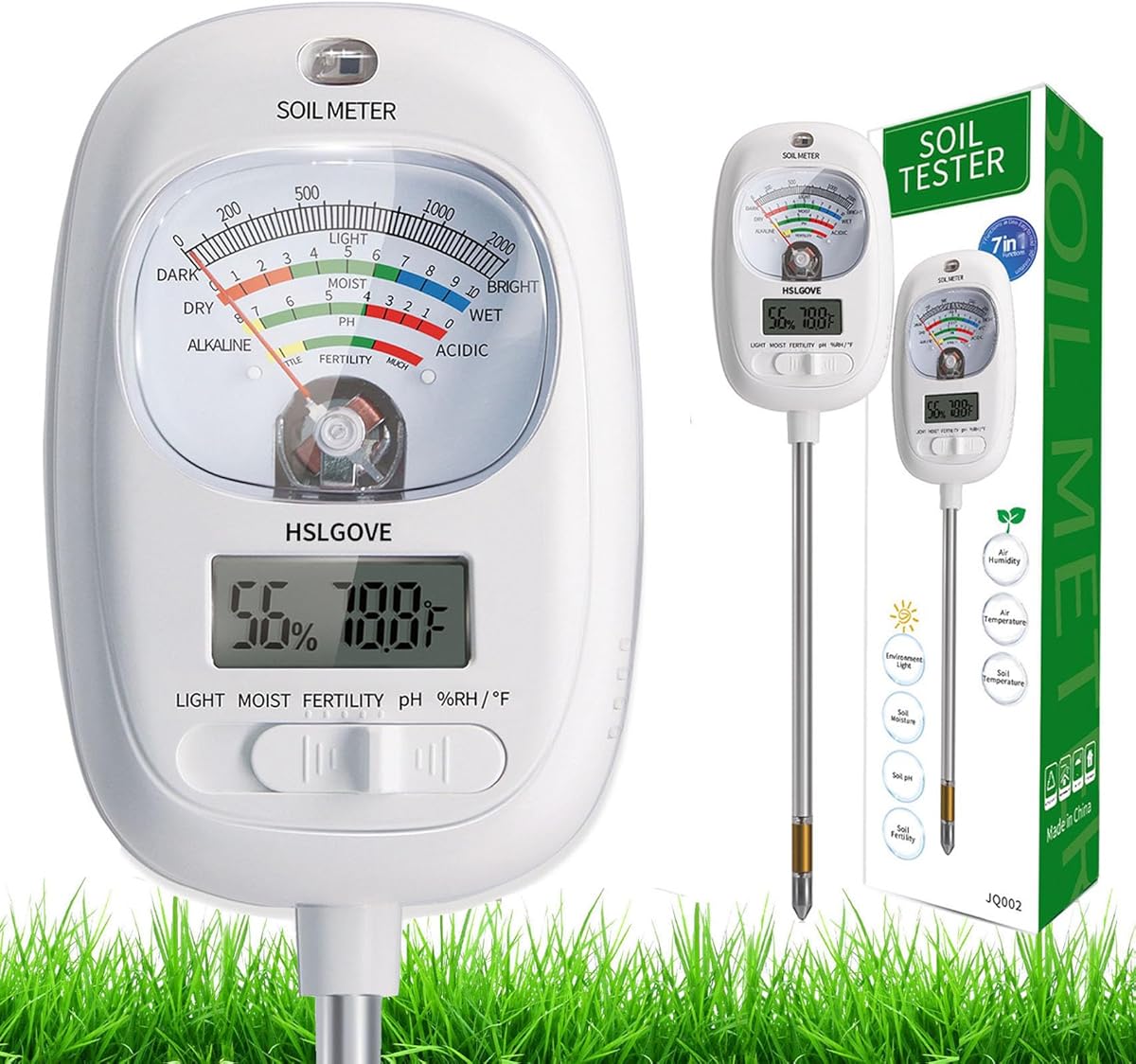
The HSLGOVE kit monitors both soil and air climate with a dual screen. It achieves a 4.4 star rating for combining soil metrics with ambient temperature and humidity.
We may earn a commission when you buy through this link, at no additional cost to you.
One probe checks soil moisture pH and light while the second displays air temp and humidity. This holistic view helps you manage indoor seedlings and sensitive plants more effectively.
The single probe design is gentle on roots and causes minimal disturbance. Its six point eight inch length reaches deep into medium sized pots and garden beds easily.
Buy this if you need a full environmental profile without multiple devices. The air humidity data pairs well with soil temps for precise greenhouse or indoor garden management.
Track air temperature and humidity alongside soil conditions to identify mismatches that could stress your plants during growth.
A single probe design means less digging and fewer root disturbances during routine checks of your soil conditions.
We may earn a commission when you buy through this link, at no additional cost to you.
This meter focuses on electrical conductivity to gauge nutrient and salt levels in soil. It rates 4.1 stars for its precise ATC features and durable waterproof probe.
We may earn a commission when you buy through this link, at no additional cost to you.
Temperature compensation ensures readings stay accurate across seasons. The IP67 rated corded probe resists water and dust damage making it tough for outdoor field testing.
You will need a separate calibration solution for best results. Immerse the probe and press the CAL button to set the device correctly before taking soil readings.
Choose this tool if managing soil salinity or precise fertilization is a priority. Its conductivity data complements pH and moisture checks for a full nutrient management strategy.
Measuring EC helps you detect salt buildup or nutrient deficits before they visibly harm plant leaves or growth.
The IP67 rating protects the sensor from rain and spills so it remains functional in outdoor garden conditions.
We may earn a commission when you buy through this link, at no additional cost to you.
This wireless system lets you check soil temps and moisture from indoors or across the yard. It earns a 4.5 star rating for convenience and reliable TDR sensing.
We may earn a commission when you buy through this link, at no additional cost to you.
One display handles up to twelve sensors so you can track diverse plants without walking to each one. The large screen shows data clearly with alerts for low moisture.
You can leave the probe in place to avoid disturbing roots. This is ideal for delicate plants where repeated insertion might cause damage over time.
Ideal for busy gardeners or large yards this kit saves time and keeps plants healthy. Just note the sensor range may vary based on walls and obstructions in your home.
Check plant conditions from your couch or office without stepping outside in rain or heat using the wireless connection.
Leaving the probe in place avoids repeated digging and keeps root zones stable for sensitive plants like orchids or herbs.
We may earn a commission when you buy through this link, at no additional cost to you.
This meter uses five probes for improved accuracy across pH temperature and humidity. It has a 3.9 star rating for solid data but slightly slower response times.
We may earn a commission when you buy through this link, at no additional cost to you.
The split screen shows pH and moisture side by side so you can compare readings without switching modes. Its corrosion resistant probes handle tough soil without bending easily.
Allow up to sixty seconds for pH values to stabilize for best results. This small wait ensures the sensor has adjusted to soil conditions for a reliable value.
Select this if you need air and soil data together and value long term probe strength. Just be patient with pH checks to avoid misreading soil acidity levels.
Multiple metal probes increase contact area for faster and more stable data compared to older single probe meters.
The split display shows both moisture and pH at once so you can adjust care steps without pressing extra buttons.
We may earn a commission when you buy through this link, at no additional cost to you.
The Luster Leaf 1625 provides straightforward digital temperature readings for gardeners who want simplicity. It holds a 4.2 star rating for reliability and ease of use.
We may earn a commission when you buy through this link, at no additional cost to you.
Its design targets early season planting when soil temps determine seed germination. Just insert the probe and wait for a clear digital number on the display.
Lacks advanced features like pH or moisture sensing but excels at core temperature monitoring. The durable glass lens and compact build make it easy to carry around the garden.
Choose this if you only need accurate soil temps and prefer a no fuss tool. Its lightweight design fits well in a small gardening kit or pocket.
This thermometer helps you decide when to sow seeds by confirming soil is warm enough for germination without guesswork.
With minimal buttons and a clear display anyone can use this tool without reading a complicated manual or app.
We may earn a commission when you buy through this link, at no additional cost to you.
Selecting the right soil thermometer depends on your gardening goals budget and desired features. This guide explains key factors to consider.
Decide if you need temperature only or additional metrics like pH moisture and light. Multi-function testers offer comprehensive data but may cost more.
Focus on core needs. If only temps matter choose a basic model. If soil health is priority select one with pH and moisture sensors.
Look for large clear LCD screens with backlighting for night or indoor use. Analog dials are simple but digital displays offer more precise numeric values.
Ensure the screen is easy to read without squinting. Backlights help in low light and rotating heads reduce bending strain.
Stainless steel probes resist rust and last longer in damp soil. Consider stem length; twelve inch probes reach deep compost while shorter ones suit pots.
Choose a probe long enough for your beds or bins. Stainless steel ensures durability and reduces replacement frequency.
Premium models offer Wi-Fi or wireless sensors for remote monitoring. These are useful for large gardens or busy schedules requiring constant checks.
If remote access matters choose a smart sensor with alerts. For casual use wired handheld models suffice without extra setup.
Look for waterproof and dust-proof ratings like IP65 or IP67 if you work outdoors in variable weather. These protect internal electronics from damage.
A rugged build ensures long life in the garden. Check for ratings that match your local climate conditions.
Test how easy the interface is to navigate. Simple button layouts and clear menus reduce frustration especially for seniors or beginners.
Prioritize models with intuitive controls and clear instructions. Avoid complex setups if you prefer quick readings.
Most units use AAA batteries which are easy to replace. Check if batteries are included and how long they typically last.
Consider rechargeable options if available to reduce waste. Ensure low battery alerts are present to avoid unexpected failures.
Prices vary from budget analog units to premium smart systems. Set a budget that matches your feature needs without overspending on unused tools.
Weigh cost against long term benefits. A slightly pricier durable model may save money over time compared to cheaper replacements.
Insert the probe into moist soil at the recommended depth usually around four inches. Wait ten to sixty seconds for the reading to stabilize before recording data.
Clean the probe after use with a soft cloth and store it in a dry place. If possible rinse gently and dry to avoid corrosion over time.
Replace batteries when the low battery indicator appears. Avoid leaving the probe in wet soil for days as moisture can damage internal components.
Soil temperature varies by location due to sun exposure and shade. Measure multiple spots and average them for a reliable garden reading. Also ensure the probe is fully inserted to avoid air gaps.
Most soil testers are not designed for direct water immersion unless specified. Use a waterproof waterproof probe sensor for water testing. Check the manual for limits to avoid damaging the device.
For active growing seasons check every few days. For early planting or seedlings daily monitoring helps ensure optimal conditions. In winter checks can be weekly.
Most consumer models are pre calibrated but high end units may need occasional checks. Use a reference thermometer or calibration solution if your device supports it to maintain accuracy.
Insert the probe to root zone depth typically three to six inches. For compost check deeper layers around twelve inches. Match depth to the plant's root system for accurate data.
Slow readings may result from dry soil or poor probe contact. Moisten the soil before testing and ensure the probe is fully inserted. Also check for battery issues.
The Reotemp K83B1 leads as the top overall pick for durability and ease of use. The Urban Worm Soil Thermometer offers great value for budget conscious buyers.
For smart features the ECOWITT WN34BS provides remote monitoring ideal for larger gardens. Choose based on your specific needs and monitoring preferences.
Always verify current prices and availability before purchasing as they can change. Your choice should fit your garden size and your comfort level with technology.