
RISEPRO HT-80A
4.4Editor score
Affordable price point
Auto power off
Compact design
This comprehensive guide compares the top ten decibel meter models available in October 2026, evaluating accuracy, features, and portability for various needs.
Choosing the right decibel meter is essential for monitoring noise levels in homes, workplaces, and industrial settings. A reliable device ensures compliance with safety regulations and helps maintain a comfortable acoustic environment for everyone involved in daily activities.
We evaluated ten top-rated sound level meters based on accuracy, range, display quality, and additional features like data logging and weighting modes. Our analysis focuses on how well each device performs in real-world scenarios for both casual and professional use cases.
Each selection highlights specific strengths such as portability, screen readability, or advanced logging capabilities to help you find the perfect match for your requirements. Please note that product availability and specifications may change over time, so verify details before purchasing.
4.4Editor score

4.5Editor score

4.2Editor score
The following table provides a side-by-side comparison of all ten models, highlighting key specifications and features to help you make an informed decision based on your specific measurement needs.


The TopTes TS-501B stands out as a top choice for both home and professional noise monitoring. With a rating of 4.5 stars, it delivers reliable accuracy and ease of use. Its large backlit display ensures readings are clear even in dimly lit environments, making it versatile for various settings.
We may earn a commission when you buy through this link, at no additional cost to you.
Key strengths include precise A and C weighting modes that simulate human ear responses to different noise levels. The condenser microphone captures sound frequencies from 30Hz to 8000Hz accurately. Additionally, the Max/Min tracking and Data Hold functions allow users to record peak noise events effectively for analysis.
While it requires three AAA batteries, the automatic power-off function helps extend battery life significantly. The lack of PC connectivity means data analysis must be done manually, but this is a minor trade-off given its affordability and feature set for most users.
This meter is ideal for homeowners monitoring noisy neighbors or professionals checking workshop safety levels. Its durable build and included case make it ready for immediate use right out of the box without needing extra accessories.
The 2.25-inch LCD with backlight ensures you can read measurements clearly even in low-light conditions like basements or night shifts.
A and C weighting options allow you to tailor measurements to specific environments, whether monitoring ambient noise or heavy machinery.
We may earn a commission when you buy through this link, at no additional cost to you.
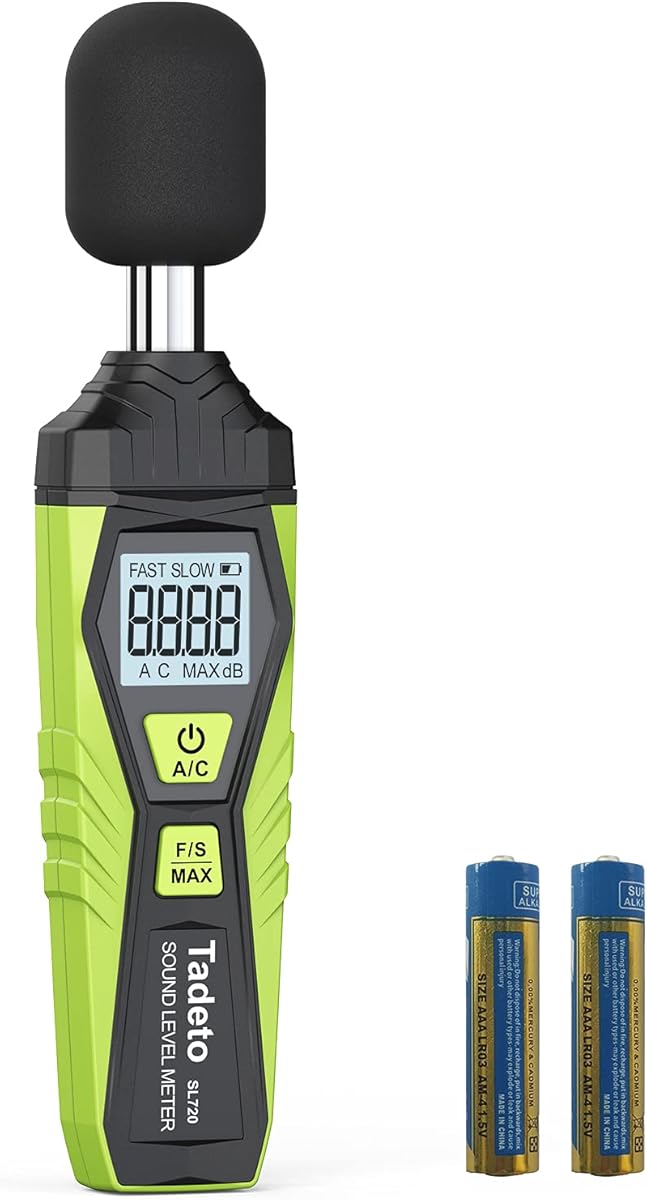
The Tadeto Digital Sound Level Meter offers a straightforward solution for measuring noise levels accurately. With a 4.5-star rating, it is praised for its lightweight design and clear LCD display. It is particularly well-suited for quick checks in various environments from homes to factories.
We may earn a commission when you buy through this link, at no additional cost to you.
Its Fast and Slow measurement modes provide flexibility depending on the stability of the noise source. The A and C weighting ensures that the device can handle different types of sound analysis effectively. Users appreciate the backlight feature for reading in darker areas without strain.
While it lacks advanced data logging, it covers essential needs like Max Data Hold and low battery indicators. The resolution of 0.1 dB ensures precision without overwhelming the user with unnecessary complexity or technical jargon.
This device is perfect for anyone needing a reliable tool for occasional noise checks or educational purposes. Its simplicity and portability make it a great companion for students or facility managers who need quick readings.
Switch between Fast and Slow modes to capture either rapid noise fluctuations or steady-state environmental sounds accurately.
The straightforward layout ensures you can start measuring immediately without needing to read a complex manual first.
We may earn a commission when you buy through this link, at no additional cost to you.
The DURFICST Sound Level Meter features a color LCD screen that adds a visual dimension to noise measurement. With a 4.6-star rating, it offers high precision and versatile unit options. The color display helps users quickly interpret data trends and noise levels at a glance.
We may earn a commission when you buy through this link, at no additional cost to you.
One unique feature is the support for both dB and SONE units, allowing for different interpretations of noise intensity. The windbreak ball reduces wind interference during outdoor use. This makes it suitable for environments where air movement might otherwise skew readings significantly.
The device includes a cloth carrying case for protection during transport. While it does not offer PC connectivity, the Max/Min recording and data hold functions provide essential tools for monitoring changes over time.
This meter is ideal for hobbyists or users who appreciate visual clarity in their devices. The combination of color display and unit flexibility makes it a compelling choice for detailed acoustic analysis without high costs.
Switch between decibels and SONE to measure intensity or perceived loudness depending on your specific application needs.
The included windbreak ball minimizes air interference, ensuring stable readings even when measuring outside or in drafty areas.
We may earn a commission when you buy through this link, at no additional cost to you.
The Goldeep SL750A decibel meter combines functionality with a striking bright orange design that ensures visibility. It holds a strong 4.7-star rating for accuracy and user satisfaction. This model is well-equipped to handle various noise environments from construction sites to offices.
We may earn a commission when you buy through this link, at no additional cost to you.
It supports both A and C weighting for flexible noise testing across different sound sources. The inclusion of a windbreak ball helps maintain accuracy during outdoor use. Fast and Slow response settings allow precise measurement of changing or steady noise levels.
The device comes with essential batteries and a clear LCD display for easy reading. While it does not offer data logging, its reliability and ease of use make it a favorite for daily checks and quality control tasks.
Perfect for parents or professionals needing a quick and reliable way to monitor noise levels. The ergonomic design ensures comfort during extended use, while the visible casing prevents it from getting lost in busy environments.
With a 4.7 rating, users consistently praise its accuracy and durability, making it a trusted tool for daily use.
The included windbreak ball ensures that readings remain accurate even in windy conditions, a common issue with basic meters.
We may earn a commission when you buy through this link, at no additional cost to you.
This green variant of the TopTes TS-501B offers all the core features of its counterpart plus temperature and humidity tracking. With a 4.5-star rating, it provides comprehensive environmental data in a single device. This is particularly useful for monitoring conditions in greenhouses or storage areas.
We may earn a commission when you buy through this link, at no additional cost to you.
The device maintains high accuracy with a condenser microphone and supports A and C weighting modes. The large backlit screen ensures readability in low light, while the warranty offers long-term peace of mind for buyers investing in this tool.
Automatic power-off extends battery life, and low battery indicators prevent unexpected shutdowns. While it lacks digital export, the Max/Min and Data Hold functions allow for thorough on-site analysis without needing a computer.
Ideal for users who need broader environmental monitoring alongside noise measurement. The extra weather features add value for those tracking conditions where temperature might influence sound behavior.
Track noise alongside temperature and humidity for a complete environmental profile in industrial or storage settings.
A three-year warranty ensures reliable support and protection, making this a solid long-term investment for facilities.
We may earn a commission when you buy through this link, at no additional cost to you.
The RISEPRO HT-80A is an excellent budget-friendly option for those needing basic noise measurement capabilities. With a 4.4-star rating, it balances cost and performance effectively. It is a great tool for checking sound levels in homes or small business settings without breaking the bank.
We may earn a commission when you buy through this link, at no additional cost to you.
It offers essential features like Max/Min tracking and auto power off to conserve energy. The backlight LCD display ensures visibility in darker environments. While its frequency range is slightly narrower, it covers the most common noise scenarios encountered by average users.
The gift box packaging makes it a convenient choice for gifting to students or DIY enthusiasts. Its compact design allows for easy transport, though it may lack the durability of more expensive industrial models.
This meter is perfect for beginners or occasional users who want to monitor noise levels efficiently. It provides sufficient accuracy for general compliance checks and personal comfort evaluations without complex features.
Delivers essential sound measurement tools at an accessible price point, ideal for users on a tight budget.
Comes in a premium gift box with all necessary accessories, ensuring it is ready for immediate use out of the box.
We may earn a commission when you buy through this link, at no additional cost to you.
The DANOPLUS Data Logger is a professional-grade tool designed for extensive noise monitoring and analysis. With a 4.2-star rating, it offers advanced features like massive data storage and PC connectivity. It is ideal for compliance reporting and long-term environmental studies.
We may earn a commission when you buy through this link, at no additional cost to you.
Its ability to record up to 43,000 data points and export via Excel makes it powerful for detailed analysis. The color alarm system provides instant visual feedback on noise thresholds. Plus, a rechargeable battery reduces the need for frequent replacements.
While more expensive than basic models, the functionality justifies the investment for serious users. The DC output option allows integration with other systems, adding versatility for industrial applications or research setups.
This device is best suited for professionals who need to track noise trends over time. It simplifies the process of gathering evidence for noise complaints or safety certifications with robust data management tools.
Store thousands of readings and export them for easy reporting, saving hours of manual data entry work.
Three-color alarms instantly inform you of safe, medium, or high noise levels, allowing for quick reactions.
We may earn a commission when you buy through this link, at no additional cost to you.
The SW-525A is designed as a fixed station monitor for continuous noise tracking in specific locations. Its large red LCD display is visible from a distance, making it useful for shared spaces. The wall-hanging type ensures it stays out of the way while providing constant data.
We may earn a commission when you buy through this link, at no additional cost to you.
It includes an alarm function that triggers when noise levels exceed set thresholds. This makes it effective for ensuring compliance in workplaces or keeping noise below acceptable limits in residential areas. The display clarity is excellent for reading without strain.
While not portable, this stability allows for reliable long-term placement in corridors or offices. Users appreciate the ease of setup for environments where constant monitoring is required without active handheld use.
This model is perfect for building managers or parents wanting to monitor noise in shared rooms. Its fixed nature ensures consistent measurement positioning, reducing user error or variation caused by hand movement.
Ideal for rooms where noise must stay within limits, providing constant visual feedback to occupants at all times.
The large red LCD ensures readings are easily seen from across the room, facilitating quick status checks.
We may earn a commission when you buy through this link, at no additional cost to you.
The Tadeto Pro brings versatility with both audible and visual alarm functions to ensure you never miss a threshold breach. With a 4.3-star rating, it offers five adjustable measurement ranges for flexibility. This makes it suitable for a variety of environments from offices to industrial floors.
We may earn a commission when you buy through this link, at no additional cost to you.
The backlight LCD display enhances readability in low light, similar to other models but with added alarm features. Max/Min tracking ensures you capture peak levels accurately. Its lightweight design makes it easy to carry around for checks across multiple locations.
While it uses batteries, the low voltage indicator helps prevent unexpected power loss. The visual alarms complement audible ones, useful in noisy areas where sound alerts might be missed. This redundancy adds reliability to the device.
Best for professionals who need active alerts during safety checks or noise surveys. The dual alarm system ensures compliance monitoring is proactive, allowing immediate corrective action when levels rise unexpectedly.
Audible and visual alarms work together to ensure alerts are noticed even in very noisy or distracting environments.
Five adjustable ranges allow you to fine-tune the device for specific tasks, enhancing accuracy across different noise types.
We may earn a commission when you buy through this link, at no additional cost to you.
The FNIRSI FDM-02 features a modern IPS screen with light and dark themes for better viewing comfort. With a 4.4-star rating, it offers a curve mode showing sound changes over thirty seconds. This visual representation makes it easier to understand noise trends at a glance.
We may earn a commission when you buy through this link, at no additional cost to you.
Its rechargeable battery eliminates the need for replacements, adding convenience for daily users. The compact design makes it easy to take anywhere, while the 30s curve mode helps visualize fluctuations effectively. It supports A and C weighting for standard measurements.
Although it lacks advanced logging, the visual feedback on the screen is intuitive. Users can set thresholds and review recent alarms quickly. This modern interface appeals to those who prefer graphical data over just numbers.
Perfect for home theater tuning or general monitoring where visual trends are useful. The sleek design and battery efficiency make it a strong contender for users prioritizing modern features and convenience.
The 30-second curve mode displays noise changes visually, helping you spot patterns without needing complex software.
Light and dark themes allow you to adjust the screen to match your environment or personal preference easily.
We may earn a commission when you buy through this link, at no additional cost to you.
Selecting the right decibel meter involves evaluating several factors to ensure it meets your specific needs. This section outlines key considerations to help you make an informed choice.
The measurement range determines the span of sound levels your device can detect. Most standard meters cover 30 to 130 decibels which suits most environments. Accuracy is crucial for compliance and safety; look for models with a deviation of less than 1.5 decibels.
Prioritize devices that offer high precision if you need to meet regulatory standards. Lower accuracy might suffice for casual home monitoring but is insufficient for industrial safety checks.
Weighting modes adjust how the meter measures different frequencies. A-weighting is standard for environmental noise as it mimics human hearing. C-weighting is better for high-intensity sounds like machinery.
Ensure the device supports at least A-weighting for general use. Advanced users might benefit from models offering both modes to cover diverse scenarios.
A clear display is essential for quick reading in various lighting conditions. Look for backlit LCD screens or color displays that enhance visibility. Larger screens make it easier to see details without squinting.
If you work in dark environments, a backlight is a must-have feature. Color screens can also help visualize data trends through charts or bars.
Fast and slow response times allow you to capture transient or steady-state noise. Fast mode is useful for traffic or sudden noises while slow mode stabilizes readings for ambient environments.
Choosing a meter with adjustable response times ensures flexibility. This helps in capturing accurate data regardless of how quickly the noise changes.
Some meters offer internal memory to store readings for later analysis. Advanced models allow exporting data via USB to a PC. This is vital for compliance reporting and long-term monitoring.
If you need to analyze trends or generate reports, a data logger model is necessary. Basic meters may only show current readings without saving history.
Since you might carry the meter to different sites, a lightweight and durable design is beneficial. Look for non-slip grips and protective cases included in the package.
Robust construction ensures the device survives drops or rough handling. A compact size makes it easier to fit into a tool bag or pocket.
Decibel meters typically run on AAA batteries or have rechargeable internal batteries. Rechargeable models reduce long-term costs and waste while battery models offer easy swaps during use.
Check if the device has a low battery indicator to avoid sudden shutdowns. Consider how long the battery lasts for your typical usage patterns.
Extra features like temperature sensors, alarms, or SONE unit support add versatility. Alarms can alert you when noise exceeds safe limits immediately. These features can be a deciding factor depending on your specific needs.
Assess whether these extras justify the added cost. For basic measurements, simpler models might be more cost-effective and easier to use.
To start using your decibel meter, power it on and select the desired weighting mode such as A or C. Hold the device at ear level or the specific point you want to measure for accurate results. Avoid covering the microphone or pointing it directly at the source of extreme noise.
Regularly check the battery level and replace or recharge as needed to prevent interruptions. Use the Max/Min hold function to capture peak noise levels if needed for compliance documentation. Always keep the windbreak ball attached during outdoor measurements to reduce interference from wind.
Store the device in its protective case when not in use to prevent damage from dust or drops. Clean the screen gently with a soft cloth to maintain visibility. If you have a model with PC connectivity, ensure the software is updated to access all features effectively.
Most consumer decibel meters come factory calibrated and do not require user calibration. If you suspect inaccuracies, compare readings with a known standard source or send it to a professional service for verification. Using a reference sound level helps ensure ongoing accuracy without specialized equipment.
Decibel meters measure sound pressure levels but cannot directly assess hearing damage risk. However, they help identify noisy environments where hearing protection is needed. Use the readings to evaluate if you are exposed to harmful levels over time and take appropriate safety measures.
A-weighting simulates how the human ear perceives low-intensity sound making it ideal for environmental noise. C-weighting captures high-intensity noise better making it suitable for industrial machinery. Choose the mode based on the type of noise you are measuring to get relevant data.
Consumer meters typically offer an accuracy of plus or minus 1.5 decibels which is sufficient for most non-professional needs. They are generally not precise enough for legal compliance or detailed acoustic research. For professional use, consider a Class 1 certified meter.
Basic decibel meters measure only sound levels but some advanced models include temperature and humidity sensors. If you need combined environmental data, look for specific models that offer these extra features as standard. This can be useful for greenhouse or storage area monitoring.
Some models have internal memory or connectivity to log and export data via USB. This is essential for tracking noise trends or proving compliance over time. Check if the device supports data export before purchasing if you need long-term records.
A windproof cover reduces wind interference especially when measuring outdoors in breezy conditions. It helps stabilize readings so you get accurate sound levels without noise from the wind. Most high-quality meters include a windbreak ball for this purpose.
No special license is required to use a decibel meter for personal or general monitoring purposes. However, using the data for legal compliance might require certified equipment and trained personnel. Always check local regulations if using measurements for official reporting.
We have reviewed ten top decibel meters ranging from simple handheld devices to advanced data loggers. The TopTes TS-501B stands out as the best overall choice for its balance of accuracy and features. Budget-conscious users can rely on the RISEPRO HT-80A for essential needs.
When choosing a device consider your primary use case whether it is home safety, professional compliance, or hobbyist tracking. Features like data logging and weighting modes become critical for industrial applications. Prioritize models that offer reliability and durability to ensure consistent performance.
Please check current pricing and availability before purchasing as these may change over time. We hope this guide helps you find a decibel meter that meets your requirements efficiently. For more updates, keep an eye on our reviews as new models are released.